

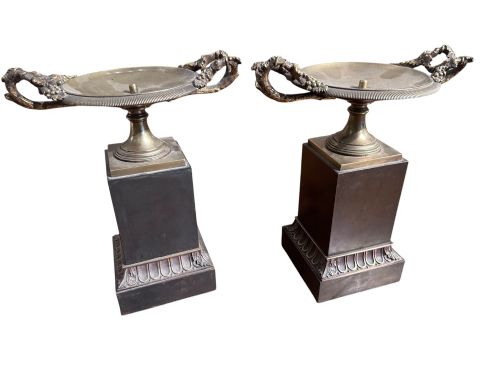
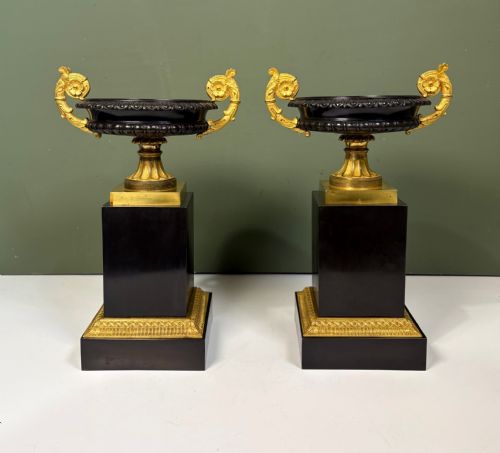


Pair Decorative Compotes
Pair decorative compotes bring neoclassical grandeur to a room, offering matched display vessels shaped by nineteenth-century tastes.
Pair Decorative Compotes
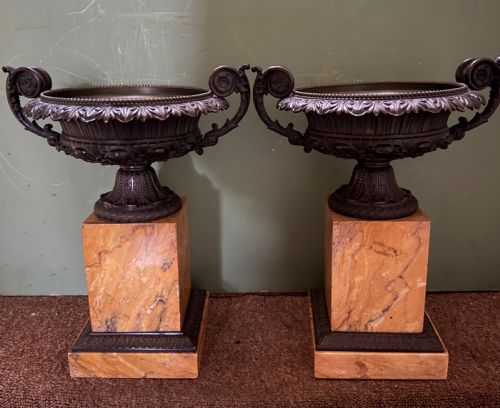
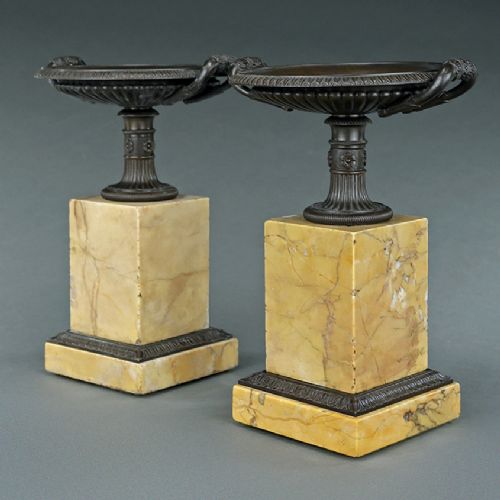
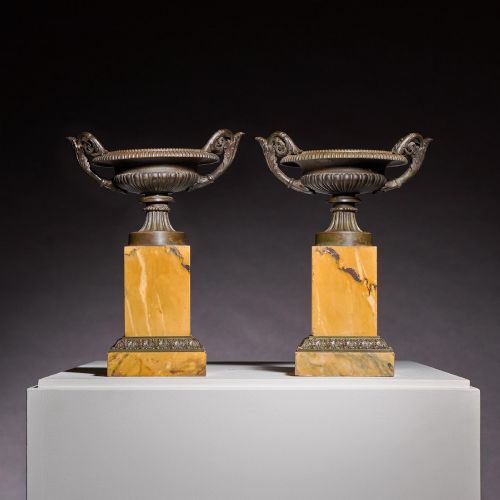
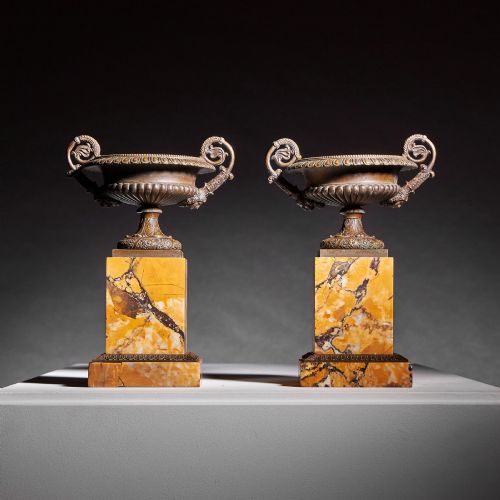
These pair decorative compotes comprise matched vessels designed for display, predominantly taking the form of tazzas, coupes, and centrepieces. The selection spans the nineteenth century, including specific periods such as Regency, 1850, 1880, 1900, and the French Empire style.
Most examples function as decorative objects or ornamental urns rather than utilitarian tableware. They appear frequently in bronze, ormolu, and marble, drawing heavily on neoclassical and Victorian aesthetic traditions.
Materials and construction
The construction relies on metals such as bronze, gilt bronze, ormolu, brass, and silver plate, often paired with structural or decorative stone. Black marble, Siena marble, and red marble form stable bases and columns that support metal bowls.
Detailing involves patinated bronze surfaces, cut glass, mother-of-pearl dishes, and inlaid rosewood. Certain pieces integrate figurative elements like cherubs or specific cultural motifs.
Pair Decorative Compotes Retail Price Guide 2026
Typical asking prices for pair decorative compotes among the pieces listed under this phrase on Sellingantiques today, from the lower quarter to the upper quarter. They describe what is for sale here now, not the wider market.
The object forms include tazzas, coupes, centrepieces, and ornamental urns shaped by French Empire and Victorian neoclassical design.
Evaluating craftsmanship
Quality rests in the precision of the casting and the richness of the gilding or ormolu work. Superior examples demonstrate crisp definition in figural elements and botanical mounts.
The choice and combination of materials dictate the tier of a piece, particularly where diverse marbles or exotic timbers like rosewood meet finely worked metal.
Minton
The Pair Decorative Compotes Glossary
- Tazza
- A shallow bowl or cup mounted on a stem and foot. This form dominates the category alongside urns and coupes.
- Ormolu
- Gilt bronze produced by applying a finely ground high-carat gold-mercury amalgam to a bronze object. It provides a distinct warm metallic lustre.
- Grand Tour
- Cultural travel undertaken by nineteenth-century elites acquiring classical antiquities and souvenirs. Pieces associated with this tradition often incorporate ancient architectural marbles.
- Centrepiece
- A large ornamental object placed in the middle of a dining table or sideboard. These often feature silver plate and cut glass.
Pair Decorative Compotes: Frequently Asked Questions
What were pair decorative compotes used for?
These matched vessels served primarily as ornamental centrepieces on dining tables or sideboards within nineteenth-century interiors. They were designed to display fruit, sweets, or simply to enhance the symmetry of a room.
Over time, their role shifted from functional table service to purely decorative objects placed on mantelpieces and pedestals.
How do I date a pair of compotes?
Dating relies on examining the combination of materials, cast quality, and stylistic markers such as French Empire or Victorian Neoclassical motifs. Nineteenth-century pieces often show specific metallurgical techniques and marble selections characteristic of the era.
Consulting the specific period indicators in the title helps establish whether an item belongs to the Regency era or later decades.
Where were these pieces made?
The listings show a strong concentration of French origin, particularly associated with nineteenth-century workshops producing Grand Tour items and Empire style goods. English Victorian pieces also feature prominently.
European centres of metalwork and stonemasonry supplied these matched vessels to an international market.
How do I style compotes in a modern interior?
Placing matched compotes symmetrically on a sideboard or console table highlights their neoclassical proportions. They require stable, level surfaces that can support the weight of bronze and marble.
Leaving them empty allows the interplay of patinated bronze, ormolu, and inlaid wood to function as sculptural art.