

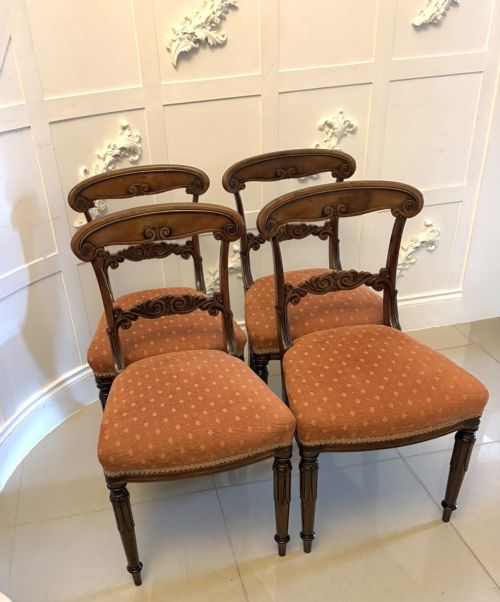
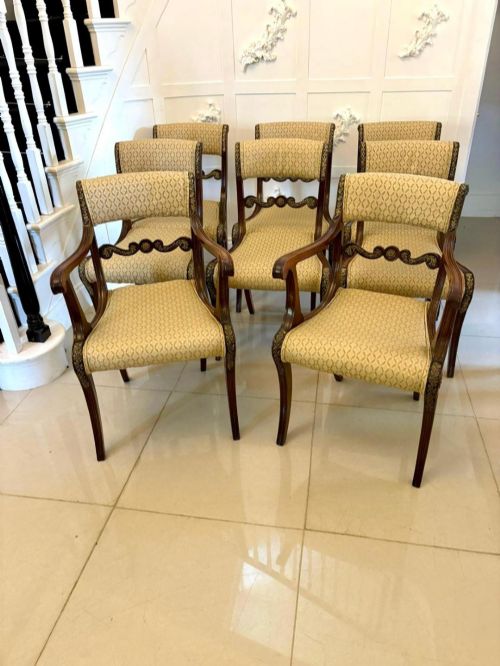

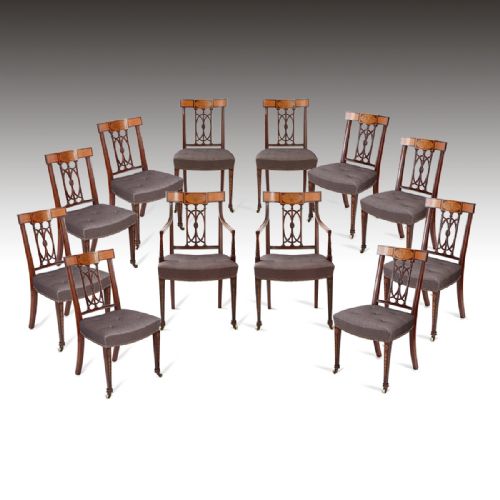
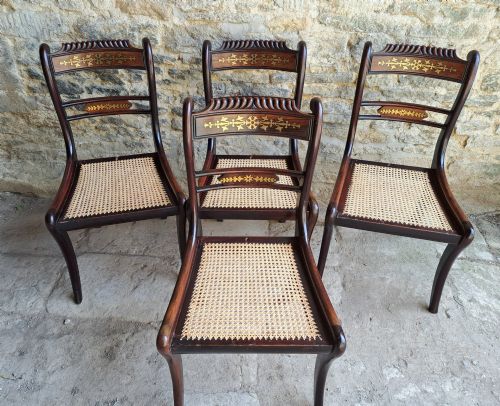
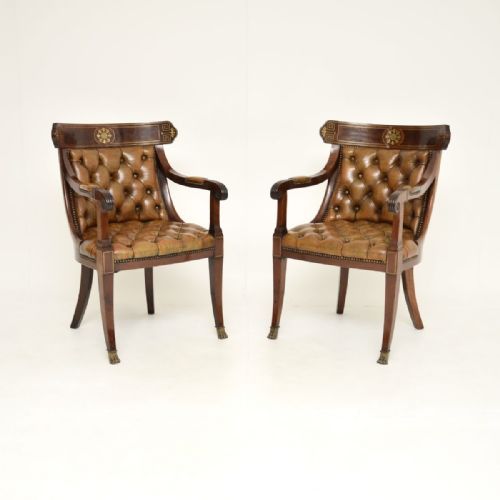


Regency Brass Inlaid Seat
These regency brass inlaid seat pieces combine architectural line and metallic detail, offering collectors durable elegance for formal rooms.
Regency Brass Inlaid Seat
A regency brass inlaid seat encompasses dining chairs, armchairs, side chairs, stools, window seats and music stools originating from the early nineteenth century and later revival periods. These forms serve traditional domestic spaces, providing both practical seating and decorative distinction.
The variants most frequently met on this page include mahogany and rosewood dining chairs alongside faux rosewood and simulated rosewood examples. Makers of the period utilised contrasting timber grains to frame intricate brass work set into the wood.
Window seats and music stools also appear among the offerings, extending the furniture style beyond standard dining settings into libraries and drawing rooms. Each piece reflects the classical influences popular during the Georgian and Regency eras.
Judging the standard of execution
Quality reveals itself in the precision of the brass inlay and the tightness of the timber joints across the frame. Superior examples demonstrate continuous, unbroken brass lines fitted flush with the surrounding mahogany or rosewood.
The selection of figured wood grains and the structural integrity of carved elements further separate standard production from exceptional work. Sets featuring uniform timber matching and original cane or upholstery command greater regard from collectors.
Regency Brass Inlaid Seat Retail Price Guide 2026
Typical asking prices for regency brass inlaid seat among the pieces listed under this phrase on Sellingantiques today, from the lower quarter to the upper quarter. They describe what is for sale here now, not the wider market.
Several pieces include simulated rosewood, proving that nineteenth century decorators loved a clever painted illusion just as much as we do.
John Gee
The Regency Brass Inlaid Seat Glossary
- Regency
- A style period spanning the early nineteenth century characterised by classical revival motifs and Egyptian influences. It draws inspiration from ancient Greek and Roman furniture forms.
- Brass inlay
- The technique of embedding thin brass strips into routed channels within the wooden surface. This method creates geometric or figurative patterns across the crest rail and splat.
- Faux rosewood
- A painted surface finish designed to imitate the rich dark grain and contrasting streaks of genuine rosewood. Artisans utilised this technique on more accessible timber foundations.
- Window seat
- An elongated stool designed for placement in a bay window or hallway. These pieces often feature scrolling arms and upholstered or cane seats.
- Music stool
- An adjustable seat utilised by pianists and musicians during performance. Examples from this period frequently incorporate revolving tops and brass detailing.
Regency Brass Inlaid Seat: Frequently Asked Questions
What woods were used for regency brass inlaid seats?
Makers predominantly selected mahogany and rosewood for their dense grain and deep colour. Satinwood and beech also appear, sometimes painted to simulate more exotic timbers.
These hardwoods provided a stable canvas for embedding fine brass stringing without splitting or warping over time.
How do I identify a genuine period piece?
Examine the construction methods and the integration of the brass inlay into the timber surface. Genuine items show hand-cut joinery and brass work that has aged naturally with the surrounding wood.
Look for period characteristics such as sabre legs, carved rope twists, and classical splat designs typical of the early nineteenth century.
Were these seats used only for dining?
Dining chairs form the majority of surviving examples, but the category includes armchairs, side chairs, window seats, and music stools. Different forms served libraries, drawing rooms, and bedrooms.
Library armchairs and window seats accommodated reading and relaxation in formal domestic spaces.
How should I care for brass inlaid furniture?
Keep the wood conditioned with appropriate waxes and avoid abrasive cleaners near the brass inlay. Gentle dusting prevents grime buildup in the channels around the metal.
Maintain stable humidity levels in the room to protect both the timber frame and the traditional upholstery or cane work.