
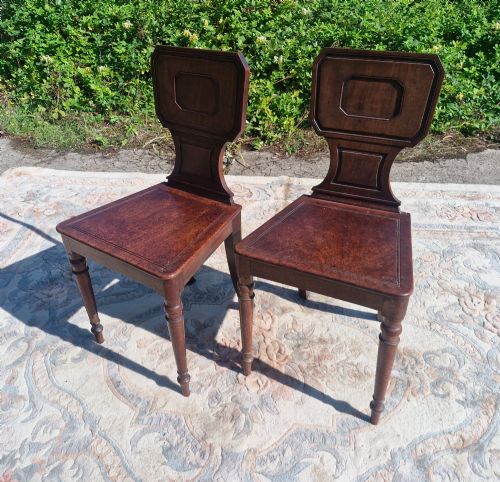
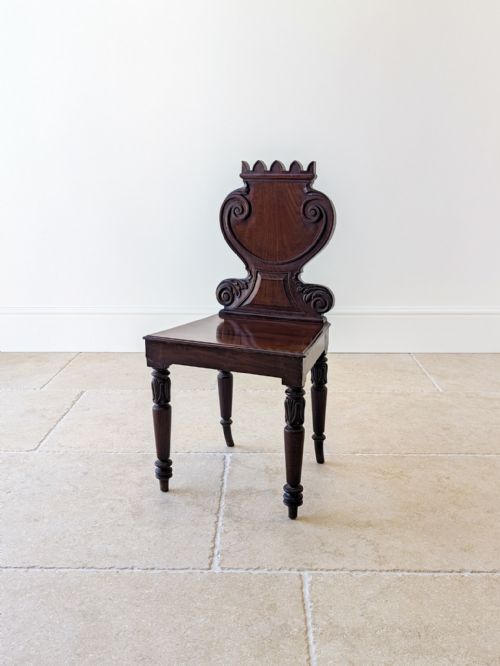
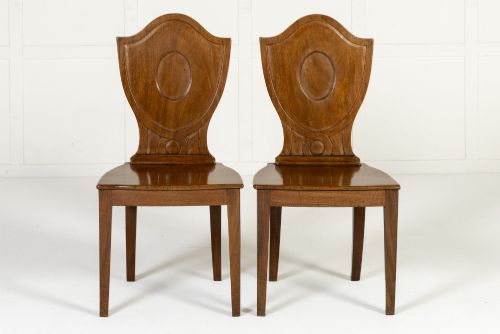
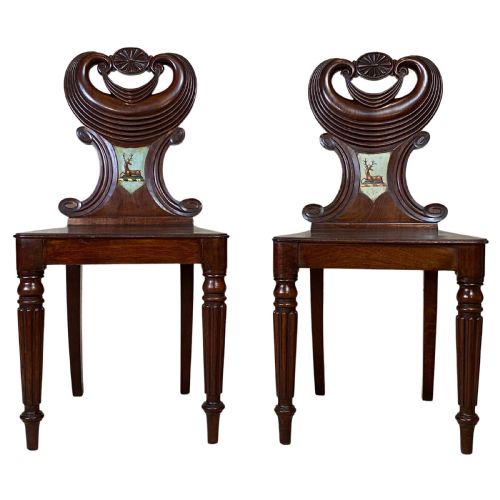


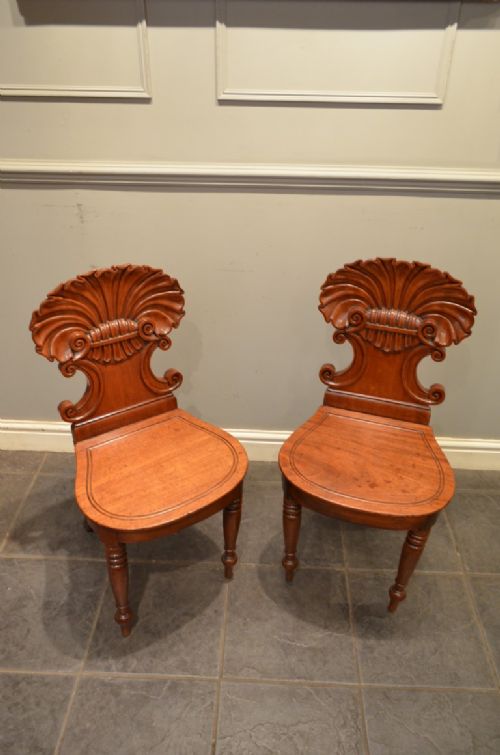


Regency Entry Chairs
Regency entry chairs are robust wooden seats designed for hallways, offering formal presence and architectural character.
Regency Entry Chairs
Makers focused on formal utility, producing wooden seats designed for occasional sitting rather than long comfort. The primary forms seen on this page include shell back, shield back, and oval back designs in mahogany and oak.
Distinctions in Quality
Quality rests upon the crispness of the carving work on shell and shield backs, alongside the selection of finely figured timber. Strong joinery and balanced proportions distinguish pieces with workshop attribution from standard workshop output.
The sophistication of decorative elements, including brass inlay or armorial engraving, separates standard utilitarian seating from distinguished cabinet work.
Some sturdy oak examples double delightfully as footman's chairs for weary visitors.
Gillows·Gillows of Lancaster
The Regency Entry Chairs Glossary
- Hall chair
- A rigid wooden seat intended for an entrance hall or corridor, typically featuring a solid wood seat and a carved back.
- Shell back
- A chair back carved in the distinct shape of a scalloped seashell, popular during the Regency period.
- Shield back
- A chair back designed in the outline of a heraldic shield, commonly found in Georgian and Regency seating.
- Armorial
- Bearing a family coat of arms or heraldic crest, often carved into the wooden back of a reception chair.
- Brass inlay
- Technique where thin strips of brass are fitted flush into channels carved within the wooden surface.
Regency Entry Chairs: Frequently Asked Questions
What are regency entry chairs used for?
These pieces served as formal seating in grand hallways, vestibules, and reception areas for visitors waiting briefly.
They were built with rigid wooden seats and upright backs to encourage proper posture rather than lounging.
How do I identify a regency hall chair?
Look for architectural wooden forms from the early nineteenth century, featuring solid timber seats and carved shield or shell backs.
Attributions often point to master workshops like Gillows when the carving is exceptionally sharp.
Where should I place an entry chair?
They suit hallways, corridors, and entrance spaces where a strong architectural silhouette can be appreciated without requiring soft upholstery.
Pairs look balanced flanking a console table or positioned against a long hallway wall.
Are these chairs comfortable for daily sitting?
These wooden seats were designed for brief utility in entryways rather than prolonged relaxation.
Their solid mahogany or oak construction offers firm upright support rather than cushioned comfort.