




Regency Brass Inlaid Chairs
Regency brass inlaid chairs bring refined classical elegance to a room through contrasting timbers and gleaming metalwork.
Regency Brass Inlaid Chairs
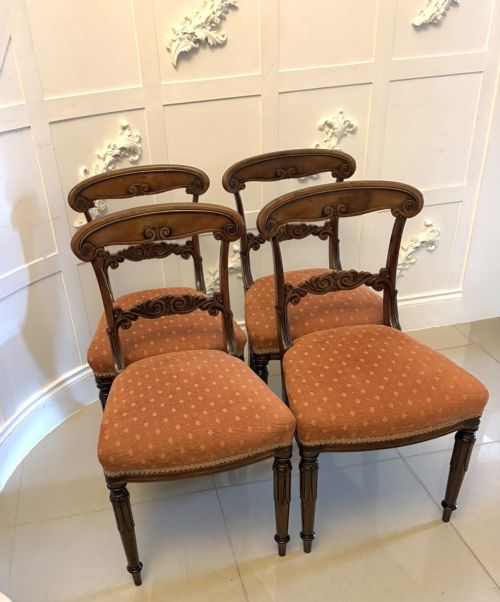
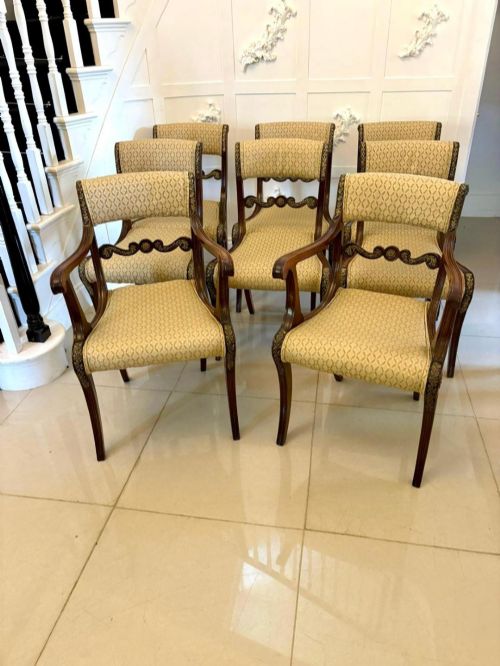
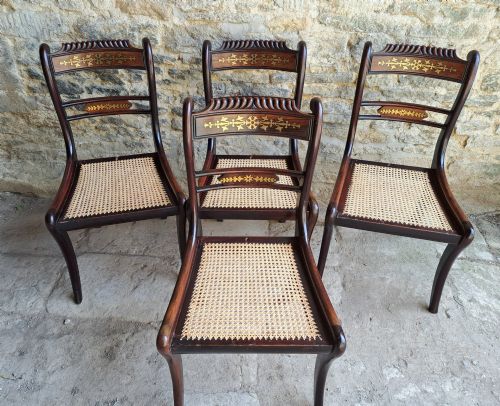
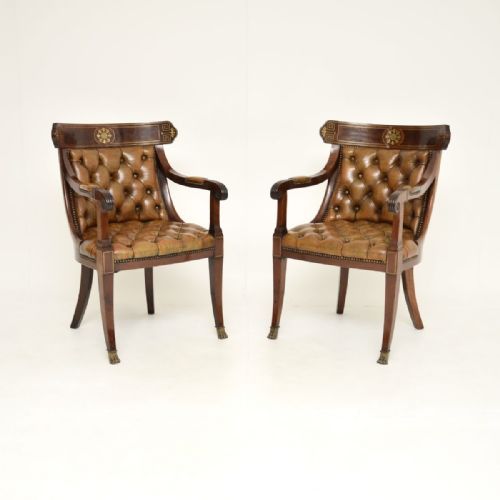
When searching for regency brass inlaid chairs, you encounter seating originating primarily from the early nineteenth century during the Regency, George IV, and Georgian periods. These pieces include dining chairs, armchairs, side chairs, elbow chairs, and library chairs built to sophisticated classical designs.
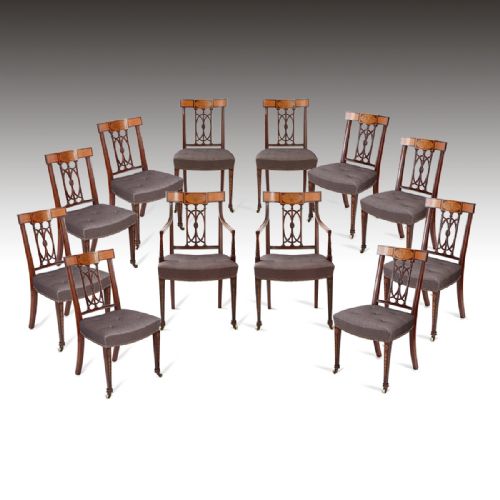
The most common form on this page is the dining chair, often found in matched sets of four, six, or eight. Alongside these are pairs of armchairs and occasional pieces like music stools and hall chairs, reflecting the varied domestic seating arrangements of the era.
Materials and construction
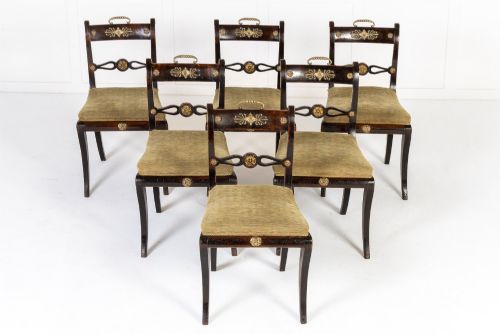
Cabinetmakers constructed these frames predominantly from rich timbers such as mahogany, rosewood, and satinwood, occasionally utilising beech or pollard oak. Some surfaces were finished as faux rosewood or simulated rosewood to imitate rarer, more expensive grains.
Brass was meticulously inlaid into precision-cut channels across the timber backs and rails, creating striking geometric or classical motifs. Upholstered elements featured fabric, leather, or cane seating supported by webbing and traditional stuffing.
Regency Brass Inlaid Chairs Retail Price Guide 2026
Typical asking prices for regency brass inlaid chairs among the pieces listed under this phrase on Sellingantiques today, from the lower quarter to the upper quarter. They describe what is for sale here now, not the wider market.
Object forms span dining chairs, library armchairs, music stools, and hall chairs from the Regency period.
Distinctions in craftsmanship
The division between standard output and the highest exhibition quality lies in the precision of the brass inlay and the selection of the timber. Finely executed brasswork sits flush with the wood, maintaining intricate patterns without gaps, whereas lesser pieces display simpler lines or wider joints.
Timber selection dictates the visual depth of the frame, with heavily figured rosewood or dense, warm mahogany indicating superior workshop standards. The structural integrity of the joints, particularly on dining chairs subjected to frequent movement, further separates ordinary examples from exceptional ones.
John Gee
The Regency Brass Inlaid Chairs Glossary
- Brass inlay
- The technique of embedding thin strips or shaped pieces of brass into recessed channels within the wooden surface. This method created contrasting linear and floral patterns popular in classical furniture design.
- Faux rosewood
- A painted or grained surface treatment applied to a secondary timber to imitate the distinctive dark figuring of genuine rosewood. Craftsmen utilised this method to achieve a luxurious appearance economically.
- Elbow chair
- A seating form featuring supportive arms attached to the sides of the frame, designed for comfort at the dining table or desk. These pieces often matched larger sets of side chairs.
- Bar back
- A horizontal curved wooden slat across the upper backrest that resembles the shape of a domestic bar. This structural feature frequently carries the intricate brass inlay characteristic of the period.
- Sabre leg
- A sharply curved rear or front leg that sweeps outward in a concave profile reminiscent of a cavalry saber. This form added dynamic movement and stability to Regency seating.
Regency Brass Inlaid Chairs: Frequently Asked Questions
What periods do these chairs come from?
These seating pieces originate primarily from the early nineteenth century, spanning the Regency, George IV, and Georgian eras. Some later examples reflect nineteenth-century revivals.
Craftsmen during these periods produced formal dining and library chairs adhering to classical aesthetic standards.
How were the brass patterns applied?
Artisans cut precise shallow channels into dense hardwoods such as mahogany and rosewood. They then hammered thin brass strips or cast motifs securely into these recesses.
This meticulous process required steady hands to ensure the metal sat flush with the surrounding timber surface.
Are these chairs suitable for daily dining?
Many sets remain sturdy enough for regular domestic use when the frame joints and internal webbing are sound. Leather and fabric upholstery options offer comfortable seating for meals.
Careful placement away from direct heat sources helps preserve the stability of the timber and the embedded brasswork.