



Regency Blue White Pottery
Regency blue white pottery brings together crisp cobalt transfer prints and earthenware bodies, offering a distinct glimpse into domestic dining from the early nineteenth century.
Regency Blue White Pottery
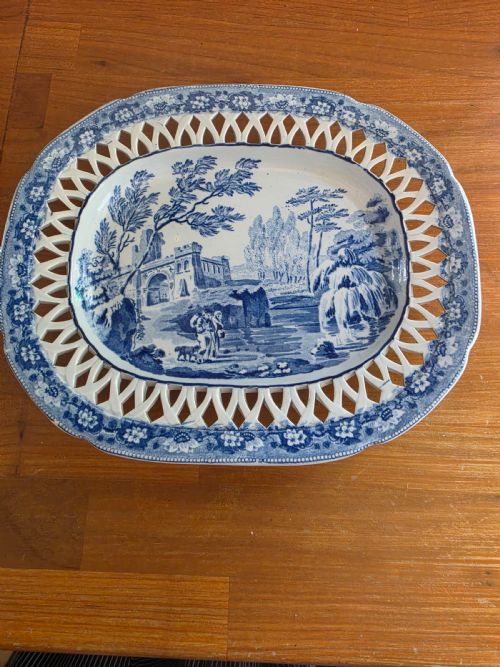
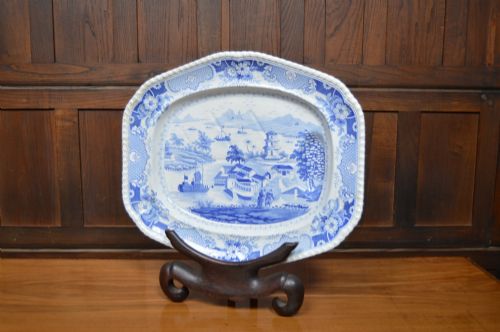
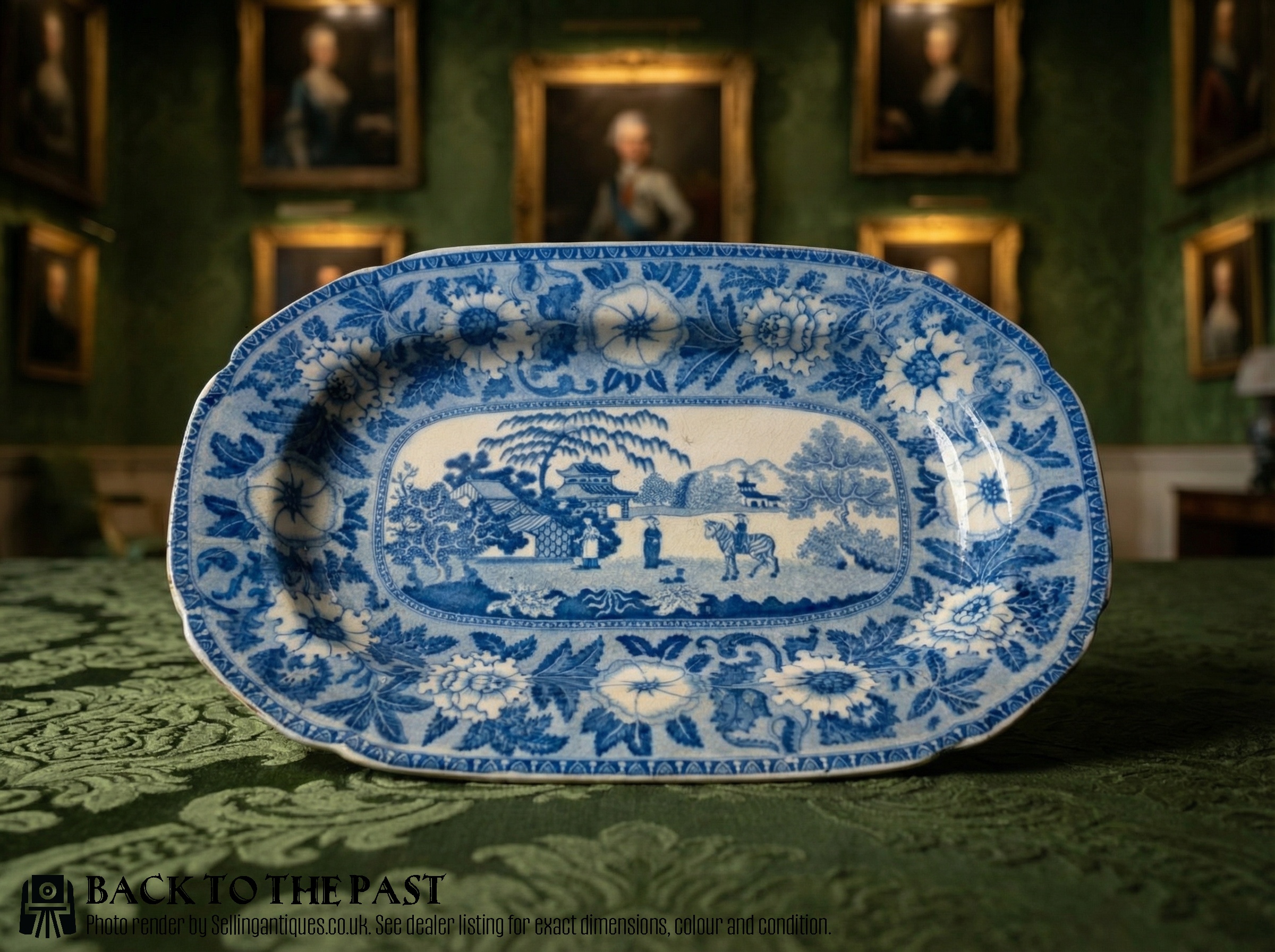
When you search for regency blue white pottery, you encounter serving platters, decorative plates, tureens, and footbaths originating from Georgian, Regency, and Victorian periods. These objects display intricate cobalt blue designs transferred onto light-coloured ceramic bodies, spanning subjects from topographical views to classical ruins.
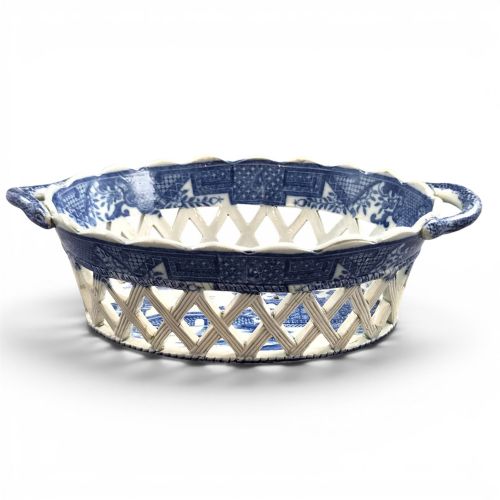
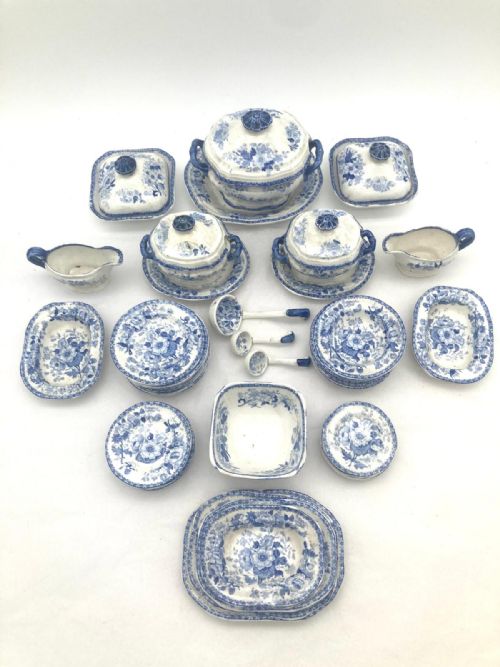
The pieces appearing most frequently on this page range from large meat platters and footed bowls to child's service sets and chestnut baskets. Makers utilised specific patterns such as Long Bridge, Tower, and various topographical scenes to decorate earthenware and pearlware forms.
How they were made
Potters shaped earthenware and pearlware bodies before applying cobalt blue designs through transfer printing, a technique that allowed intricate pictorial scenes to be replicated onto curved ceramic surfaces. A transparent glaze sealed the print before firing.
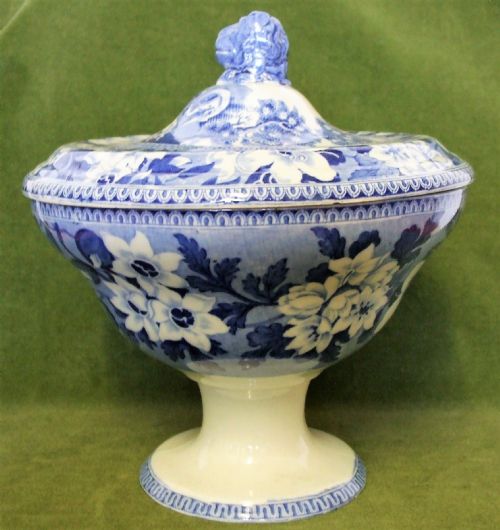
Makers formed specialised items like reticulated chestnut baskets, footbaths, and tureens with moulded details such as lion head covers, combining functional utility with decorative moulded handles and pierced rims.
Regency Blue White Pottery Retail Price Guide 2026
Typical asking prices for regency blue white pottery among the pieces listed under this phrase on Sellingantiques today, from the lower quarter to the upper quarter. They describe what is for sale here now, not the wider market.
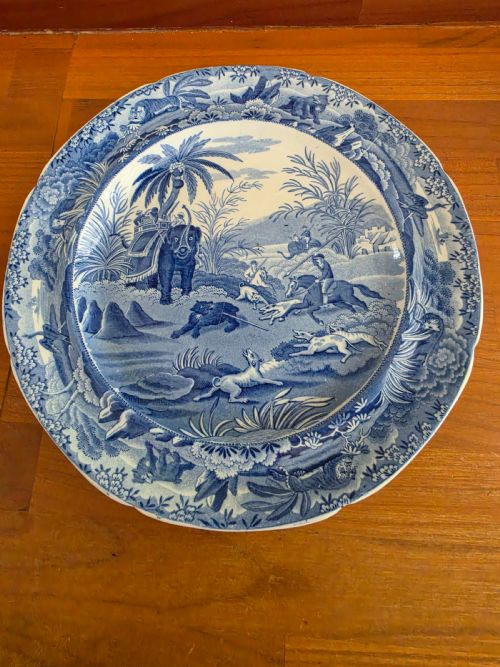
At least one unfortunate bear met its end on a Spode plate.
What varies in quality
The clarity and depth of the cobalt blue transfer print determine the visual success of the design, distinguishing sharp, well-defined scenes from smudged or uneven applications. The crispness of moulded elements like pierced basket borders and handles also dictates the refinement of the piece.
The sophistication of the ceramic body itself creates distinction, where lighter pearlware variants and finely potted earthenware show greater ambition than heavier utilitarian wares. The completeness of matched sets, such as tureens with corresponding bases and covers, elevates the standing of the pottery.
Davenport·Spode·J.W.R.·John Rogers & Son·Ridgway·Heathcote·Minton·Copeland & Garrett·Wedgwood·William Adam
The Regency Blue White Pottery Glossary
- Transferware
- Pottery decorated by printing a design from a copper plate onto paper and transferring it onto the ceramic surface before glazing. This technique revolutionised mass production of blue and white patterns.
- Pearlware
- A refined earthenware developed in the late eighteenth century with a bluish glaze that pooled slightly in recesses to mimic Chinese export porcelain. It frequently forms the base for Regency blue and white pottery.
- Reticulated
- Having an openwork pattern resembling a net or lattice, commonly found on the rims of chestnut baskets and dessert plates. This pierced decoration required careful manual cutting before firing.
- Footbath
- A large vessel designed for washing feet, adapted in ceramic production to hold water for domestic use. These substantial pieces often featured heavy handles and elaborate transfer-printed landscapes.
- Tureen
- A deep covered serving bowl used for soup or sauces at the dining table. Matching stands and lion head covers frequently accompanied these service pieces.
Regency Blue White Pottery: Frequently Asked Questions
How do I care for regency blue white pottery?
Wash these ceramic items gently by hand in warm water using mild soap, avoiding harsh scrubbing or modern dishwashers that can damage the old glaze and ceramic body.
Display them away from direct sunlight and extreme temperature fluctuations to protect the integrity of the earthenware and the transfer-printed surface over time.
Were these pieces used daily?
Many items like meat platters, plates, and tureens served practical roles on dining tables during the Georgian and Regency periods, accommodating large communal meals.
Other forms such as chestnut baskets and footbaths fulfilled specialised domestic duties in wealthy households, combining utility with decorative display.
What subjects appear on these ceramics?
The transfer prints depict a wide variety of scenes, ranging from classical architectural views and foreign landscapes to topographical British settings and literary or animal patterns.
Chinoiserie motifs and romanticized foreign views also proved extremely popular among buyers during the Regency and early Victorian eras.