






Regency Ball Frame Mirror
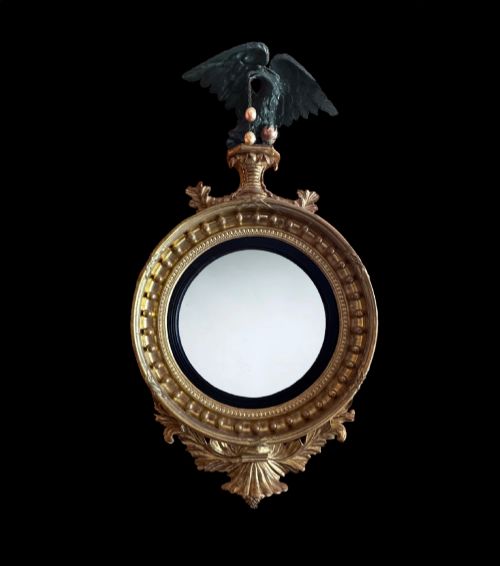
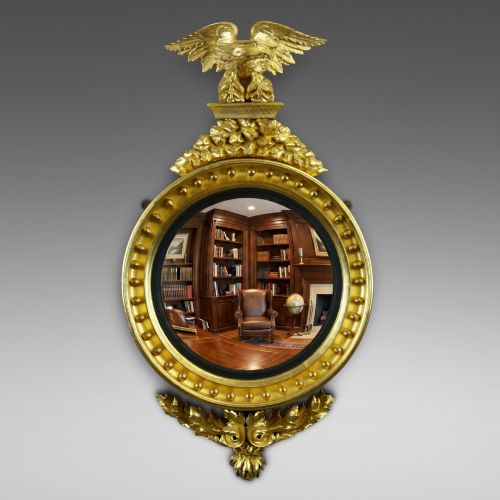
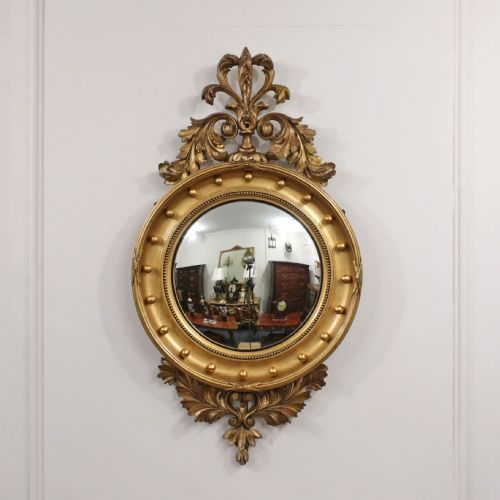
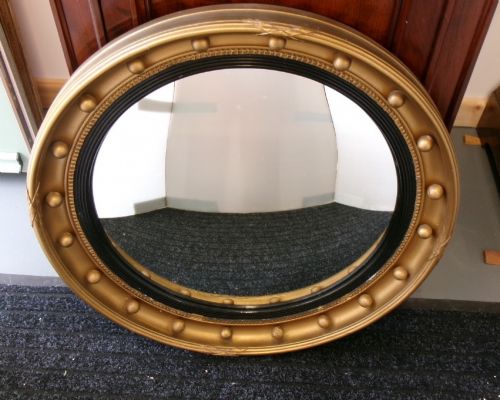
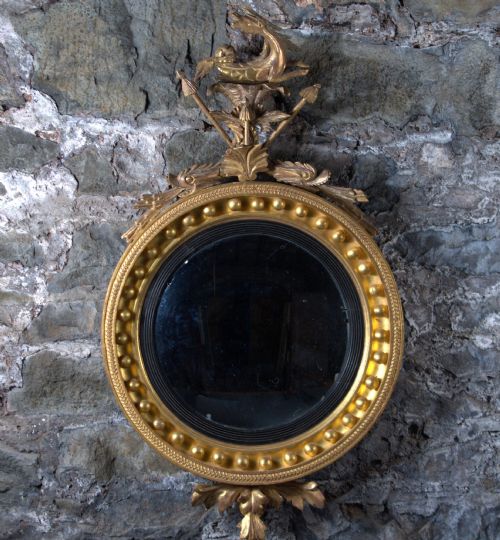
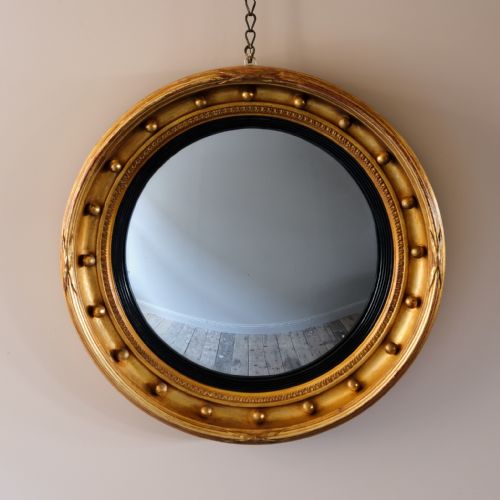
A regency ball frame mirror brings light and depth into a room through its curved convex glass.
Regency Ball Frame Mirror
When you search for a regency ball frame mirror, you encounter circular wall mirrors designed to draw light across an interior space. These pieces originate primarily from the Regency period and the nineteenth century, alongside later revivals from the Victorian, Edwardian and early twentieth century eras.
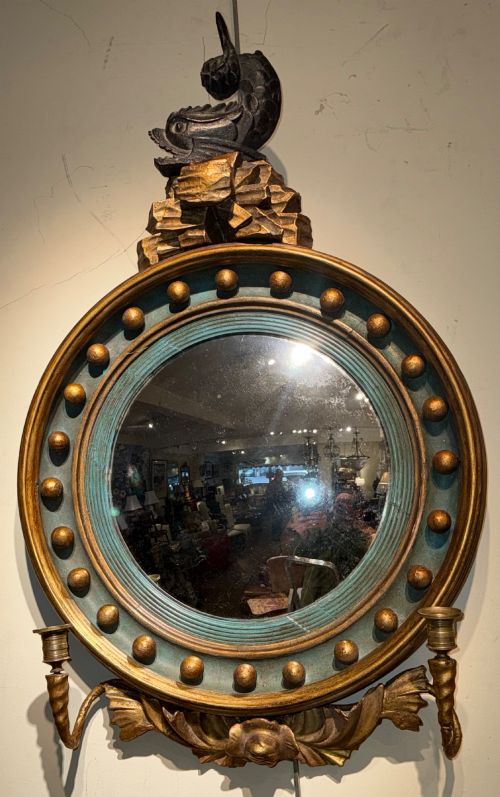
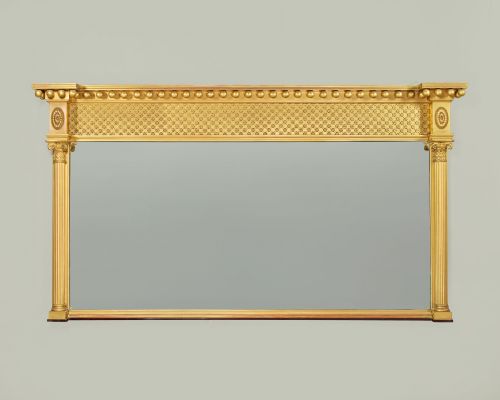
The most common form on this page is the convex wall mirror, often framed in giltwood with circular proportions. You also meet overmantel mirrors and hall mirrors, featuring styles that range from grand Regency designs down to smaller antique formats.
Makers shaped these circular frames from timber and composition, frequently incorporating ebonised wood or verre eglomise panels. Surviving examples demonstrate how these optical looking glasses served both practical and decorative functions in period homes.
Judging quality
The standard of carving and the crispness of the composition ornamentation dictate the visual strength of the frame. Finer examples retain their original gilding and retain the depth of detail intended by the maker.
The quality of the curved glass pane contributes heavily to the character of the piece, with clearer reflections and minimal distortion marking superior examples. The integrity of the underlying wooden structure and joinery also separates better preserved pieces from heavily altered ones.
Some convex frames feature dragons perched atop the glass, keeping a watchful glass eye over the room.
The Regency Ball Frame Mirror Glossary
- Convex mirror
- A circular looking glass with an outward-curving surface that produces a wide-angle reflection of the interior. This optical design was intended to gather light from across an entire room.
- Giltwood
- Timber coated with a thin layer of gold leaf over a prepared ground. It provides the bright reflective surface characteristic of many antique frames.
- Gesso
- A plaster-like mixture applied to wood frames to create a smooth surface for carving or gilding. It allowed makers to achieve sharp decorative mouldings.
- Verre eglomise
- A process of cold painting and gilding on the reverse side of glass. It frequently appears in the upper or lower panels of Regency mirrors.
- Ebonised wood
- Timber treated to imitate ebony, producing a dense black finish. This technique offers a sharp visual contrast against gilded elements.
Regency Ball Frame Mirror: Frequently Asked Questions
What is a convex mirror?
A convex mirror uses a curved glass disc to reflect a wide, panoramic view of a room. The optical effect captures light from multiple angles and brightens darker spaces.
These pieces were traditionally hung in reception rooms and dining spaces to assist with illumination before electric lighting became common.
How do I hang a heavy mirror?
Secure hanging requires locating wall studs or using heavy-duty wall anchors rated for the weight of the frame. The fixing point must support the downward pull safely.
Consulting a professional installer ensures the mirror stays secure against the wall without straining the frame construction.
How do I clean antique glass?
Use a soft, dry microfibre cloth to dust the glass surface gently. Avoid spraying liquid cleaner directly onto the mirror, as moisture can seep behind the silvering.
Applying cleaner to the cloth first prevents liquid from pooling at the edges of the frame where it might cause damage.
Are these mirrors original Regency?
The selection includes genuine Regency period pieces alongside later Victorian, Edwardian, and twentieth century revival examples. Examining the construction materials helps determine the correct age.
Stylistic cues and the composition of the frame often point to whether a piece belongs to the early nineteenth century or a later period.