
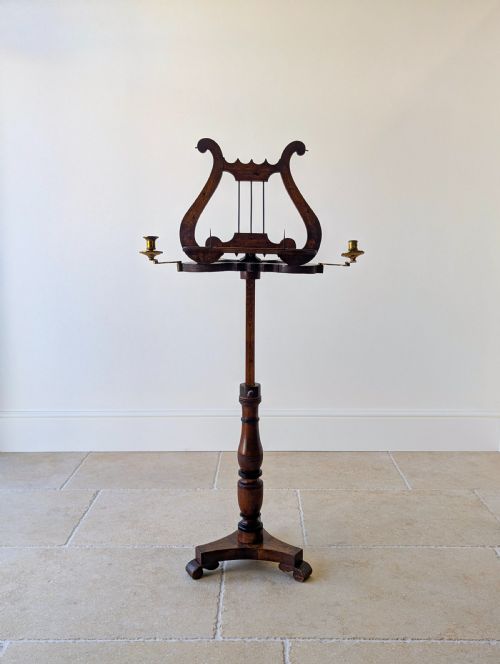


Regency Adjustable Stand
A regency adjustable stand brings mechanical ingenuity to domestic life, offering flexible height and angle for reading, music, or illumination.
Regency Adjustable Stand
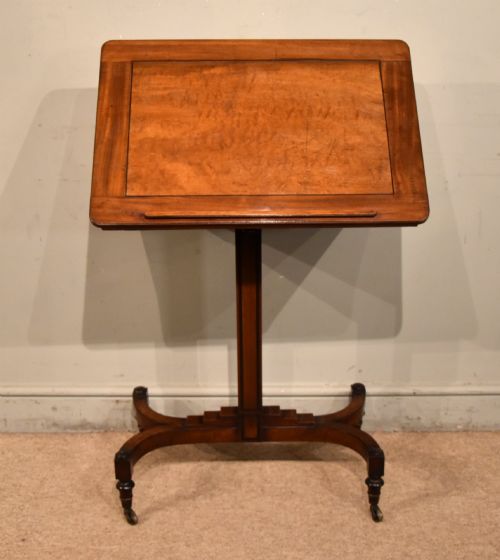
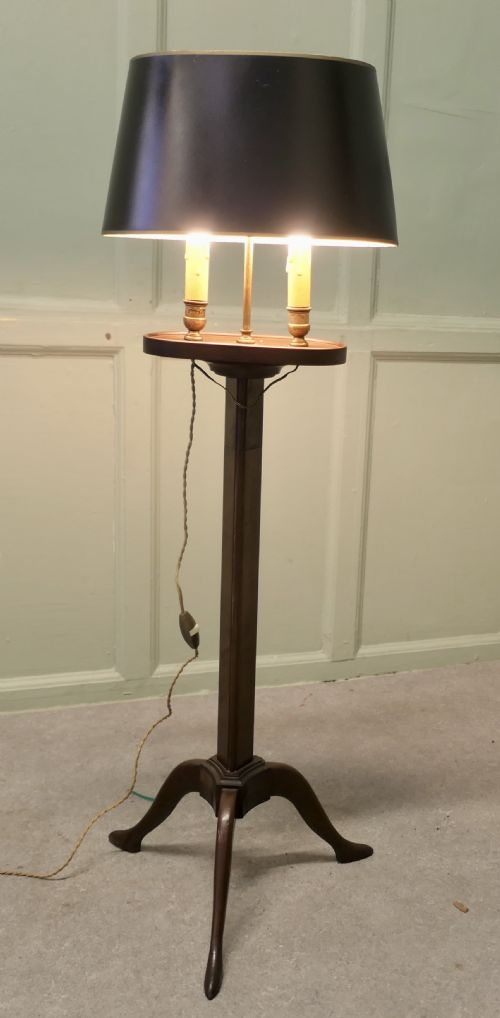
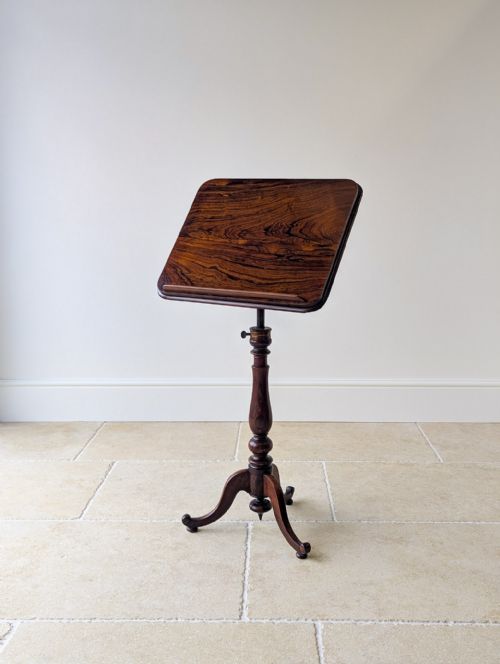
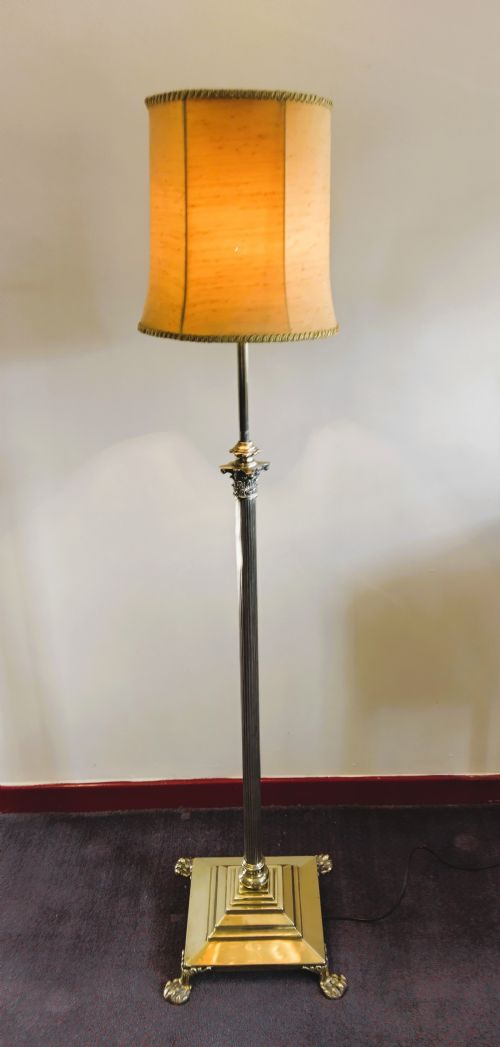
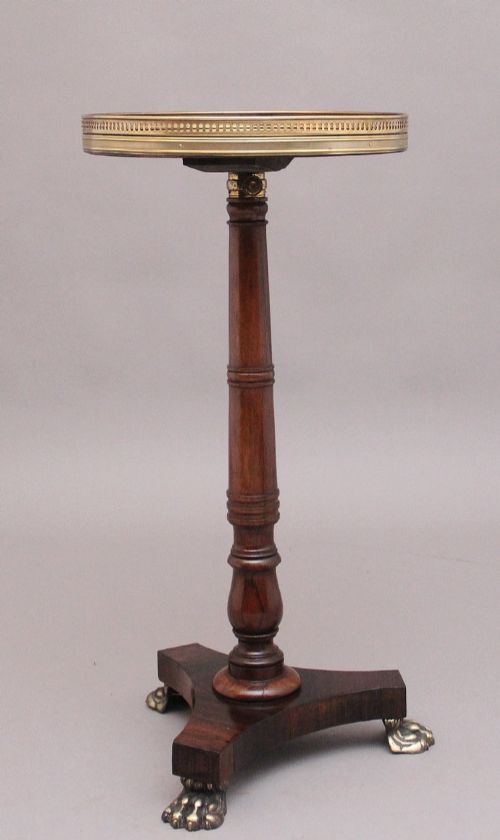
A regency adjustable stand encompasses a variety of domestic furnishings designed to alter in height or position, combining utility with decorative refinement. These pieces span music stands, reading tables, pole screens, and candlesticks originating primarily from the Georgian, Regency, and Victorian periods.
What varies in quality
Quality rests in the precision of the mechanical engineering and the choice of secondary timbers. Finer examples feature smoothly operating brass screws, tightly fitted telescopic joints, and well-figured mahogany or rosewood veneers that remain flush with the frame.
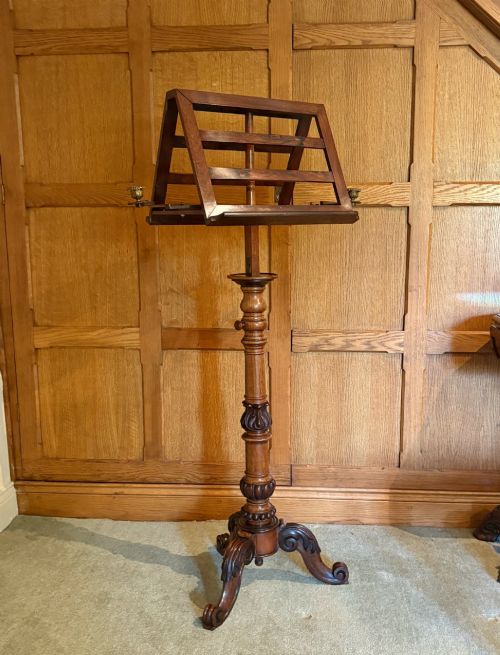
The sophistication of the carving, particularly on lyre-form music stands or pillar supports, distinguishes standard workshop production from pieces bearing attributed or marked cabinet-making provenance.
Listings include mahogany, rosewood, oak, and walnut, alongside brass, copper, and Sheffield plate.
Gillows
The Regency Adjustable Stand Glossary
- Telescopic
- A mechanism allowing one cylinder to slide inside another to alter height. This feature is commonly found on candlesticks and reading stands.
- Duet stand
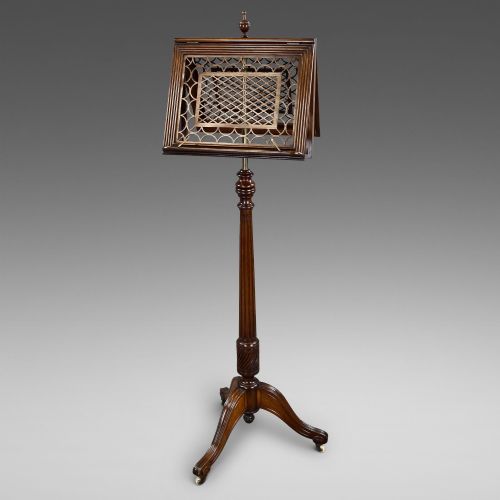
- A wider music stand designed to hold scores for two musicians simultaneously. These pieces often feature folding lecterns and robust tripod bases.
- Pole screen
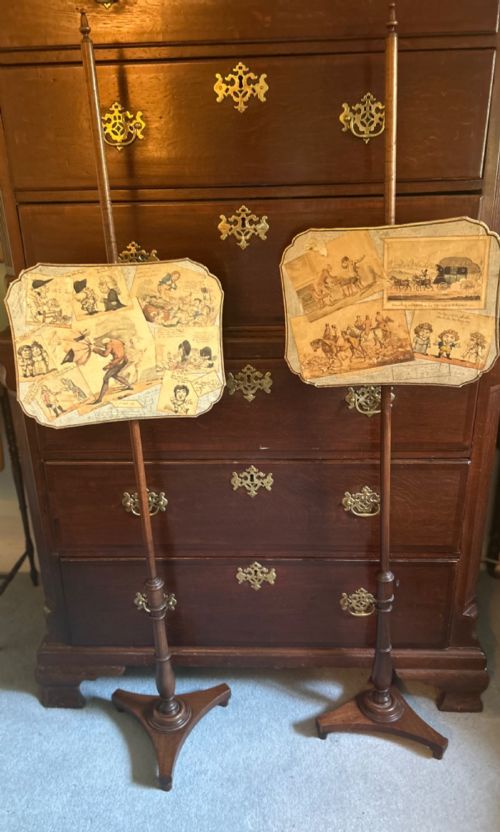
- A vertical stand holding an adjustable needlework panel or print to shield the face from fireplace heat. The screen slides up and down on a central wooden pole.
- Lyre-form
- A decorative motif shaped like an ancient musical instrument, frequently utilised for the central support of music stands. It combines structural rigidity with classical elegance.
- Sheffield plate
- A fused composite material made by applying a thin sheet of silver to a thicker copper base. It was widely utilised for adjustable candlesticks before modern electroplating.
Regency Adjustable Stand: Frequently Asked Questions
Where were music stands placed?
These pieces sat near pianos, in music rooms, or beside seating areas in drawing rooms during recital evenings. Their adjustable lecterns held sheet music or heavy folios at the correct angle for performers.
Today, they serve equally well as independent book holders or decorative display pieces in studies and libraries.
How do I distinguish Regency from Victorian examples?
Regency stands typically display restrained neoclassical lines, brass inlay, and tapered reeded legs inspired by ancient Greek and Roman forms. Rosewood and figured mahogany predominate in this earlier phase.
Victorian pieces often exhibit heavier proportions, bolder carving, and darker finishes, occasionally incorporating walnut or oak alongside traditional mahogany.
What maintenance do moving brass parts need?
Keep telescopic brass stems clean and free from dust to prevent scratching the inner sliding tube. A light application of microcrystalline wax protects the exterior metal surface.
Avoid using harsh chemical polishes that strip historical patination from the brass components and surrounding timber.