




Duet Music Lectern
A duet music lectern holds scores for two players side by side, bringing a practical centrepiece of nineteenth-century musical life into the modern room.
Duet Music Lectern
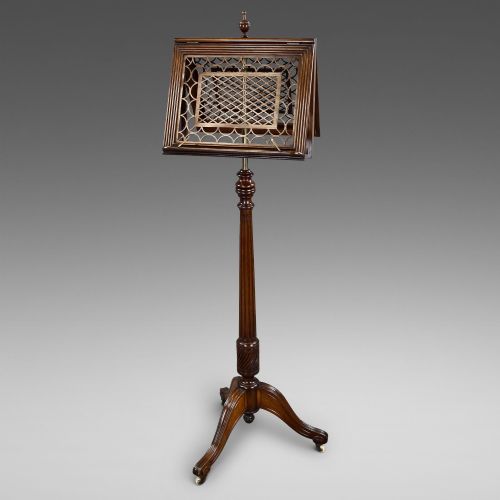
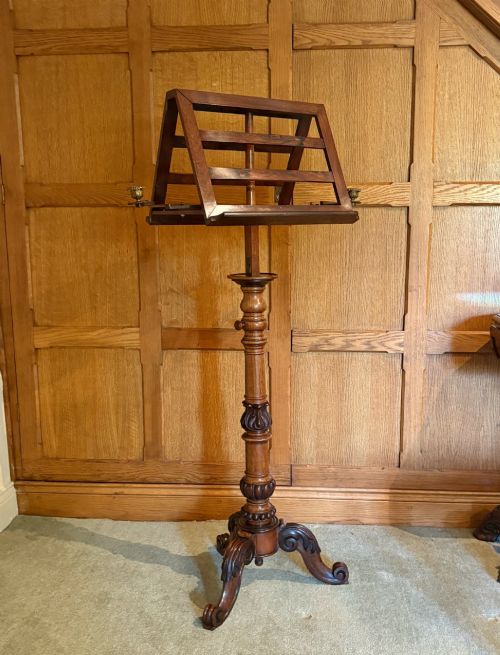
A duet music lectern is designed to accommodate two musicians reading from the same volume or shared sheets, appearing primarily in nineteenth-century forms across this selection. These stands emerge in Georgian, Regency, George IV, William IV, and Victorian periods, stretching from the late eighteenth century into the final decades of the victorian era.
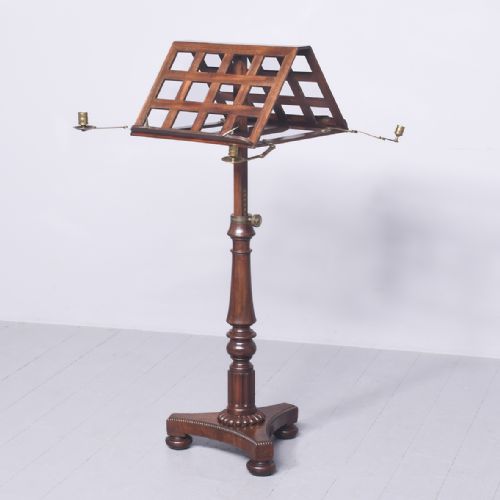
The objects seen here take the form of adjustable music stands and music stands, sometimes noted as folio stands or book stands. Buyers will most frequently encounter mahogany and walnut examples, alongside rarer pieces in burr walnut, oak, brass, and rosewood.
Makers such as Gillows contributed to this tradition, producing adjustable stands that allowed performers to alter the height and angle of the score. These furnishings span formal drawing-room pieces with fretted details and inlaid burr walnut to robust country examples in solid oak.
Materials and construction
Cabinetmakers constructed these lecterns using dense hardwoods like mahogany, rosewood, and walnut, frequently selecting burr veneers and decorative inlay to enrich the visual surface of the wood. Solid oak and brass also appear, providing the structural rigidity required for adjustable mechanisms supporting heavy folios and bound scores.
Joinery techniques united turned columns, adjustable shafts, and branching desk tops designed to tilt or rotate for two performers. Workshops integrated brass ratchets and screw mechanisms to control height and reading angles reliably over decades of daily use.
Listings feature mahogany, burr walnut, walnut, rosewood, oak, and brass across Georgian and Victorian periods.
Judging quality and character
Quality rests in the selection of timber figures, such as highly grained burr walnut or rich flame mahogany, paired with crisp fretted carving or precise inlay work. The sophistication of the adjustable mechanism also separates standard production from superior pieces attributed to workshops like Gillows.
Proportion and stability dictate the standing presence of each piece, where slender turned columns meet balanced tripod or platform bases without wobble. The integrity of the original brass fittings and the smoothness of the adjustment actions complete the assessment of a finer stand.
GILLOWS
The Duet Music Lectern Glossary
- Duet stand
- A music stand featuring twin reading desks designed for two musicians to share a single score. These stands often incorporate adjustable stems and rotating platforms.
- Folio stand
- A low or adjustable stand intended to hold large bound portfolios of sheet music or prints. They share mechanical adjustments with standard music lecterns.
- Burr walnut
- A veneer sliced from the gnarly growths of a walnut tree, prized for its swirling, highly figured grain pattern. Cabinetmakers used it on high-status Victorian furniture.
- Fretted
- Woodwork pierced or cut through with decorative open patterns. This technique lightens the visual weight of heavy book ledges.
Duet Music Lectern: Frequently Asked Questions
What is a duet music lectern used for?
A duet music lectern supports two musicians reading from the same open score or book simultaneously. These pieces were placed in drawing rooms or music rooms to facilitate shared practice and performance.
Today, they serve equally well as freestanding book stands for displaying large volumes, art folios, or tablets in a modern study or living space.
How do I adjust the height and angle?
Most period stands utilise a central brass screw mechanism or a ratcheted bracket hidden behind the reading desk. These components allow the user to raise the stem and tilt the ledges independently.
Care should be taken when operating nineteenth-century metalwork to ensure the mechanisms move freely without forcing seized threads.
Which woods are most common?
Mahogany forms the majority of surviving examples, reflecting its popularity throughout the Georgian and Victorian periods. Walnut, rosewood, and oak also appear regularly across different regional workshops.
Figured timbers like burr walnut and inlaid rosewood typically indicate more decorative drawing-room pieces rather than utilitarian room furnishings.
How do I date a music stand?
Dating relies on stylistic markers such as the heavy classical proportions of Regency pieces versus the turned columns and fretwork of later Victorian examples. Secondary woods, joinery methods, and the design of the brass adjustment screws provide further chronological clues.
Comparative pieces in archives help narrow the window of manufacture when maker marks are absent.