

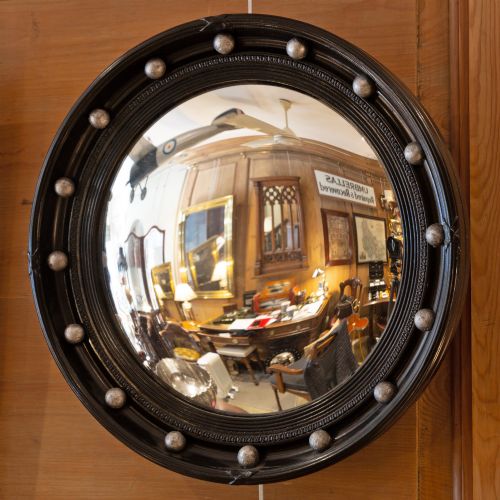
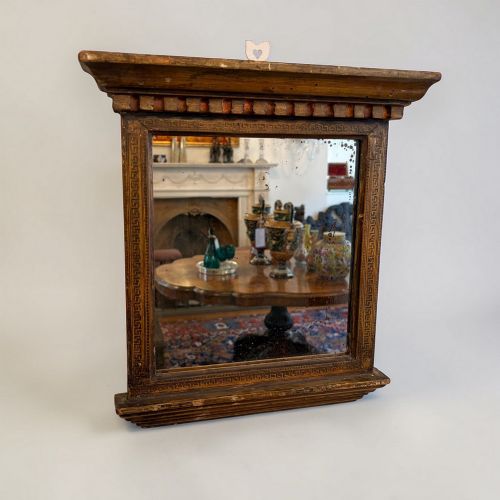
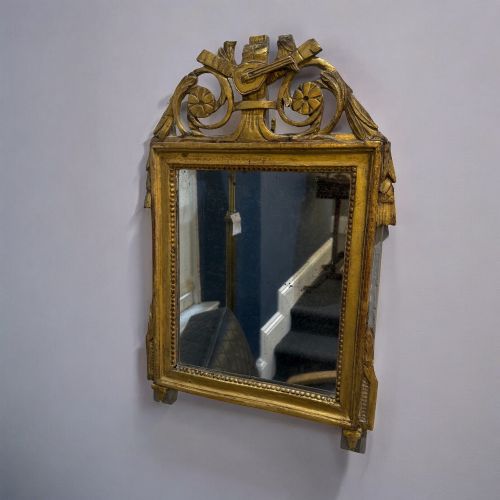


Regency Accent Mirror
A regency accent mirror brings historic focal depth to a room through circular convex glass and gilded frames.
Regency Accent Mirror
A regency accent mirror draws the eye across a room through curved glass and ornate framing. Pieces matching this search phrase span genuine Regency periods alongside later Victorian, 1930, and mid-century revivals.
Convex and pier glass configurations dominate the selection. Buyers encounter small wall-hung roundels alongside larger gilt hanging hall mirrors and overmantle forms.
Construction and materials
Wood provides the structural core for traditional frames, shaped and layered with gesso before receiving a rich coat of gilding. Ebonised wood and chrome also appear in later interpretations.
Reflective surfaces utilise mirrored glass shaped to fit circular or rectangular rebates. Frames combine carved wooden elements with moulded gesso detailing to achieve their characteristic profiles.
Regency Accent Mirror Retail Price Guide 2026
Typical asking prices for regency accent mirror among the pieces listed under this phrase on Sellingantiques today, from the lower quarter to the upper quarter. They describe what is for sale here now, not the wider market.
Materials range from traditional giltwood and gesso to ebonised wood, chrome, and mirrored glass.
Assessing quality and craftsmanship
Finer examples demonstrate crisp moulding in the gesso ornamentation and deep, even application of gold leaf across the wooden substrate. Lesser pieces show softening in decorative details and simpler surface finishes.
The clarity and integrity of the mirrored glass plate distinguish superior specimens. Original convex glass retaining minor age foxing commands greater appreciation than modern replacement plates.
The Regency Accent Mirror Glossary
- Convex mirror
- A round mirror with a bulging spherical glass surface that distorts the reflection to capture a wide-angle view of the interior. These pieces were often placed in parlours to monitor guests.
- Gesso
- A plaster-like mixture applied to wood frames to create a smooth surface for gilding. Skilled artisans carved intricate motifs directly into this dried layer.
- Giltwood
- Timber coated in thin sheets of gold leaf. It defines the lustrous appearance of traditional frames.
- Pier mirror
- A tall glass designed to hang on the wall between two windows. It frequently sat above a matching console table.
- Ebonised
- Wood finished with a dark stain or polish to imitate ebony. This technique highlights neoclassical silhouettes.
Regency Accent Mirror: Frequently Asked Questions
Where should I hang a convex mirror?
Convex mirrors work best opposite a window or in a narrow hallway where their wide-angle reflection can capture and bounce light around the space.
Because they project the entire room into a compact circle, positioning them at eye level in a reception room makes a striking visual impact.
How do I date a gilt mirror?
Dating relies on examining the construction methods of the wooden frame, the composition of the gesso, and the backboards. Earlier pieces often display hand-carved elements and older joinery.
Later revivals from the Victorian era or the twentieth century tend to use machine-moulded ornamentation and different fastening techniques.
Are these mirrors heavy?
Many frames carry substantial weight due to the density of the timber, gesso layers, and thick glass plates. Proper wall fixings into masonry or studs are essential.
Wall mirrors require sturdy hanging wire or brackets secured firmly to the frame structure rather than the decorative moulding.
What is a pier mirror?
A pier mirror is a vertical wall glass traditionally hung on the narrow wall space between two windows. They were often paired with console or side tables beneath.
This arrangement maximised natural light in nineteenth-century drawing rooms before widespread electricity.