
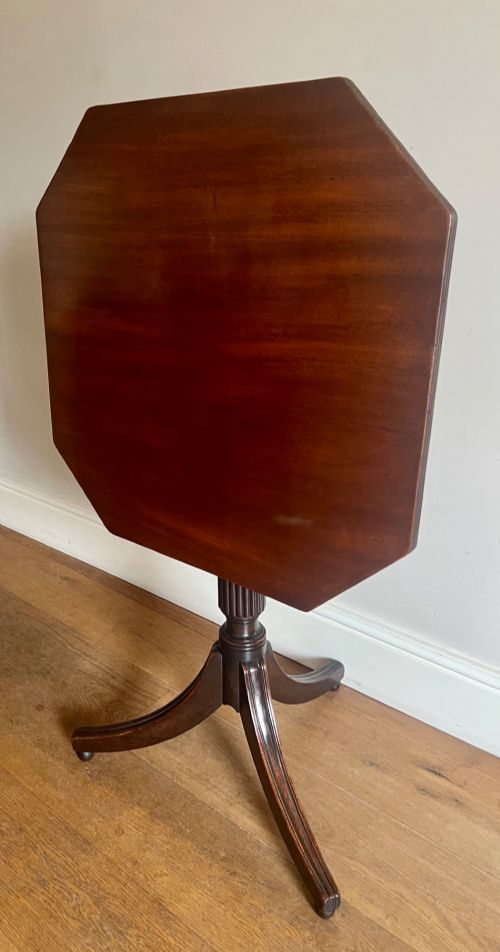


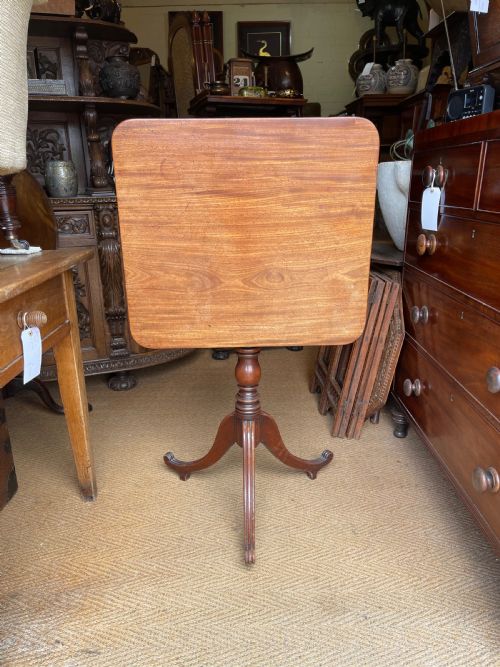


Reeded Leg Tripod Table
A reeded leg tripod table brings elegant Georgian and Regency craftsmanship into a room as an adaptable occasional or side table.
What these tables are
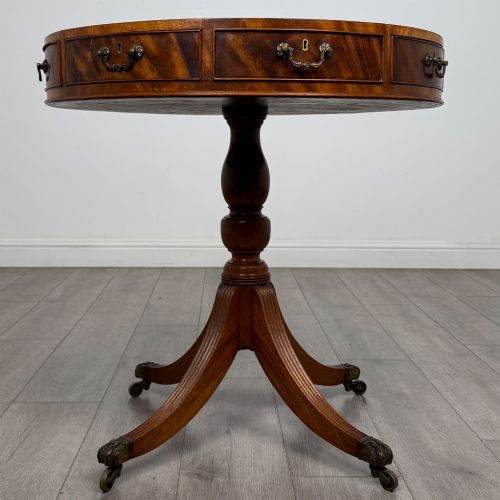
When you search for a reeded leg tripod table, you are looking at occasional and side tables originating from the Georgian and Regency periods. The forms include snap top tables, supper tables, tilt top tables, and revolving drum tables. Mahogany is the primary timber found across these pieces, accompanied by occasional examples in rosewood and satinwood.
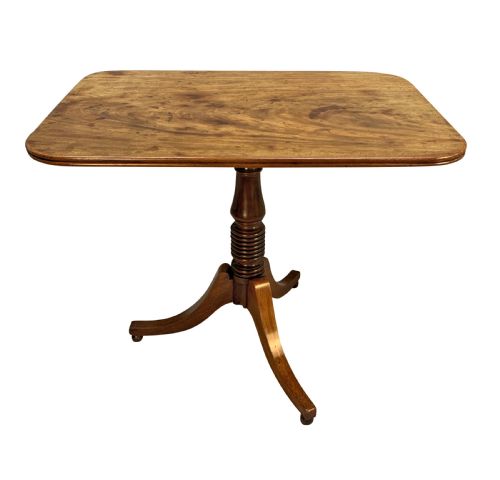
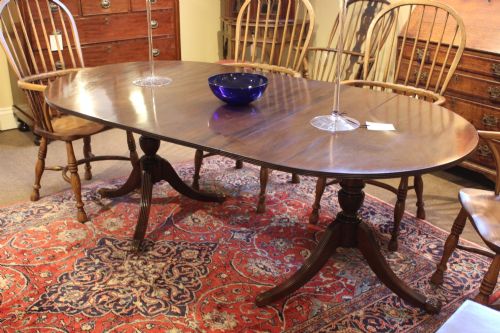
The version you are most likely to meet on this page is a mahogany occasional table supported by a central column and a three-legged base. These tables often feature tilt tops or snap tops for convenient storage when not in use. Their origins span George III, Georgian, and nineteenth-century workshops, maintaining traditional proportions suited to domestic spaces.
What varies in quality
The distinction between ordinary and exceptional pieces lies in the crispness of the timber turning and the precision of the reeding on the legs. Superior examples exhibit fine natural colour and surface preservation that highlight the underlying quality of the mahogany.
Finer construction is also visible in the seamless operation of the tilt mechanism and the integration of decorative details such as crossbanding and brass castors. Lesser examples rely on simpler turned columns without the sophisticated carving and inlay seen on documented workshop pieces.
Retail Price Guide 2026
Typical UK retail prices for reeded leg tripod table, calculated from the Sellingantiques database of over a million retail prices indexed since 2003. This retail price guide relies exclusively on Sellingantiques data; no external sources or auction records are used, so the figures do not describe the wider market.
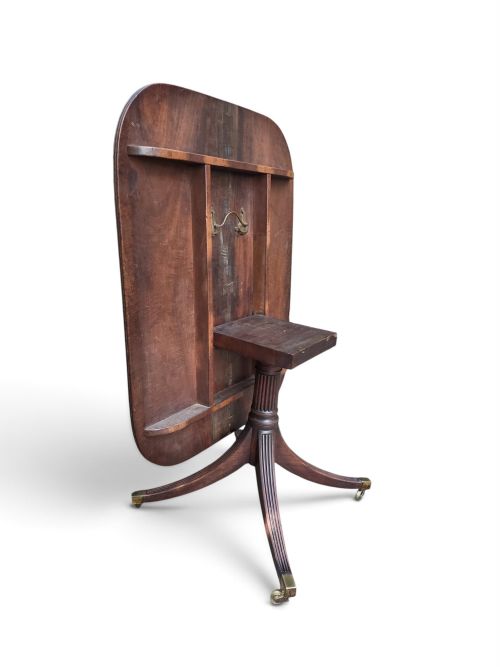
Tilt tops were originally designed to hide tables flat against drawing room walls like paintings when tea was finished.
Gillow
The Reeded Leg Tripod Table Glossary
- Reeded
- A decorative moulding consisting of parallel convex strips resembling parallel reeds placed side by side. This carving appears frequently on the legs of Regency tripod tables.
- Tripod table
- A small freestanding table supported by a single central pillar resting on three feet. This form became popular during the eighteenth century for serving tea or holding books.
- Snap top table
- A table with a hinged top that can be tilted vertically when not in use. It locks into a horizontal position with a simple wooden catch.
- Crossbanded
- A border technique where thin strips of veneer are laid across the grain of the main surface. It creates a contrasting frame around the edge of table tops.
- Sabre leg
- A concave curving leg that tapers toward the foot, typical of Regency furniture design. These legs frequently terminate in brass castors.
Frequently Asked Questions
What is a reeded leg tripod table?
It is a compact occasional or side table supported by a central column and three legs featuring carved parallel reed mouldings. These pieces date primarily from the Georgian and Regency eras.
They were designed for versatility in domestic interiors, serving as tea tables, supper tables, or general display surfaces that could be moved easily about a room.
How do you use a tilt top table?
The hinged top tilts into a vertical position by releasing an under-table catch, allowing the table to stand flat against a wall when not in use. This space-saving mechanism was particularly popular in eighteenth-century drawing rooms.
To use it as a table, simply lower the top back to the horizontal position until it locks securely onto the central pillar.
What woods were used for these tables?
Mahogany is the predominant timber found across these pieces, valued for its rich colour and durability. Cabinetmakers also utilised rosewood and satinwood for decorative contrast.
Finer examples incorporate crossbanding and intricate inlay work to enhance the visual appeal of the top surface.
How do I distinguish Georgian from Regency tables?
Georgian pieces tend to display more restrained classical proportions and simpler turned columns. They often feature plain mahogany tops without extensive banding.
Regency examples frequently introduce more ornate elements such as reeded sabre legs, brass capped castors, and contrasting timber veneers inspired by classical antiquity.