
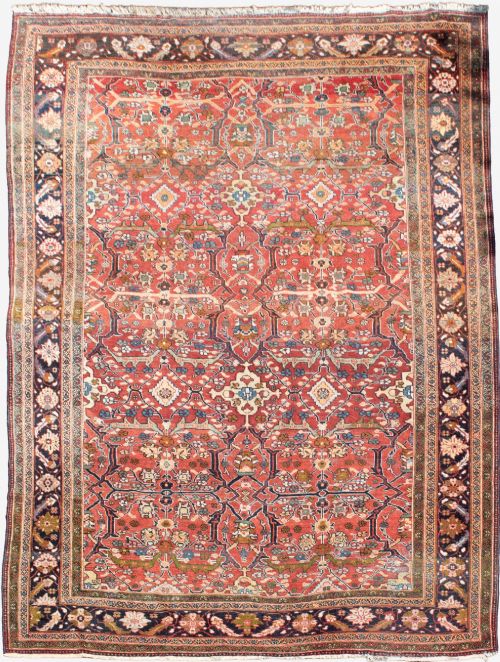


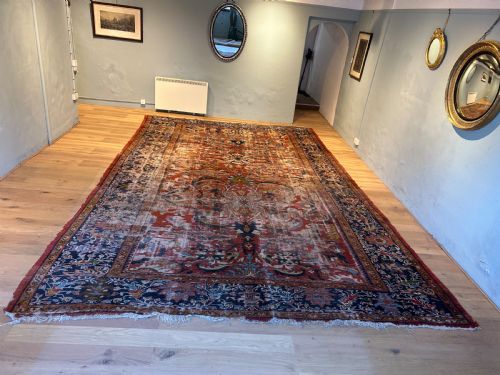


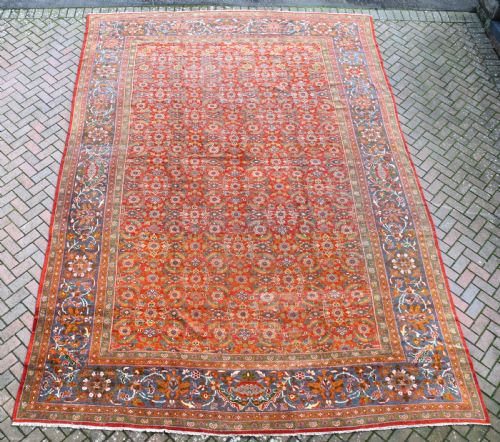


Red Ziegler Carpet
A red ziegler carpet brings room-anchoring scale and muted botanical palettes into a home, born from late nineteenth-century Persian workshops.
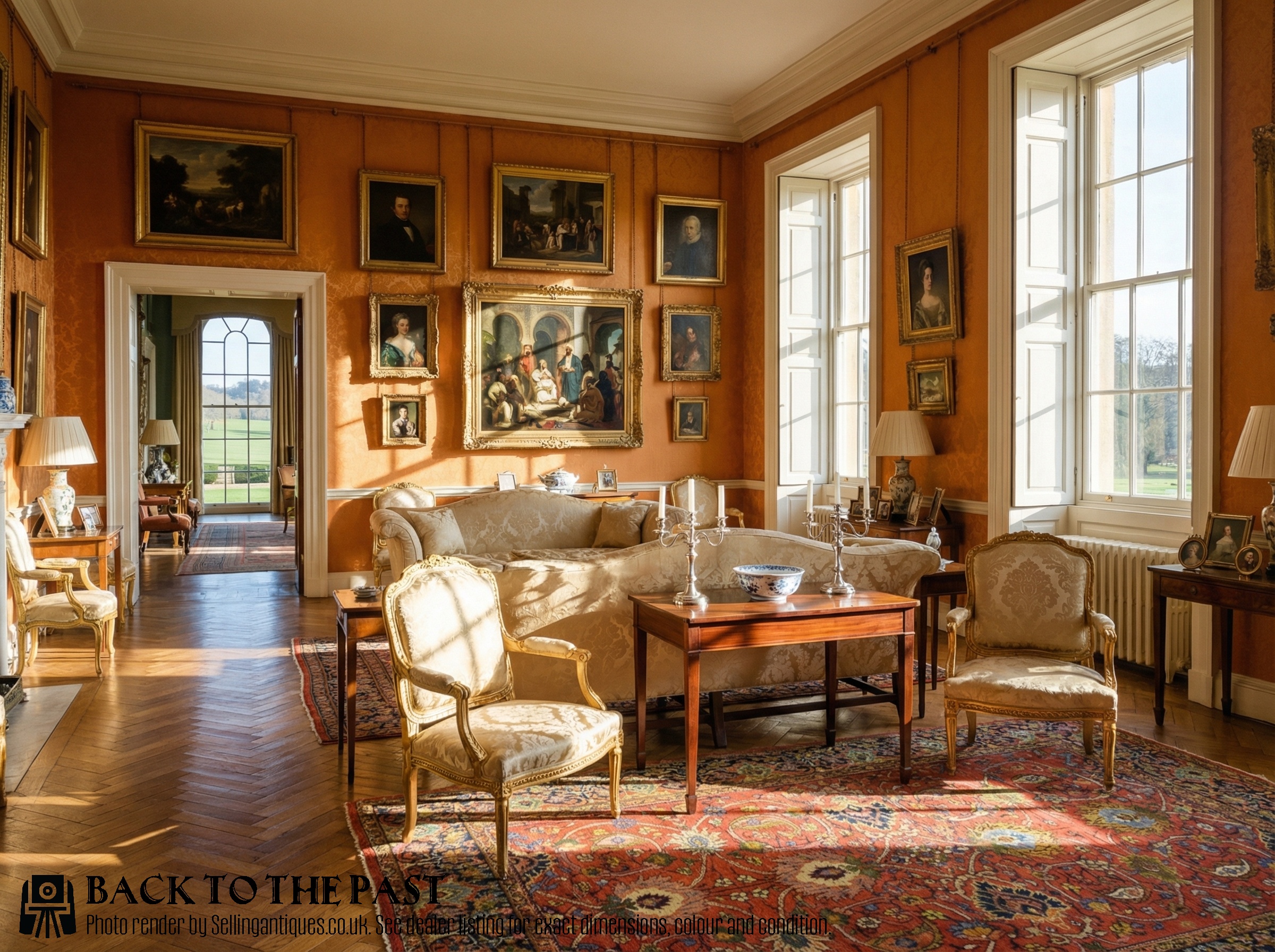
Red Ziegler Carpet
When you search for a red ziegler carpet, you are looking at large-scale floor coverings originating from Persia during the nineteenth century, specifically spanning the 1880s, 1890s, and 1900s. These pieces encompass related regional designations such as Sultanabad and Mahal rugs and carpets.
The version you are most likely to meet on this page is an antique Persian Ziegler, Sultanabad, or Mahal carpet produced around 1890. They frequently measure in generous proportions suited to country house spaces.
These floor coverings balance large floral motifs with softened red and terracotta grounds. The aesthetic developed to suit Western tastes of the period while retaining traditional Persian knotting techniques.
How they were made
Production relies upon a foundation of sturdy cotton for the warp and weft threads, providing structural stability for large formats. Wool forms the thick pile surface that absorbs dye and softens underfoot.
Weavers knotted the wool pile by hand onto the cotton grid, implementing large-scale botanical designs that distinguish these carpets from finer city rugs of the same era.
Listings show these carpets date predominantly from the 1890s, utilising hand-knotted wool pile on a cotton foundation in styles spanning Ziegler, Sultanabad, and Mahal.
What varies in quality
The nuance in these carpets lies in the handling of the wool and the proportion of the design. Superior examples display even wear across the thick pile and a harmonious softening of the red dye lots.
Drafting of the large floral motifs separates standard room-size rugs from exceptional country house carpets. The precision of the weave against the scale of the field dictates the visual impact.
Ziegler & Co
The Red Ziegler Carpet Glossary
- Ziegler & Co
- A Manchester-based firm that established production facilities in Persia during the late nineteenth century to export carpets tailored to European interiors. Their output defined this specific aesthetic category.
- Sultanabad
- A regional Persian centre of carpet production known for bold, oversized floral patterns. Pieces from this area share stylistic traits with Ziegler outputs.
- Mahal
- A term describing carpets woven in the same district as Sultanabad, often featuring grand scales and rustic charm. They frequently overlap with Ziegler designs in the market.
- Warp
- The vertical cotton threads stretched tightly on the loom that form the skeletal structure of the carpet. The visible fringe at either end consists of these extended threads.
- Weft
- The horizontal threads passed back and forth between the warp threads to lock the rows of knots in place. Together with the warp, it forms the hidden foundation.
Red Ziegler Carpet: Frequently Asked Questions
How do I clean a red ziegler carpet?
Professional specialist cleaning is essential for antique wool and cotton carpets. Regular gentle vacuuming without a beater bar removes surface dust safely.
Water and household detergents risk damaging the natural dyes and cotton foundation. Consult a conservator experienced in nineteenth-century Persian textiles for maintenance.
Will a red ziegler carpet suit modern rooms?
The muted red tones and expansive floral patterns complement contemporary minimalist furniture as well as traditional interiors. Their faded elegance adds warmth and texture to wooden or stone floors.
Because they were originally woven for large reception rooms, measure your space carefully to ensure the generous dimensions fit the room.
How do I tell a Ziegler from a Sultanabad?
Ziegler carpets often feature more open, muted fields designed specifically for the Western market of the late nineteenth century. Sultanabad carpets can display slightly denser traditional village patterns.
In practice, the workshops overlapped significantly in the region, leading to pieces that share characteristics of both designations.
What century are these carpets from?
The pieces listed originate primarily from the late nineteenth century, specifically the decades surrounding 1890. A few examples extend into the turn of the twentieth century around 1900.
This era represents the height of commercial carpet production in western Persia for European export.