






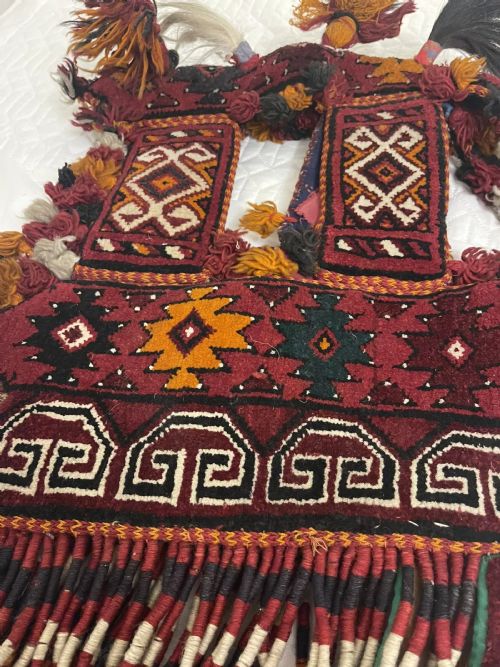
Red Wool Tribal Fringe
Red wool tribal fringe gathers the nomadic weavings and embroideries of Central Asia and Persia, offering tactile links to historic tribal life.
Red Wool Tribal Fringe
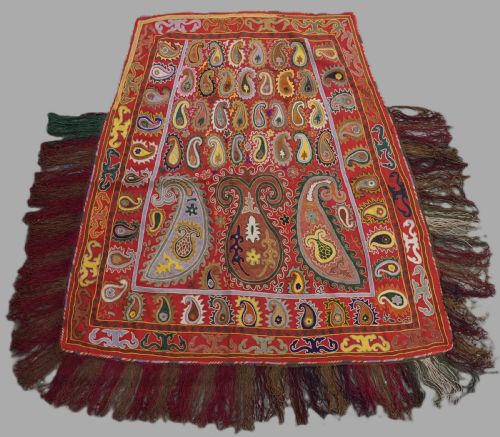
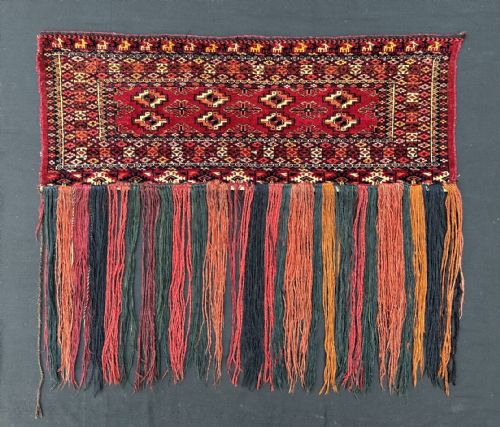
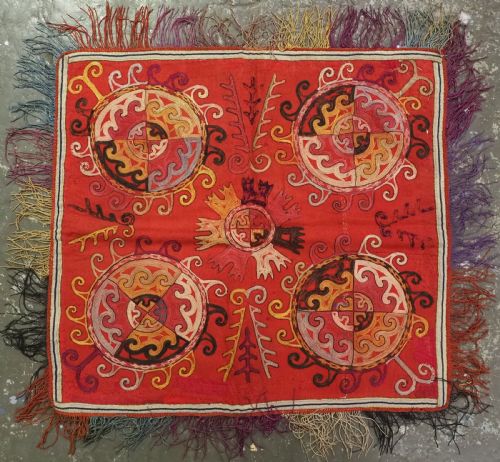
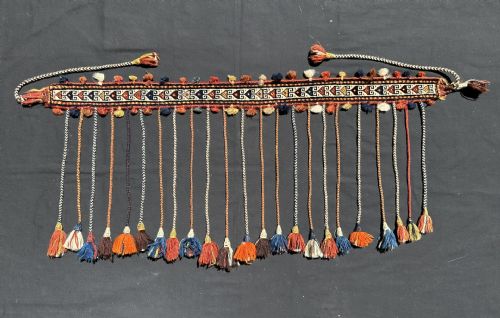
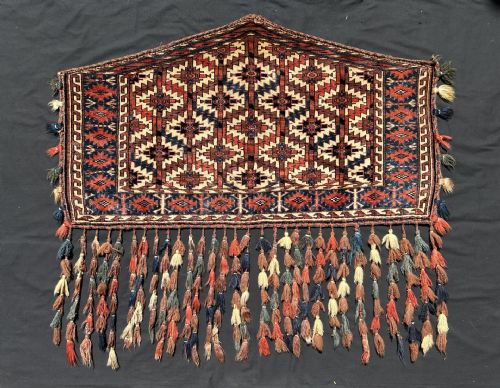
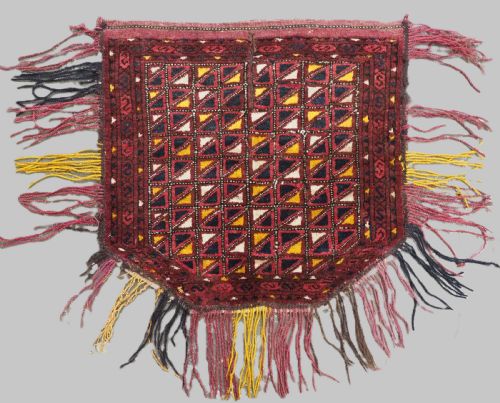
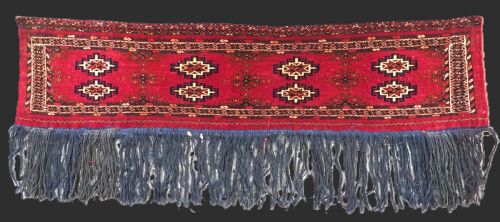
Red wool tribal fringe encompasses practical and ceremonial textiles originating from nomadic and tribal groups across Central Asia and Persia. When exploring red wool tribal fringe, buyers encounter functional objects such as torbas, saddle covers, wall hangings, and dowry embroideries produced between the late nineteenth century and the early twentieth century.
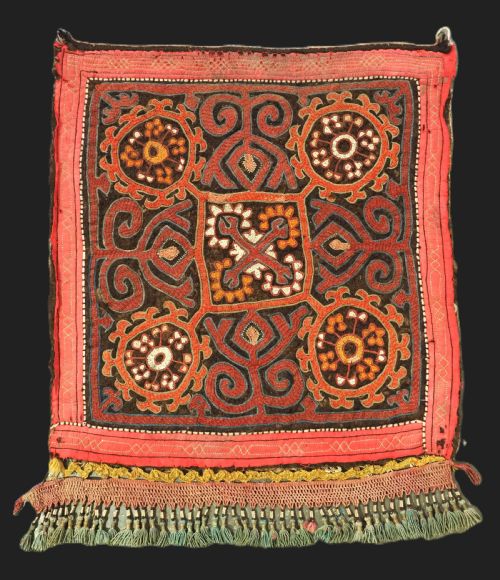
The selection on this page relies heavily on Turkmen tribal groups including the Tekke, Yomut, Ersari, and Saryk, alongside Uzbek Lakai embroideries, Kirghiz felt panels, and Qashqa'i nomadic pieces. These items served daily domestic functions or marked significant cultural events such as weddings within tribal communities.
How they were made
These textiles utilise hand-spun wool and cotton, frequently decorated with natural dyes that yield deep madder reds alongside contrasting tones. Skilled makers combined flat weaving, pile knotting, and intricate needlework embroidery to construct durable domestic items and decorative trappings.
Many surviving examples incorporate applied elements such as felt panels, silk accents, and original tassels or fringes which complete the structured composition of the textile.
Red Wool Tribal Fringe Retail Price Guide 2026
Typical asking prices for red wool tribal fringe among the pieces listed under this phrase on Sellingantiques today, from the lower quarter to the upper quarter. They describe what is for sale here now, not the wider market.
Materials documented across the page include wool, cotton, silk, felt, and natural dyes applied to flat weaves and embroideries.
What varies in quality
The distinction between standard examples and exceptional pieces rests upon the precision of the drawing and the saturation of the natural dyes. Superior items display meticulous symmetry in tribal motifs like guls and curled leaves, paired with a rich, balanced palette.
Completeness also dictates standing, as pieces retaining their original plain-weave backs, tassels, and fringe edges provide a more intact historical record than altered fragments.
The Red Wool Tribal Fringe Glossary
- Torba
- A small storage bag produced by Turkmen tribes, typically hung inside a yurt to store household possessions.
- Asmalyk
- A large, pentagonal trapping traditionally mounted on the flanks of a camel during wedding processions.
- Gul
- A repeated primary medallion motif characteristic of Turkmen carpet and textile design.
- Ilgich
- An embroidered dowry hanging created by Uzbek Lakai tribes, featuring expressive needlework.
- Flat weave
- A textile constructed by interweaving warp and weft threads without creating a pile surface.
Red Wool Tribal Fringe: Frequently Asked Questions
What are red wool tribal fringe pieces?
These items are hand-woven or embroidered textile trappings created by nomadic and tribal groups in Central Asia and Persia. They include functional bags, wall hangings, and ceremonial animal decorations.
Most examples date from the late nineteenth century to the early twentieth century. They reflect the traditional domestic and ceremonial arts of specific tribes.
How were these tribal textiles used?
Nomadic families utilised these pieces for practical storage inside tents and dwellings, or as decorative furnishings. Many items also served important roles during weddings and tribal celebrations.
Animal trappings adorned camels and horses during ceremonial processions. Smaller bags held personal possessions or domestic goods.
How do I live with these textiles?
These pieces suit wall mounting or placement on low-traffic surfaces where the weave and embroidery remain protected from heavy wear. Proper display involves supporting the weight evenly across the textile.
Keeping them away from direct sunlight preserves the natural dyes used in the wool and cotton fibres. Gentle care ensures the original fringe and tassels stay intact.
How do I identify different tribal styles?
Different tribal groups employed distinct structural patterns, colour palettes, and structural layouts. Turkmen pieces frequently feature repeating guls, while Uzbek Lakai works display distinctive chain-stitch embroidery.
Analysing the specific motifs and material combinations helps separate regional traditions. Examining the weave structure provides further clues to tribal origins.