




Red Wool Embroidered Hanging
These red wool embroidered hanging selections bring tactile warmth and nomadic artistry into modern interiors.
Red Wool Embroidered Hanging
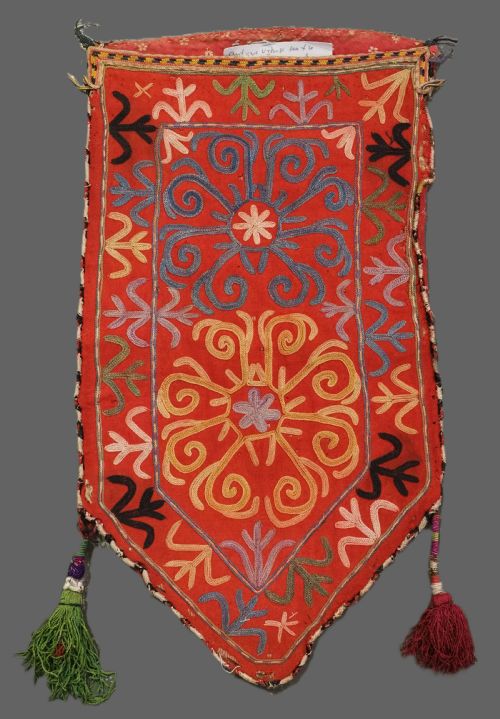
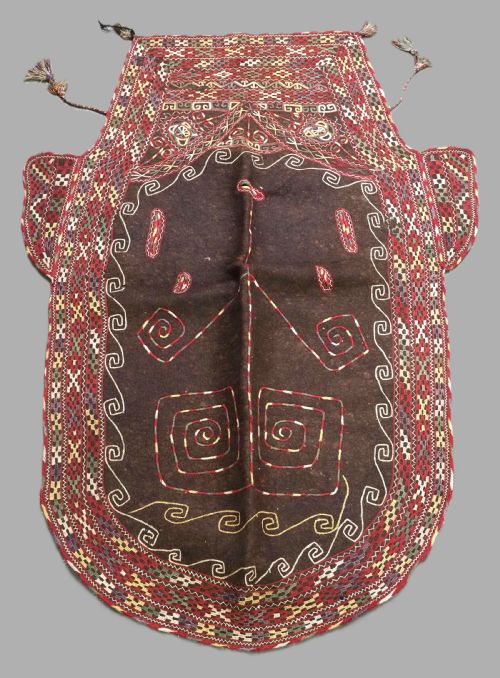
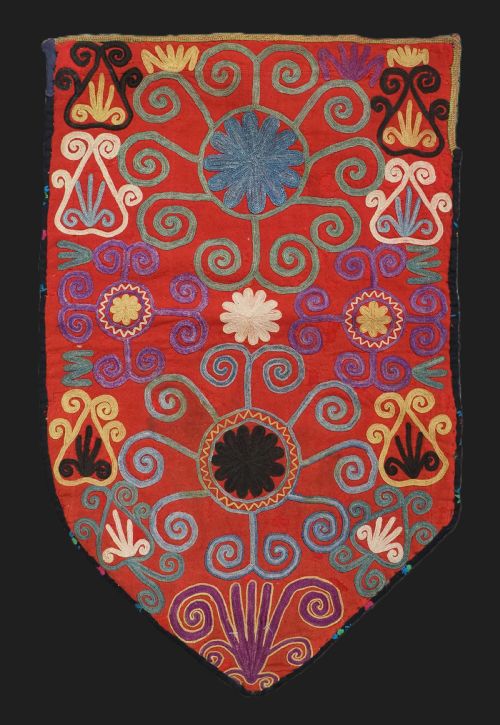
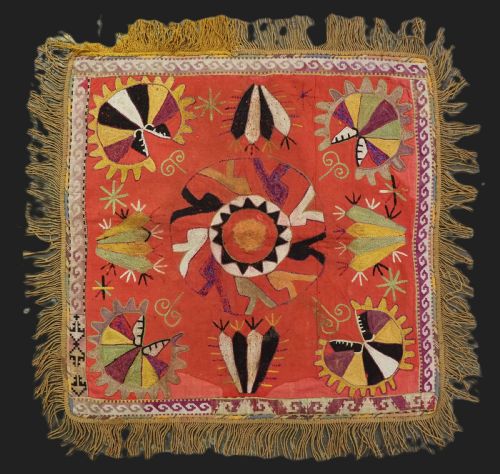
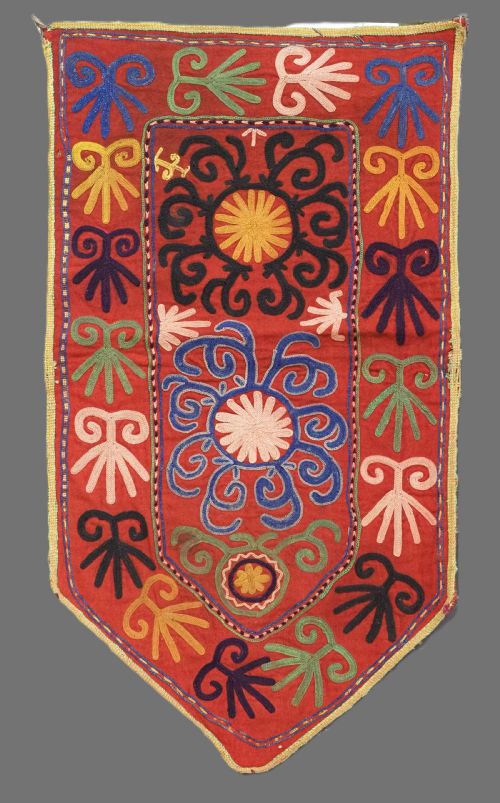
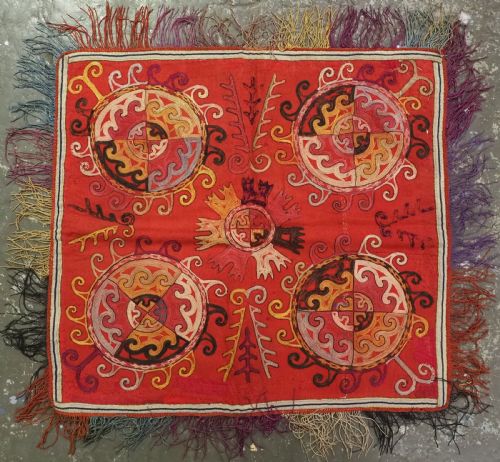
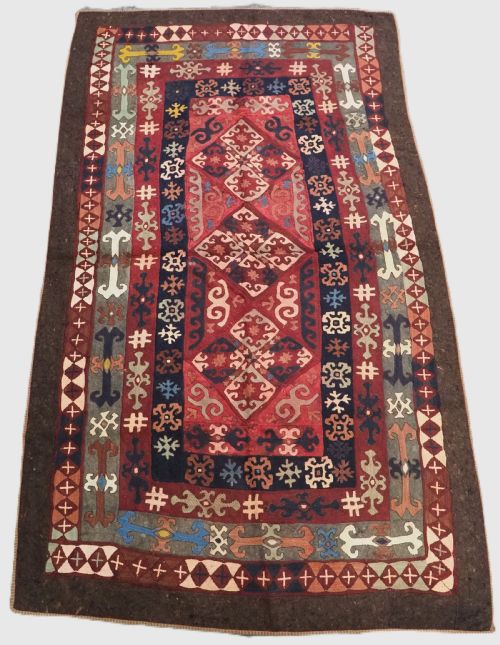
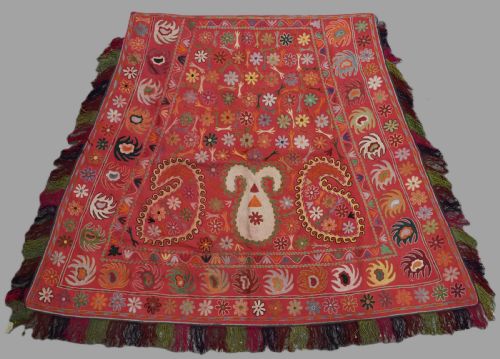
A red wool embroidered hanging brings together tribal textiles, felt panels, and ceremonial dowry pieces originating primarily from Central Asia and Persia. When exploring a red wool embroidered hanging, buyers encounter traditional works attributed to nomadic groups such as the Lakai, Yomut, and Kirghiz tribes, dating from the nineteenth and early twentieth centuries.
Materials and construction methods
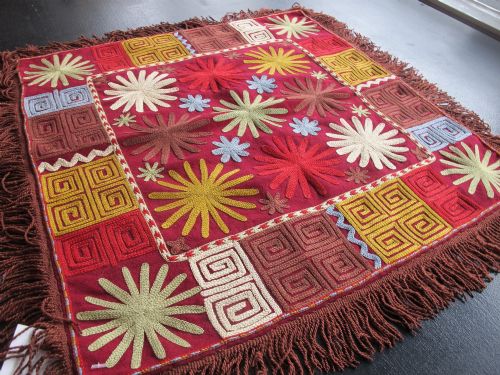
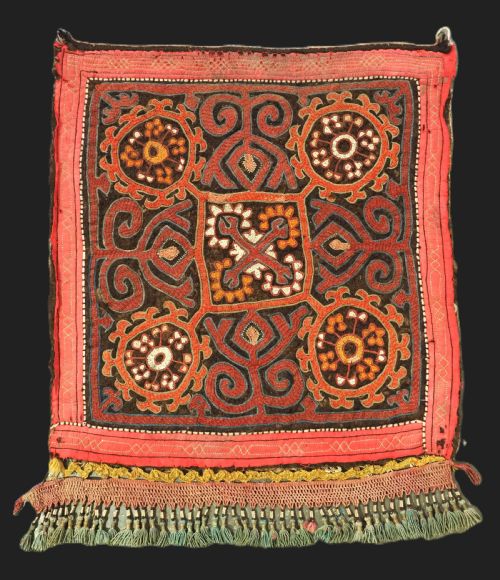
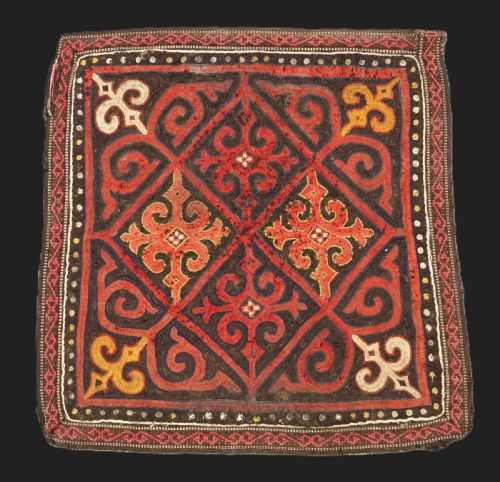
The foundational structures rely heavily on sturdy wool, felted wool, and woven felt grounds, frequently dyed in deep red or Mogul red tones. Artisans then applied dense surface ornamentation using fine silk thread, cotton thread, and occasionally beads.
Needlework techniques range from intricate chain stitch embroidery to flat stitch and applied fringe detailing. These combinations of wool grounds and silk embellishments provided both structural durability and striking visual contrast.
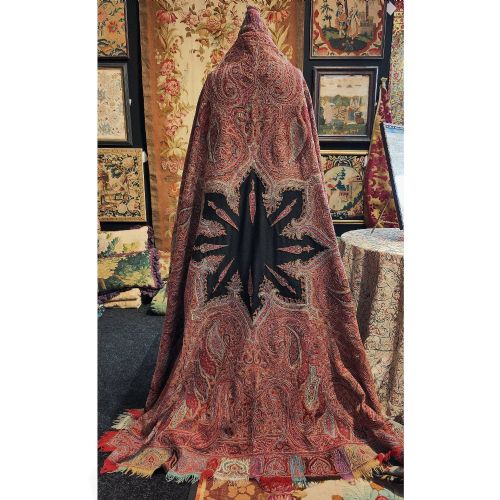
Object forms on this page include yurt wall hangings, horse blankets, saddle rugs, dowry bags, and shawl panels.
Assessing quality in vintage textiles
Quality in these textiles rests upon the density of the stitching, the intricacy of the tribal motifs, and the preservation of the ground wool or felt. Tighter, more precise needlework executed with varied silk highlights distinguishes finer examples from simpler utilitarian pieces.
The integrity of the fabric foundation and the vibrancy of the remaining threads also dictate the standing of a piece. Original elements such as applied fringes, double-faced construction, or intact dowry origins contribute further substance to the work.
The Red Wool Embroidered Hanging Glossary
- Ilgich
- A Central Asian embroidery piece, frequently created by Lakai women as dowry items intended for wall hanging inside a yurt.
- Uut kap
- A type of storage bag or utilitarian trapping utilised within nomadic tent structures to hold household items.
- Suzani
- A large, decorative embroidered textile panel originating from Central Asia, traditionally worked in silk on a wool or cotton ground.
- Torba
- A small ceremonial wall hanging or trapping produced by Turkmen and related tribal groups.
Red Wool Embroidered Hanging: Frequently Asked Questions
How were these tribal textiles used?
Nomadic communities utilised these textiles as wall decorations, storage containers inside tents, horse blankets, and ceremonial dowry items. They served both practical storage functions and cultural roles during weddings and tribal gatherings.
Today, collectors typically display them as wall art or decorative textile panels to introduce historical texture and colour into modern interiors.
How should I hang a textile safely?
Mounting a textile requires distributing the weight evenly across the entire upper edge to prevent stretching the wool or felt ground. Conservation-grade Velcro stitching or a custom-built padded wooden slat system are standard methods used by collectors.
Avoid direct, bright sunlight to protect the natural dyed wool and silk threads from fading over time.
How can I identify the age of a piece?
Dating relies on examining the materials, natural dye characteristics, and traditional tribal motifs recorded in nineteenth and early twentieth-century examples. Stylistic markers specific to groups like the Lakai, Yomut, or Kirghiz help narrow down the period of production.
Constructive details such as hand-spun wool yarns and traditional embroidery techniques further indicate age.