
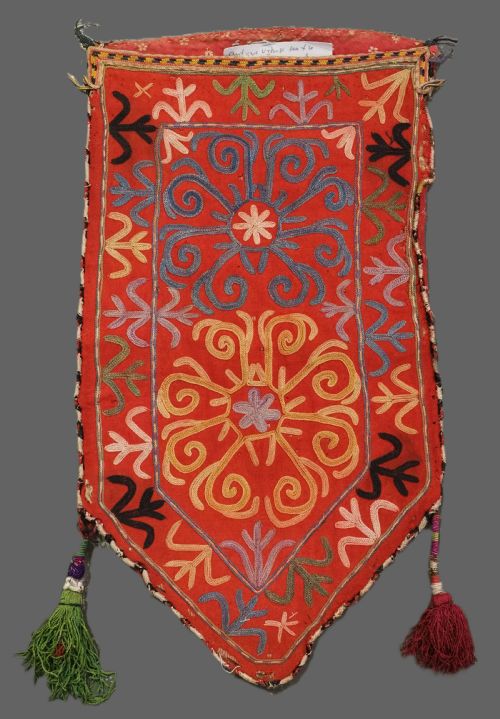
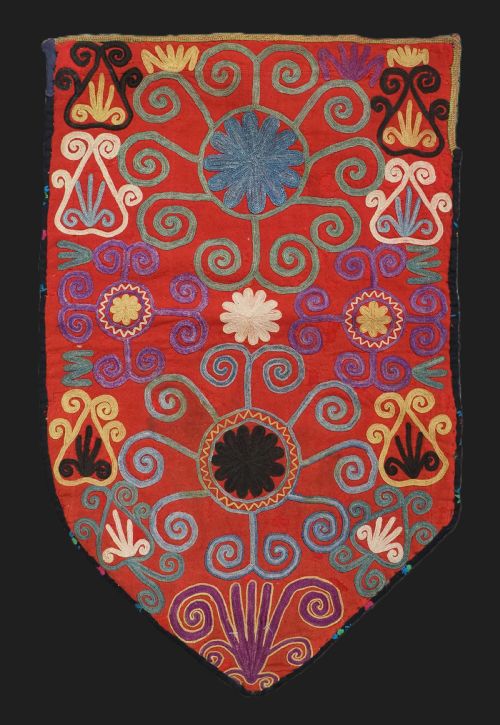
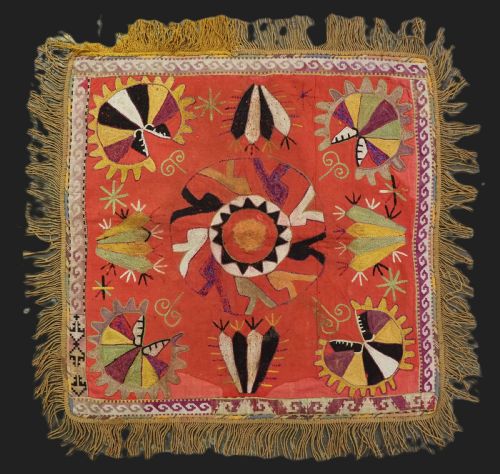
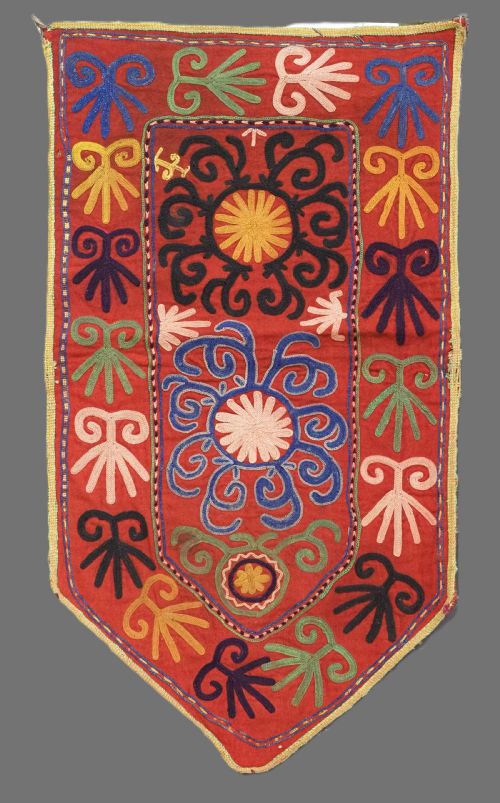
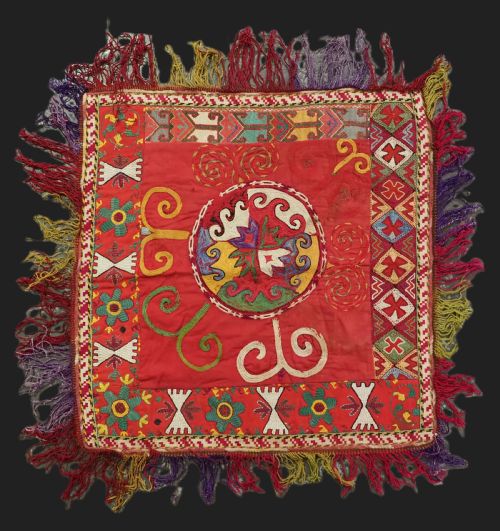


Uzbek Lakai Ilgich
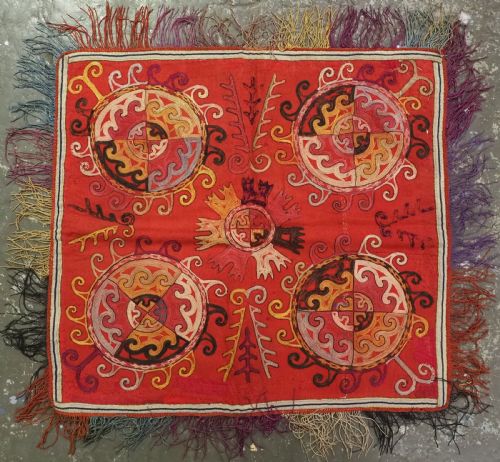
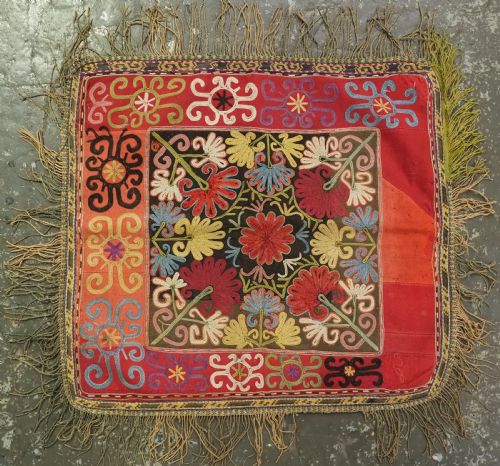
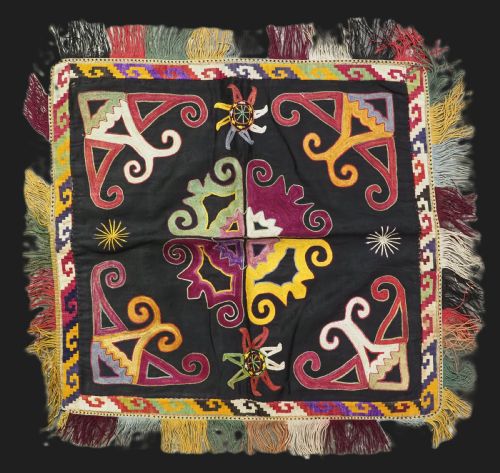
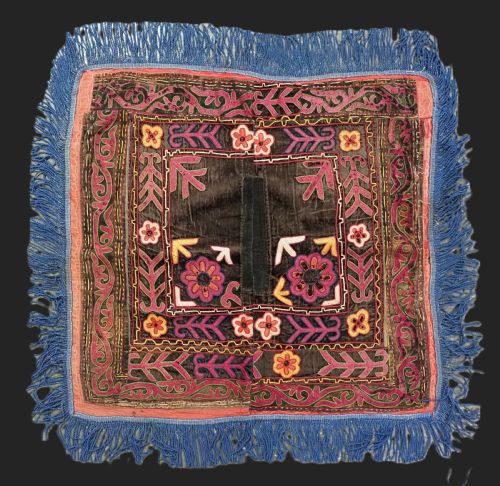
These antique uzbek lakai ilgich pieces are Central Asian tribal embroideries and wall hangings brought into modern rooms for their bold colour and historic textile art.
Uzbek Lakai Ilgich
When you search for an uzbek lakai ilgich, you encounter Central Asian tribal pieces created as dowry embroidery or wall hanging items.
The versions most common on this page date from the late nineteenth century and around nineteen hundred, originating from Shakrisabz and broader Uzbekistan.
These textiles function primarily as wall hangings and decorative textiles, often taking the specific form of an uut kap ilgich or at torba ilgich.
How they were made
Maker communities constructed these pieces using combinations of cotton, silk, wool and occasionally velvet as ground materials.
Artisans applied dense embroidery techniques to build up the Central Asian tribal patterns characteristic of Lakai workmanship.
Some resilient household pieces were originally designed to hang near horse tack inside nomadic tents.
What varies in quality
Differences in quality rest on the precision of the embroidery and the complexity of the traditional Central Asian tribal design work.
The selection of ground fabrics, such as silk versus standard cotton, alongside the vibrancy of surviving thread colours, distinguishes finer examples.
The Uzbek Lakai Ilgich Glossary
- Ilgich
- A Central Asian hanging or embroidery piece, typically used for domestic decoration or as part of a dowry. These items display distinctive tribal motifs.
- Lakai
- A Turkic-speaking tribal group located in Central Asia known for dynamic, geometric embroidery styles. Their textile output includes functional domestic bags and wall hangings.
- Uut Kap Ilgich
- A specific form of hanging associated with nomadic tent storage furnishings. These double-faced or shield-like pieces served protective and decorative purposes.
- At Torba
- A bag or hanging traditionally used for horse gear within Central Asian households. Surviving examples demonstrate fine tribal needlework.
Uzbek Lakai Ilgich: Frequently Asked Questions
What is an uzbek lakai ilgich?
An uzbek lakai ilgich is a traditional embroidered wall hanging or textile art piece made by the Lakai tribe in Central Asia. These items often served as dowry pieces or household furnishings during the late nineteenth century and around nineteen hundred.
They showcase distinct tribal needlework patterns executed on cotton, silk, wool or velvet grounds. Collectors value them as authentic examples of nomadic textile heritage.
How were these textiles used?
Nomadic families utilised these embroidered pieces inside traditional dwellings for decoration and utility. Many functioned as wall hangings or formed part of the dowry given upon marriage.
Specific variants like the uut kap ilgich or at torba ilgich connected to tent storage and domestic equipment. Today, they transition into interior settings primarily as decorative wall art.
How do I date an ilgich?
Dating relies on stylistic analysis, material examination and historical context linking pieces to the late nineteenth century and around nineteen hundred. Natural dyes and early textile structures indicate older periods of production.
Expert attribution points to specific regions in Uzbekistan, such as Shakrisabz, where these tribal traditions flourished. Comparing stitch density and wool or silk quality helps establish the era.
How do I hang a textile safely?
Mounting ancient textiles requires weight distribution methods that avoid placing stress on the cotton or silk foundation. Using a fabric sleeve stitched to the reverse allows a padded rod to support the piece evenly.
Keep the hanging away from direct sunlight to protect vulnerable natural threads and dyed silks from fading. Professional conservators can advise on archival mounting materials.