



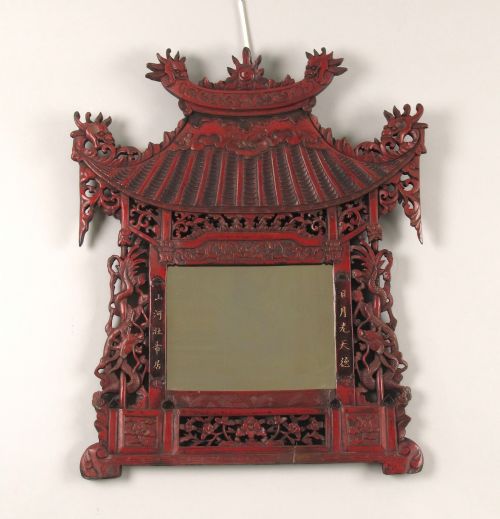


Red Wall Mirror
When you search for a red wall mirror, you find rich lacquer, painted timber and ruby glass built across centuries of changing decorative taste.
Red Wall Mirror
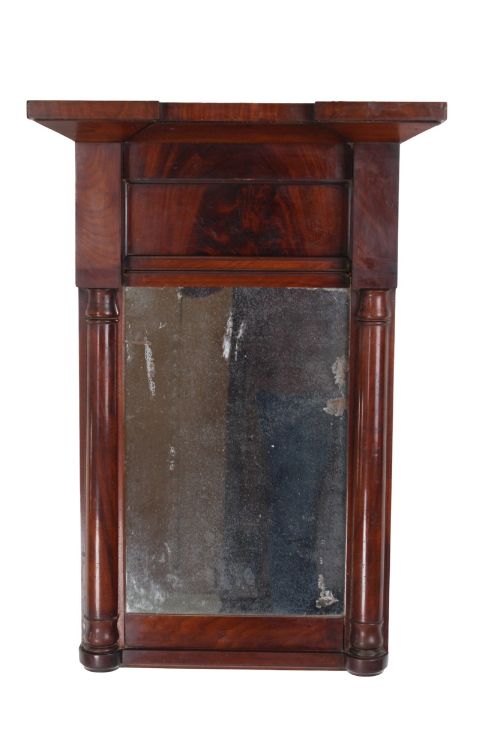
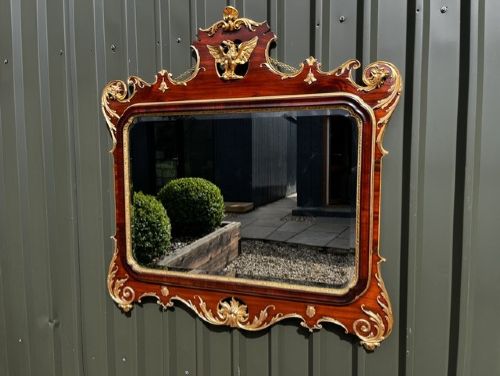
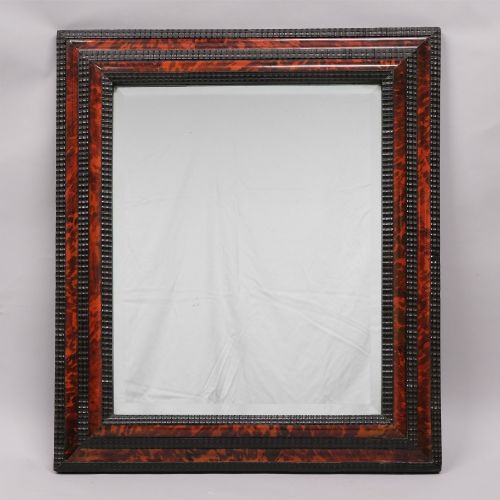
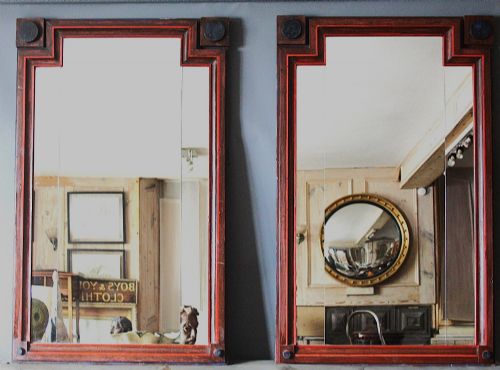
A red wall mirror brings intense colour and historical depth to an interior, drawing on centuries of decorative tradition. When you search for a red wall mirror on this page, you encounter pieces spanning the nineteenth and twentieth centuries, including Victorian, Edwardian, and Art Deco eras.
The selection ranges from striking Chinoiserie japanned frames and carved giltwood pieces with scarlet grounds to Venetian cut glass with ruby borders. Forms vary from simple cushion frames and overmantels to elaborate pagoda shapes and French camel-crested designs.
Originating from English, French, Italian, and Chinese workshops, these mirrors function as focal points in reception rooms, halls, and bedrooms. They reflect both formal revival styles and exotic taste, utilising paint, lacquer, and gilt to create striking visual impact.
Materials and construction
Makers built these frames using dense timbers such as mahogany, beech, and pine, often preparing the wooden base with gesso before applying layers of paint, lacquer, or gilt. Japanning and lacquer techniques involved building up multiple coats of varnish and pigment, sometimes cured and polished to achieve a deep, glossy red finish.
Glass plates were hand-cut, bevelled, or silvered, and in Venetian examples, decorated with delicate etched designs and applied ruby glass borders. Giltwood elements relied on thin gold leaf laid over bole, while reverse-painted glass panels incorporated intricate pigments directly onto the rear surface of the mirror plate.
One Victorian example hides behind a velvet surface, offering a tactile twist on the traditional glass wall mirror.
Assessing craftsmanship and execution
Quality in a red wall mirror rests on the depth of the finish and the finesse of the handwork. Superior examples display meticulously layered lacquer or japanning with hand-drawn Chinoiserie motifs, whereas simpler pieces rely on plain painted surfaces.
Carved wooden details, such as the crispness of a Chippendale fretwork frame or the delicate moulding of a French camel crest, separate ambitious artisan work from mass-produced output. The clarity and original integrity of the mirror glass, whether flat, bevelled, convex, or etched, further dictate the standing of the piece.
Paul Sormani
The Red Wall Mirror Glossary
- Japanning
- European imitation of East Asian lacquerwork, created by applying layers of varnish and pigment onto a prepared wooden base. This technique was widely used on eighteenth-century and revival frames to produce glossy red finishes.
- Gesso
- Plaster-based mixture applied to wood frames to provide a smooth surface for gilding or painting. Traditional gesso allows for crisp, carved details that hold metallic leaf and vibrant pigments securely.
- Pier mirror
- Tall, narrow mirror designed to hang on the wall space between windows. These pieces often feature elaborate crests and matching console tables to amplify light in a room.
- Trumeau mirror
- Decorative mirror featuring a painted or carved panel incorporated above the glass plate. Often French in origin, these pieces were designed to fit flush against wall panels.
- Overmantel mirror
- Large horizontal mirror intended to sit directly above a fireplace mantelpiece. They anchor the room's proportions and reflect light across the hearth.
Red Wall Mirror: Frequently Asked Questions
Where should I hang a red wall mirror?
These mirrors suit spaces that benefit from a strong splash of colour and reflected light, such as a dark hallway, above a living room fireplace, or opposite a window. Their rich tones complement neutral walls and darker paneling alike.
Ensure the wall structure can support the weight, particularly for larger overmantel or framed pieces, and hang them securely using appropriate fixings rather than simple picture wire where heavy timber is involved.
How do I care for antique lacquer and painted frames?
Dust the frame gently with a soft, dry cloth and avoid commercial polishes or moisture, which can damage delicate lacquer, japanning, and painted surfaces.
Keep the mirror out of direct sunlight to prevent the red pigments from fading over time, and maintain stable room humidity to protect the underlying wood and gesso.
What is the difference between Georgian and Art Deco red mirrors?
Georgian and revival Georgian mirrors rely on classical symmetry, fretwork mahogany, and intricate Chinoiserie motifs designed to evoke eighteenth-century elegance. They often feature gilt highlights on red grounds and ornate crests.
Art Deco mirrors embrace streamlined geometry, clean lines, and symmetrical or circular forms. Their red elements come from modern glass treatments, coloured mirrors, or smooth, unadorned painted surfaces rather than complex hand-drawn Oriental scenes.
Are these mirrors made of original glass?
Many older pieces retain their original silvered or hand-bevelled glass, which often exhibits natural foxing, minor speckling, and distortion that confirm its age. Some mirrors have been re-silvered or fitted with replacement plates during their working life.
Examining the depth and backing of the glass helps determine whether the plate dates to the period of the frame or represents a later repair.