





Oriental Lacquer Mirror
These oriental lacquer mirror examples bring painted Chinoiserie scenes and rich Japanned finishes into modern rooms.
Oriental Lacquer Mirror
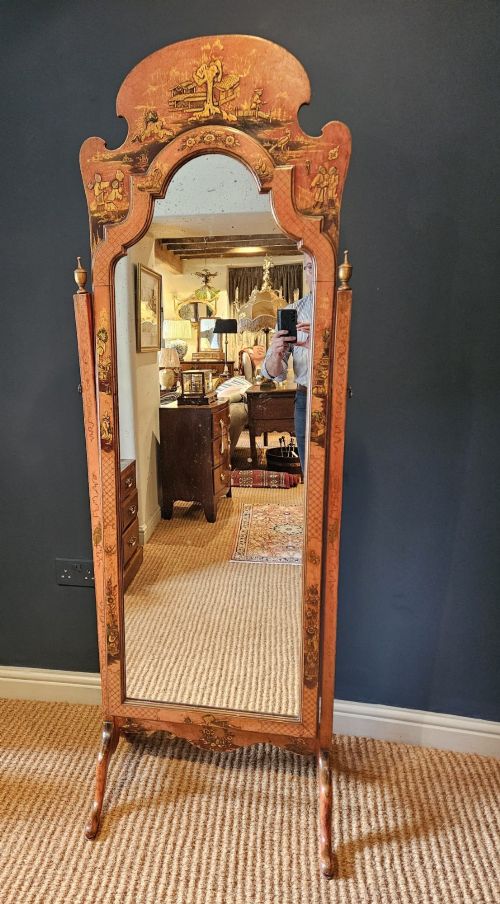
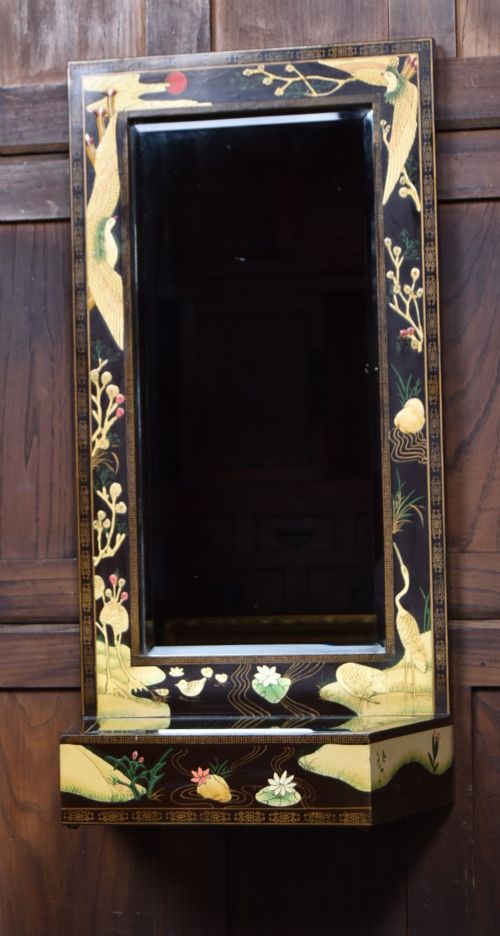
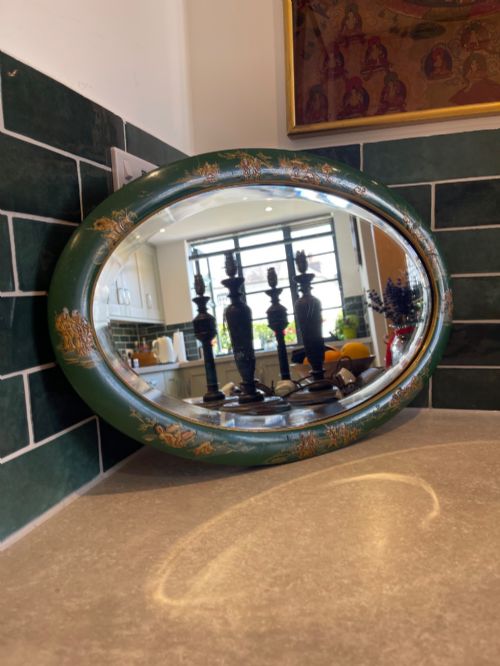
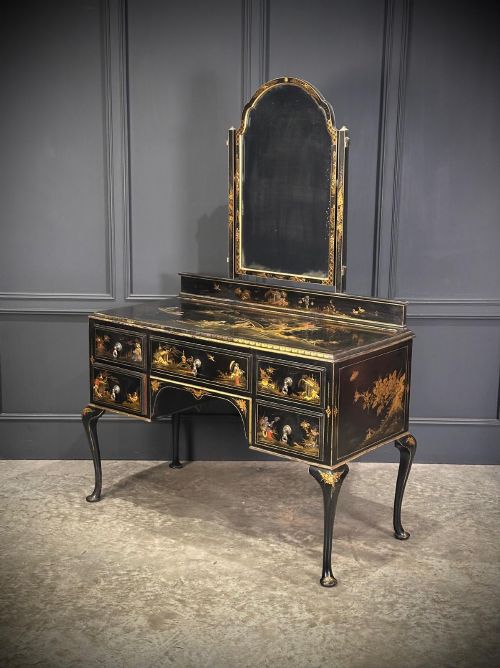
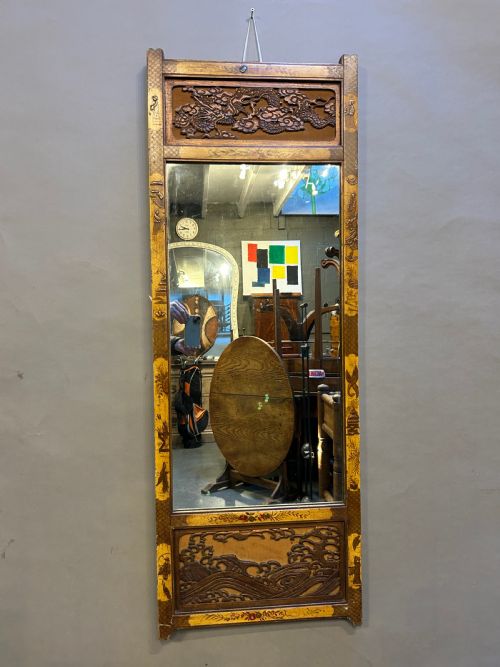
An oriental lacquer mirror combines reflective glass with decorative Asian-inspired painted surfaces, spanning wall-hung formats, dressing table variants, and large freestanding cheval pieces.
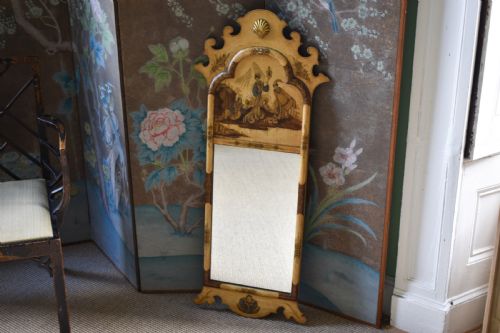
Most examples encountered here date from the nineteenth and early twentieth centuries, drawing heavily on Georgian and Queen Anne revival styles alongside Chinese export traditions.
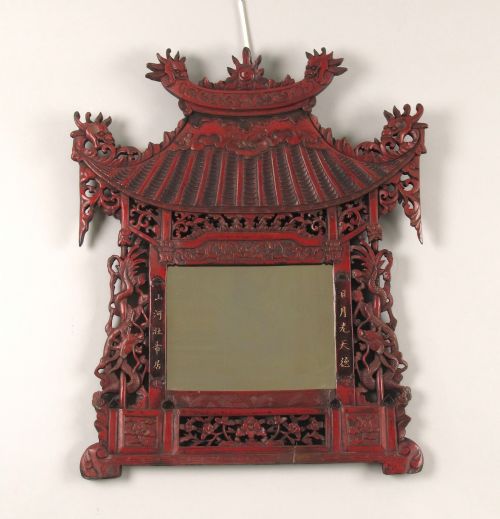
Forms range from compact oval wall mirrors to substantial architectural pagoda frames and complete bedroom furniture suites incorporating matching tables.
How they were made
Construction relies primarily on wood bases built to support mirror glass, finished with layers of lacquer applied in black, cream, red, or ebonised tones.
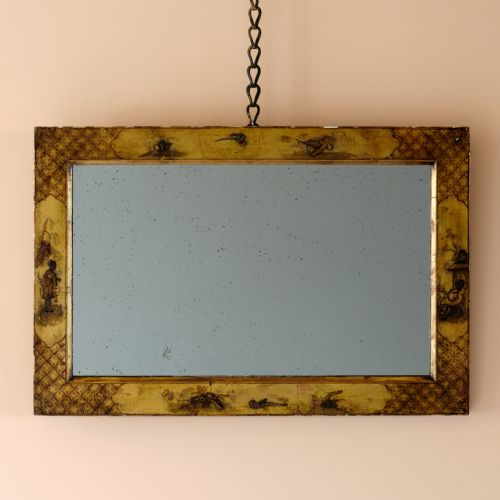
Surface decoration frequently incorporates gilt details, gold leaf, and painted Chinoiserie motifs depicting figures, landscapes, and traditional structures.
Listings feature pieces spanning the 18th, 19th, and 20th centuries, utilising wood, glass, lacquer, gilt, and brass across Chinoiserie and Queen Anne styles.
What varies in quality
The sophistication of the painted Chinoiserie decoration dictates the distinction between standard production pieces and finer examples, with hand-rendered details showing greater depth and precision.
The integration of the frame's structural timber with the stability of the lacquer finish governs longevity, alongside the clarity and original condition of the mirror glass.
The Oriental Lacquer Mirror Glossary
- Chinoiserie
- European decorative style reflecting Chinese artistic influences, popular across eighteenth-century and revival periods. It employs characteristic motifs of figures, pagodas, and landscapes.
- Japanned
- European imitation of East Asian lacquerwork, created using layers of varnish and metallic dust. This technique yields glossy black or coloured decorative surfaces.
- Cheval mirror
- A freestanding full-length mirror supported by a pivoting frame between upright posts. They often appear in larger bedroom settings.
- Chinese export
- Items produced in China specifically for Western markets, combining traditional domestic craftsmanship with European furniture forms.
Oriental Lacquer Mirror: Frequently Asked Questions
Where should I hang an oriental lacquer mirror?
These pieces suit principal reception rooms, hallways, or bedrooms where light can interact with the reflective glass and decorated frame.
Position them away from direct sunlight to protect the integrity of the painted lacquer surface over time.
How do I clean an antique lacquer frame?
Dust the surface gently with a soft, dry cloth to remove surface particles without disturbing the delicate finish.
Avoid liquid cleaners, chemical sprays, or abrasive cloths entirely, as these substances damage historic lacquer and gilt decoration.
What is the difference between Georgian and Edwardian Chinoiserie?
Georgian pieces originate from the eighteenth century or reflect that specific stylistic period's proportions and joinery methods.
Edwardian interpretations date from the early twentieth century, often utilising revival aesthetics scaled for contemporary homes of that era.
Are these mirrors heavy?
Wall-mounted examples possess substantial wooden frames layered with lacquer, requiring secure fixings suited to their weight.
Freestanding cheval and dressing table versions rely on balanced supporting frames to distribute the mass safely.