
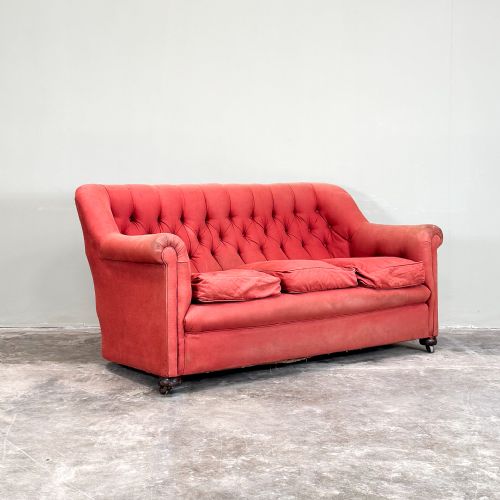


Red Upholstered Settee
When choosing a red upholstered settee, you secure a seating piece defined by rich textiles and enduring timber frames.
Red Upholstered Settee
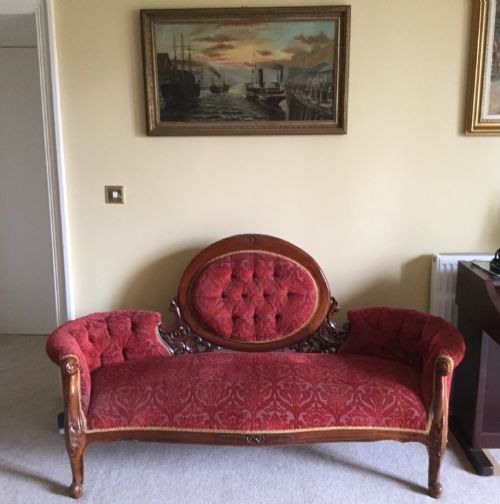
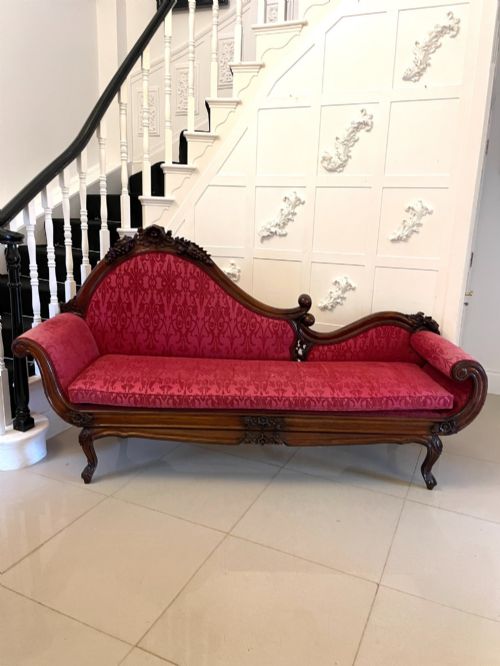
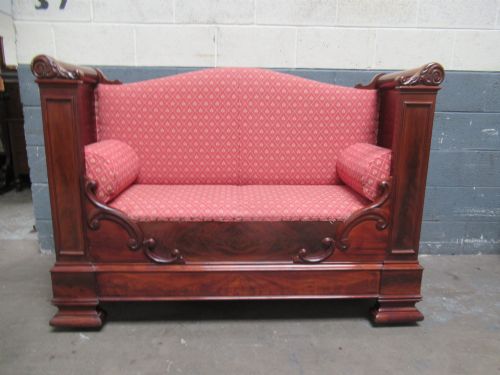
A red upholstered settee brings together centuries of seating design, ranging from Victorian carved frames to Edwardian parlour pieces and 1930s deep-seated designs. These items serve as functional focal points in a room, combining exposed woodwork with tactile fabric coverings.
The selections span distinct historical periods, featuring 19th-century mahogany structures alongside early 20th-century creations. Buyers encounter various seating forms here, including camel backs, chaises longues, and classic Chesterfield shapes.
The most common versions on this page are Victorian and Edwardian settees wrapped in deep pile brocade, velvet, or damask. These examples reflect traditional British craftsmanship adapted for domestic comfort.
How they were made
Makers constructed the structural frames of these pieces using dense hardwoods like mahogany and walnut, often shaping the timber with hand-carved details or subtle inlay. Brass accents and exposed wooden legs complete the foundational framework of many designs.
Upholstered surfaces rely on traditional textiles such as velvet, damask, brocade, and leather to provide both texture and colour. Craftsmen secured these fabrics over sprung bases and stuffed padding to ensure durable support.
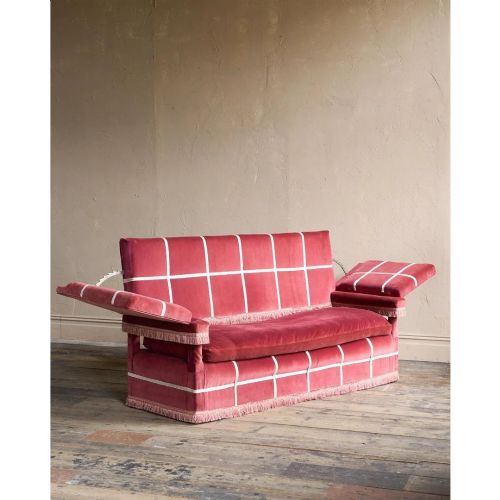
Some Edwardian settees hide clever drop arms designed for afternoon sleeping.
What varies in quality
The distinction between standard and superior pieces lies in the precision of the timber carving and the integrity of the underlying frame construction. Finer examples exhibit tight joinery, balanced proportions, and carefully selected hardwoods.
Material selection and upholstery execution further divide the range, with dense pile brocade and deep buttoning indicating higher workshop investment. Well-executed revival styles maintain historical accuracy in their silhouette and decorative flourishes.
Hampton and Sons·John Tesch·Baumann
The Red Upholstered Settee Glossary
- Chesterfield
- A traditional sofa style characterised by rolled arms and deep button tufting. This form provides a formal yet comfortable seating arrangement.
- Brocade
- A rich shuttle-woven fabric featuring raised decorative patterns. It often incorporates metallic threads or heavy pile textures.
- Damask
- A reversible figured fabric traditionally woven on a jacquard loom. The pattern stands out through contrasting matte and lustrous surfaces.
- Camel Back
- A sofa design with a distinct convex curve along the upper back rail. This profile echoes 18th-century proportions.
Red Upholstered Settee: Frequently Asked Questions
How do I identify a Victorian settee?
Victorian settees typically feature dark mahogany or walnut frames with carved wooden details and sprung bases. Look for heavy textiles such as velvet or buttoned upholstery.
These pieces often display rounded contours or serpentine lines reflecting mid-to-late 19th-century manufacturing methods.
What is a Knole sofa?
A Knole sofa is a historic British seating form recognised by its high, adjustable hinged arms and exposed wooden framing. It originated as a stately seat in country houses.
Modern iterations preserve the deep seating capacity and textile-heavy draping characteristic of the original design.
How should I care for velvet upholstery?
Velvet textiles require gentle brushing to maintain the direction of the pile and prevent flattening. Keep these fabrics away from direct sunlight to preserve the red hue.
Professional cleaning is recommended for antique textile coverings to protect the underlying natural fibres.
Are these settees suitable for daily use?
Many antique settees feature robust hardwood frames and resilient sprung bases built for practical living spaces. Their structural durability supports everyday seating requirements.
Reupholstered variants often integrate modern internal padding while retaining their historical wooden exterior.