
Victorian Chaise Lounge
When you search for a victorian chaise lounge, you find daybeds and reclining seats designed for daytime rest in nineteenth-century interiors.
Victorian Chaise Lounge
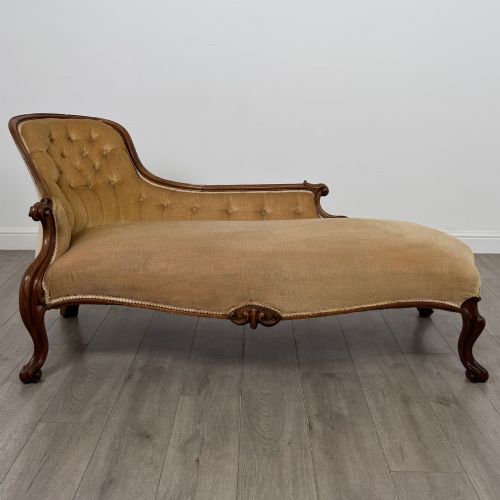
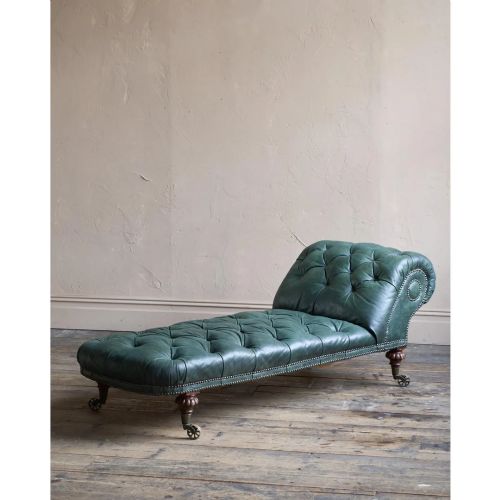
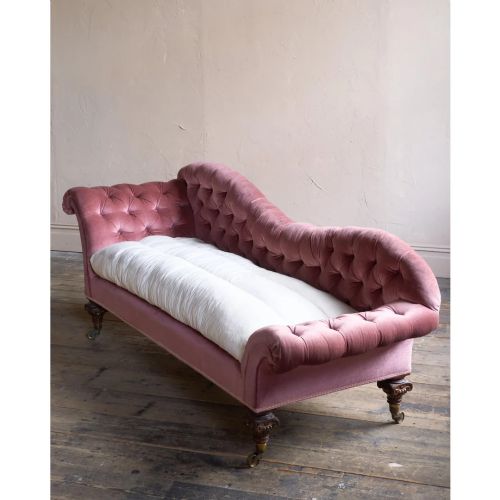
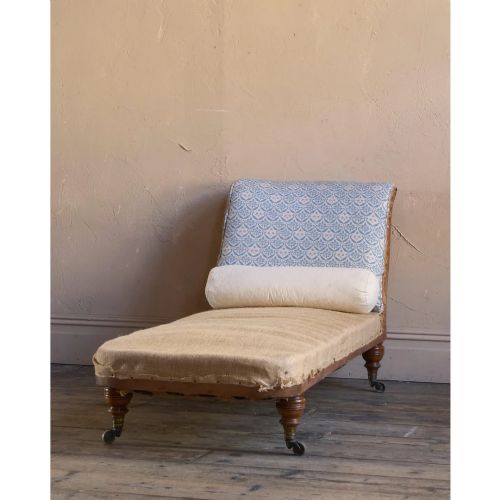
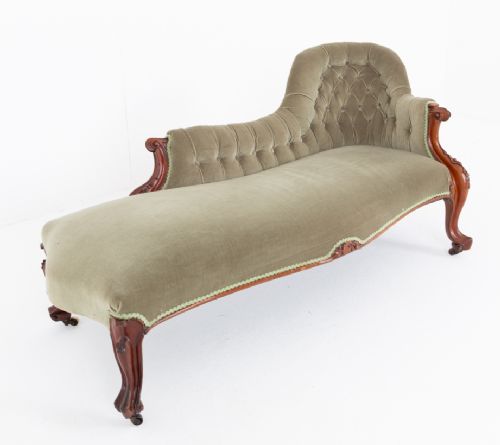
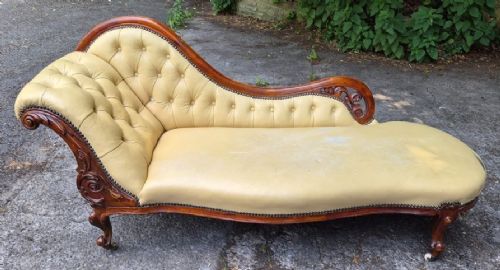
A victorian chaise lounge is a single-ended or double-ended upholstered seating form intended for reclining in the parlour or drawing room. The pieces recorded here span the nineteenth century, including walnut, mahogany, and rosewood frames upholstered in leather, velvet, and brocade.
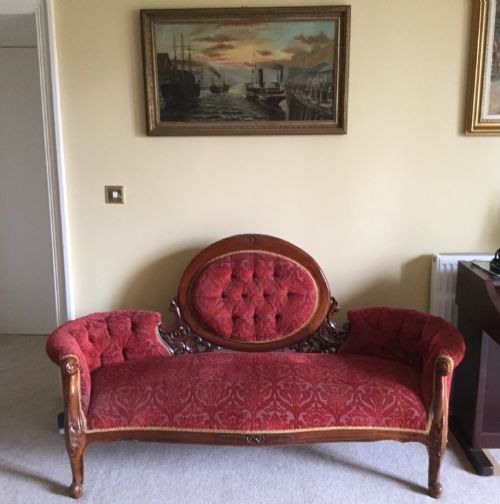
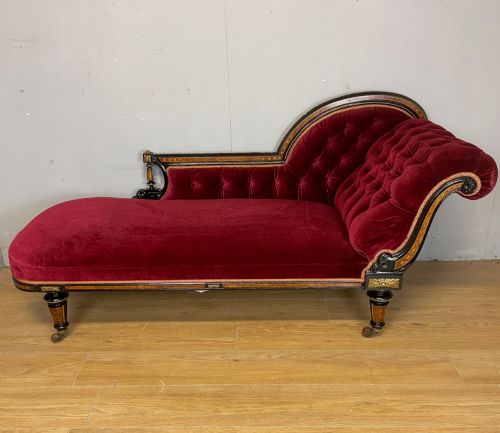
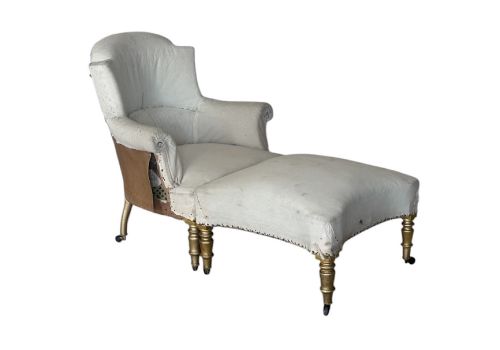
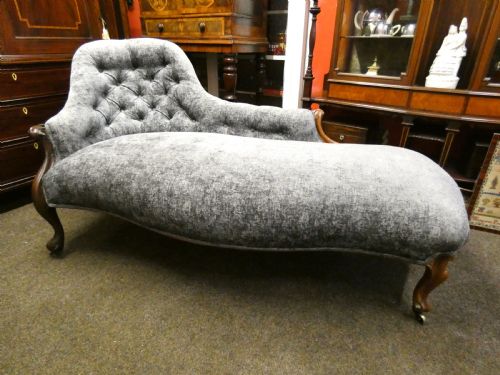
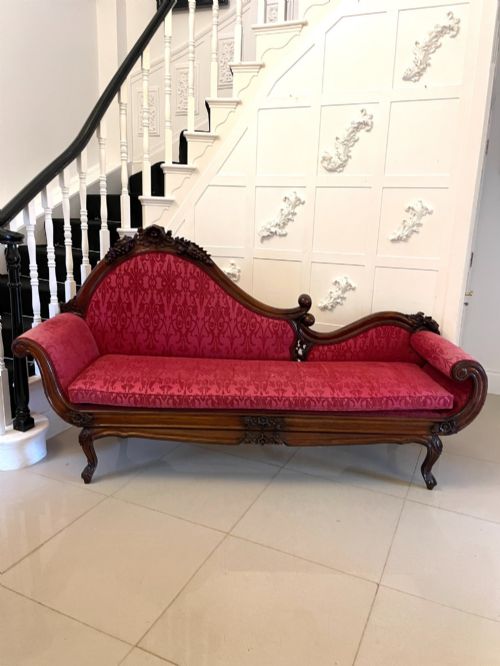
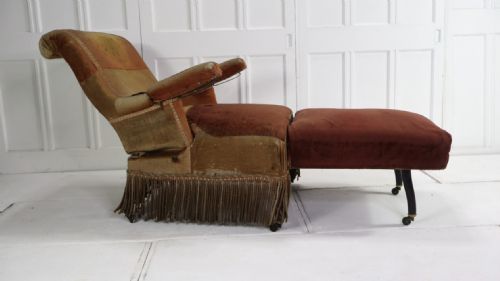
Most examples take the form of a carved wooden frame with a raised scroll end and a single sloping backrest, though daybeds, ottomans, and duchess brisee variants also appear. These forms reflect the comfortable domestic standards of the period, ranging from plain country house models to heavily carved rosewood and walnut designs.
Materials and construction
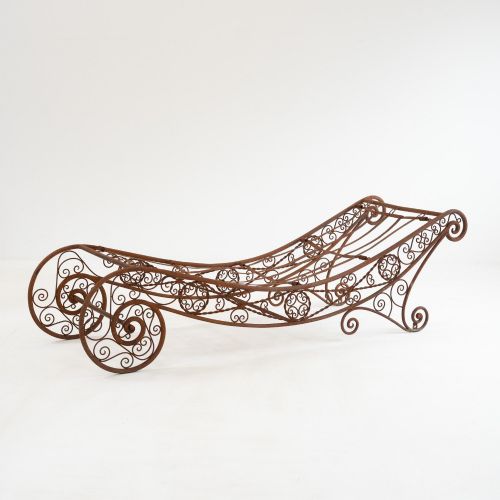
Makers built the structural frames of a victorian chaise lounge from dense hardwoods like mahogany, walnut, and rosewood, often enriching them with carved scrollwork, turned legs, or inlaid wood panels. Metal elements such as brass castors and cast iron frames support some daybed and campaign variants.
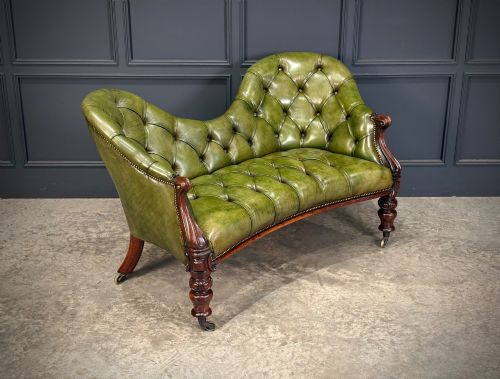
Upholstery techniques combined sprung seat bases with deep buttoning, horsehair stuffing, and heavy textile coverings including leather, velvet, damask, and brocade. The joinery relies on traditional nineteenth-century framing methods to support the asymmetric weight distribution of a reclining user.
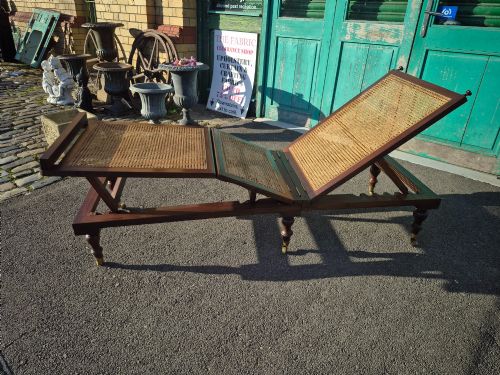
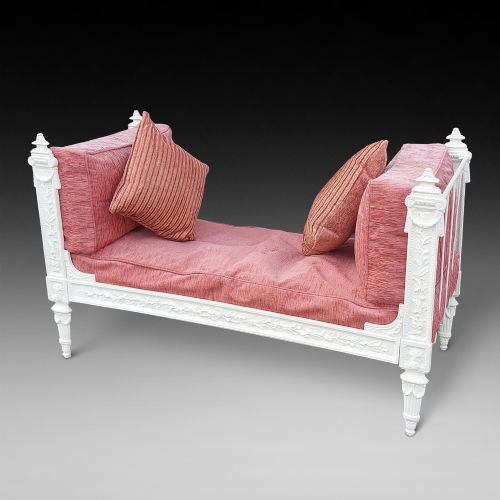
Nineteenth-century forms span simple iron daybeds and campaign styles to carved walnut and rosewood double-ended couches.
What separates the fine examples
The distinction between ordinary and superior pieces rests on the crispness of the timber carving and the density of the framing timber. Rosewood and walnut frames with deeply carved scroll ends or complex serpentine mouldings represent the more ambitious end of nineteenth-century production.
Upholstery execution and frame integrity also define the standard. Pieces that retain sound internal springing, precise buttoning, and robust secondary timbers command greater attention than simple frames requiring structural rebuilding.
Howard and Sons·H. Goodall and Sons·Holland and Sons
The Victorian Chaise Lounge Glossary
- Chaise Longue
- An upholstered long chair designed for reclining, combining a chair back with a seat long enough to support the legs.
- Double Ended
- A seating form featuring raised backrests or scrolls at both ends of the frame rather than a single headboard.
- Buttoned
- An upholstery technique where tightly pulled tufts secured by buttons create a patterned, indented surface across leather or fabric.
- Ormolu
- Gilt-bronze decorative mounts applied to wood furniture frames during the nineteenth century.
- Castors
- Small wheel attachments fixed to the base of furniture legs to allow smooth movement across carpets and floors.
Victorian Chaise Lounge: Frequently Asked Questions
How do I identify a walnut frame from mahogany?
Walnut displays a rich, warm brown tone with distinct grain figuring and occasional darker growth rings. Mahogany generally shows a deeper reddish-brown colour with a straighter, tighter grain pattern.
Both timbers were widely used by nineteenth-century cabinet makers for high-end seating frames.
Were these seats used for sleeping?
These pieces served primarily for daytime rest, reading, and recovering from illness or fatigue. They provided a comfortable resting place in domestic interiors without requiring the user to retire to a bedroom.
Many examples feature sprung bases and upholstered head rests designed for extended comfort during the afternoon.
What does double ended mean?
A double ended piece has scrolled or raised ends at both sides of the frame rather than a single enclosed headboard. This symmetrical design allows the user to recline facing either direction along the length of the seat.
Such forms often stand away from walls to display the carved woodwork on all sides.
How do I care for antique leather upholstery?
Leather surfaces benefit from regular dusting and occasional treatment with appropriate leather dressings to prevent drying and cracking. Keeping the material away from direct heat sources preserves its suppleness.
Original nineteenth-century leather requires gentle handling to maintain its patina over time.