


Vintage Lounge Daybed
A vintage lounge daybed offers a stretch for the afternoon and a seat for the room, spanning Regency curves to Victorian mahogany.
Vintage Lounge Daybed
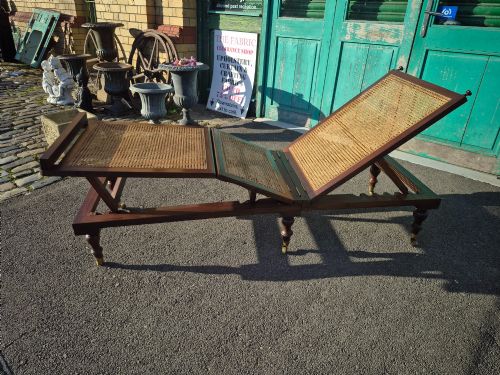
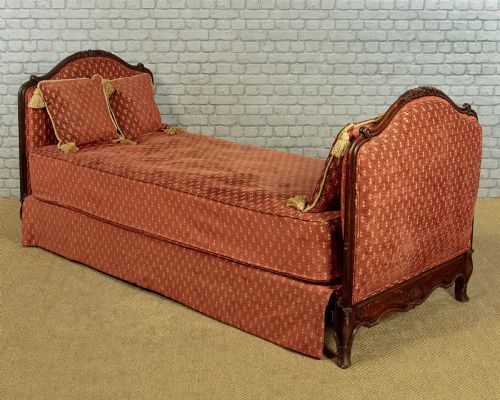
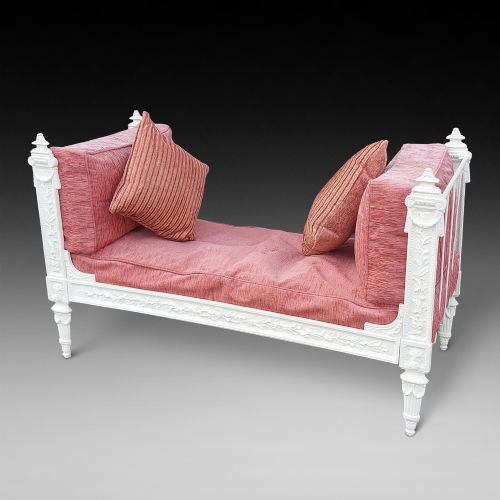
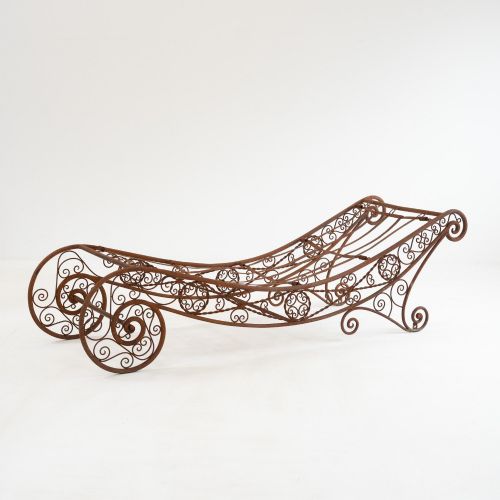
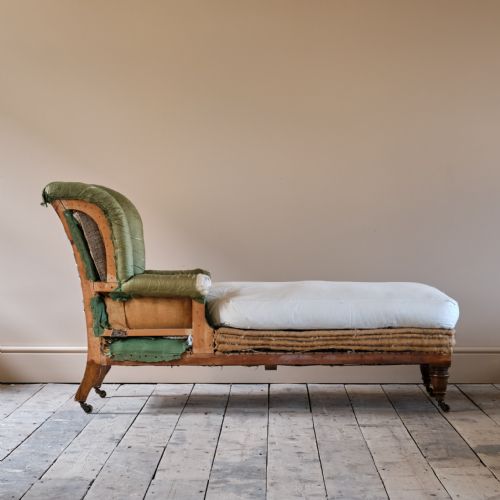
When you search for a vintage lounge daybed, you look at hybrid forms designed for both reclining and sitting, encompassing chaise longues, garden daybeds, and window seats. These pieces bridge the gap between a sofa and a bed, serving as long seating for parlours or bedrooms.
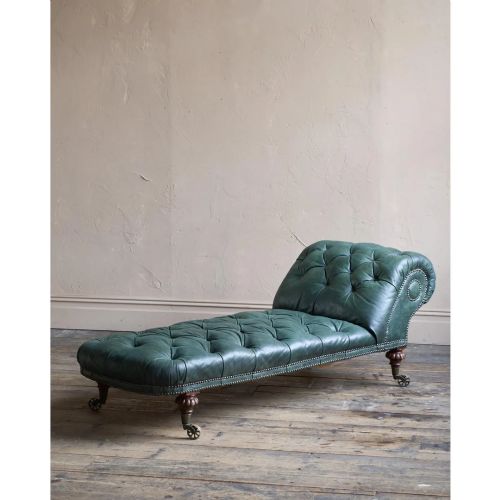
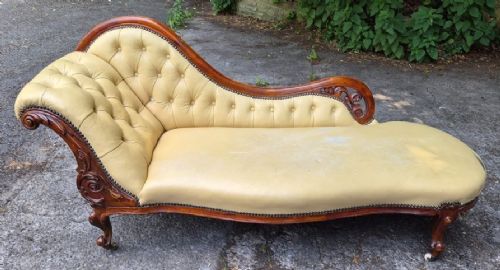
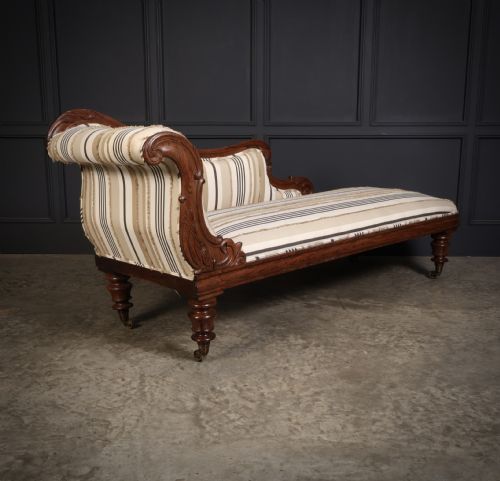
The selections available here lean heavily toward nineteenth-century origins, featuring Victorian carved mahogany and Regency mahogany frames alongside campaign styles. You will also encounter twentieth-century interpretations, including Edwardian pieces, rattan loungers, and gilt-decorated day beds from around nineteen-twenty.
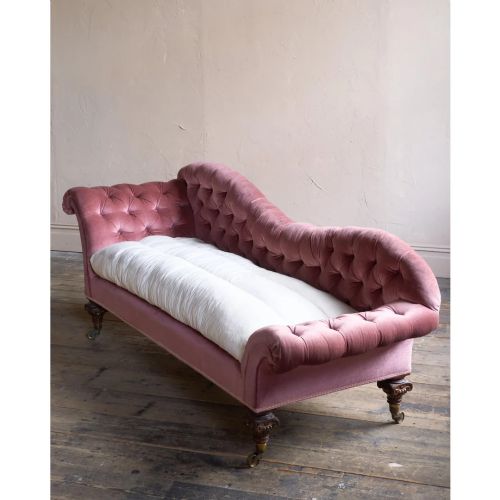
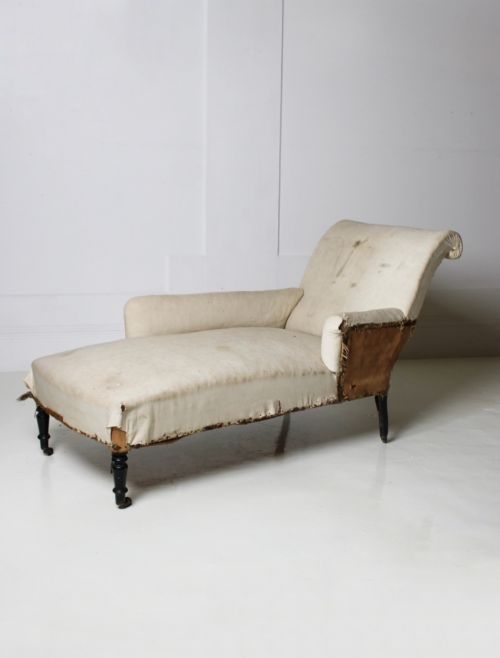
The physical forms vary from asymmetric chaise longues with ionic column legs to box ottoman daybeds and Chinese hardwood day beds. Such versatility means these items suit both formal drawing rooms and relaxed garden settings.
What varies in quality
The standard of a vintage lounge daybed rests primarily in the timber selection and the precision of the carving, where dense rosewood or figured mahogany signifies superior craftsmanship. Finer pieces display crisp hand-carved details on frames, whilst simpler vernacular examples rely on plain turned wooden supports.
Upholstery detailing also dictates the grade of the piece, distinguishing between standard padded surfaces and complex buttoned velvet or leather work associated with notable makers. Original castors and sound structural joinery further elevate the standing of an individual daybed.
Chinese stargazers chairs offer an alternative view of lounging, designed for contemplation beneath the open sky.
Howard and Sons·Jas Shoolbred·William Birch·Hampton and Sons
The Vintage Lounge Daybed Glossary
- Chaise longue
- An upholstered sofa in the form of a chair with a long seat to support the legs. This form dominates nineteenth-century seating designs.
- Campaign style
- Portable furniture constructed for military officers on active service, typically featuring brass fittings and collapsible elements. These pieces prioritise sturdy practicality alongside mobility.
- Box ottoman
- A upholstered seat featuring a hinged lid that opens to reveal storage space beneath. This dual-purpose form appears in nineteenth-century domestic interiors.
- Bobbin day bed
- A bed or daybed characterised by turned spool or bobbin-shaped woodwork along the frame. The technique creates a rhythmic, decorative profile.
- Simulated rosewood
- Painted or stained wood mimicking the rich grain and colour of genuine rosewood. This finish offered an accessible alternative during the Regency period.
Vintage Lounge Daybed: Frequently Asked Questions
What is a vintage lounge daybed used for?
These pieces function primarily as daytime lounging furniture, combining the upright back support of a sofa with the extended seat of a bed. Owners traditionally place them in libraries, drawing rooms, or bedrooms for afternoon rest.
The elongated form allows the user to recline fully without moving to a conventional bedroom. They also serve as decorative statement seating in large hallways and window recesses.
How do I identify a Regency daybed?
Regency daybeds typically feature classical architectural motifs such as ionic column legs, scrolled ends, and dark woods like mahogany or simulated rosewood. Their proportions reflect early nineteenth-century neoclassical tastes influenced by ancient Greek and Roman designs.
Look for clean lines, sabre or turned legs, and austere frames that contrast with the heavier, more heavily carved Victorian styles that followed later in the century.
Where should I place a daybed in a room?
A daybed works best positioned against a long wall or floating perpendicular to it, allowing the backrest or scrolled end to act as a visual anchor. Placing them near windows or in sunrooms maximises their dual role as seating and lounging spots.
Because many vintage examples feature finished backs or detailed woodwork on all sides, they can also sit in the centre of spacious rooms to divide seating zones.