
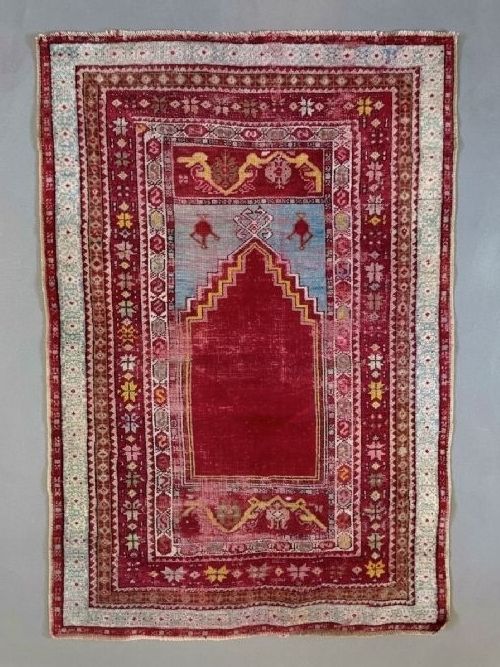
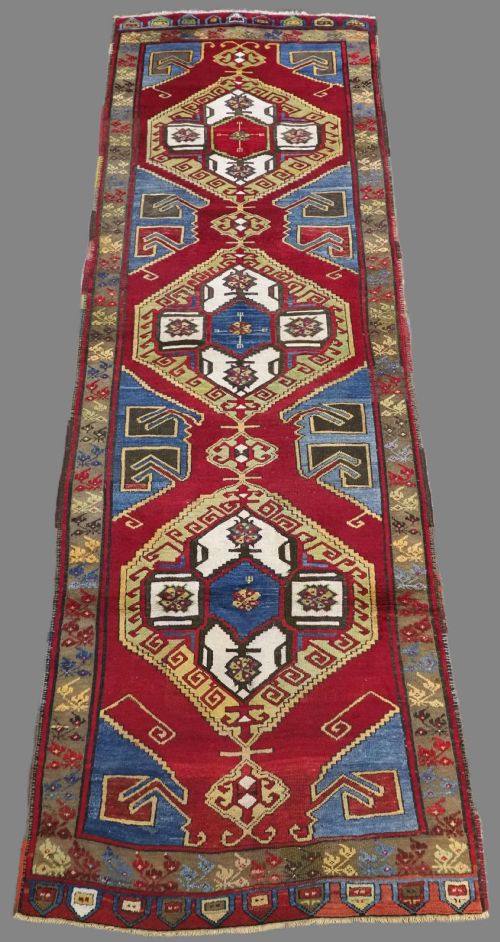


Red Turkish Floor Rug
A red turkish floor rug brings deep madder tones and centuries of nomadic weaving tradition directly into a room.
Red Turkish Floor Rug
A red turkish floor rug encompasses hand-knotted and flat-woven floor coverings originating from Anatolia and wider Turkish regions, dating from the Victorian era through the early twentieth century. Buyers encounter various formats here, ranging from large carpets and long hallway runners to specific village prayer rugs and flat-woven kilims.
The selection draws heavily on traditional regional styles such as Ushak, Bergama, Melas, and Konya, reflecting distinct tribal and village aesthetics. These pieces serve primarily as functional floor coverings that ground a room with deep reds, rich patterns, and historical textile craftsmanship.
How they were made
Weavers utilised natural materials, predominantly hand-spun wool and cotton foundations, occasionally incorporating silk and angora wool for finer pile execution. Vegetable dyes provided the lasting palette, yielding deep madder reds alongside secondary earthy tones that age gracefully.
Construction methods combine pile knotting and flat-weaving techniques, with village and tribal workshops employing sturdy warp and weft structures. These traditional methods ensure the dense pile and flat structures withstand generations of domestic use.
Listings span multiple decades from the Victorian period through the nineteen-thirties, featuring wool, cotton, and vegetable dyes.
What varies in quality
Quality rests upon the fineness of the weave, the clarity of the regional design, and the integrity of the materials. Tightly knotted piles and carefully balanced vegetable dye lots distinguish superior workshop and village productions from simpler utility pieces.
The sophistication of the motifs, whether geometric tribal patterns or grand Ushak floral designs, dictates the aesthetic standing of each rug. Original edge finishes and well-preserved pile height further separate standard domestic examples from finer survivals.
The Red Turkish Floor Rug Glossary
- Kilim
- A flat-woven carpet or rug produced without a pile by tightly interweaving warp and weft strands. These pieces offer graphic geometric patterns and a flat profile.
- Prayer rug
- A small rug featuring a mihrab or niche design, historically used for individual Islamic prayer. The niche motif points toward Mecca during use.
- Pile
- The upright yarn loops or cut ends that form the soft surface of a knotted rug. Pile density contributes to the weight and durability of the floor covering.
- Warp
- The vertical threads stretched tightly on the loom before weaving begins. Weft threads are passed across these warp threads to lock the structure in place.
- Vegetable dye
- Colouring matter derived from roots, plants, and insects rather than synthetic chemicals. These dyes yield rich, complex tones that mellow harmoniously over time.
Red Turkish Floor Rug: Frequently Asked Questions
How do I care for an antique rug?
Vacuum gently without using a rotating brush roll to protect the old wool pile and foundation threads. Professional cleaning suited to antique textiles is recommended every few years to preserve the vegetable dyes.
Keep the rug out of direct, harsh sunlight to prevent fading of the rich madder reds. Using a quality underlay prevents slipping and reduces friction between the floorboards and the historic weave.
Where were these rugs made?
These textiles originate from various Anatolian regions, towns, and villages across Turkey, including Ushak, Bergama, Konya, and Sivas. Each producing area developed distinct weaving habits, colour combinations, and geometric or floral motifs.
Tribal groups and village workshops each contributed their own interpretations to the local vernacular. This geographical diversity explains the wide stylistic range found within traditional Turkish weaving.
How do I distinguish between types?
Examine the construction method first to determine whether the piece is a pile-knotted carpet or a flat-woven kilim. Motif arrangements, such as prayer arches, medallions, or all-over star patterns, point directly to specific weaving centres like Ushak or Kirsehir.
Material choices also assist identification, as certain regions favoured silky angora wool or specific cotton foundation structures. Comparing knot density and edge finishes helps separate village work from larger town workshop production.
Are these rugs suitable for heavy traffic?
Sturdy village and tribal carpets woven with thick wool pile withstand normal hallway and living room use quite well. The resilient natural lanolin in hand-spun wool helps repel dirt and resists daily wear.
Finer silk pieces or fragile antique flat weaves require more careful placement in low-traffic zones. Selecting the appropriate rug thickness ensures the textile endures modern domestic life without sustaining undue damage.