
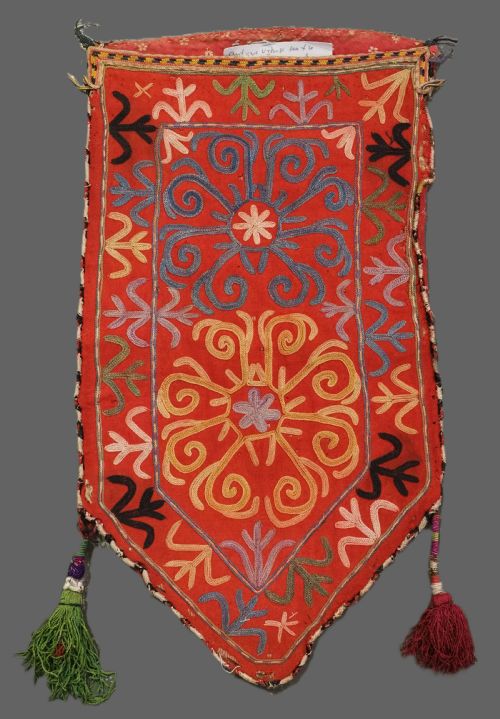
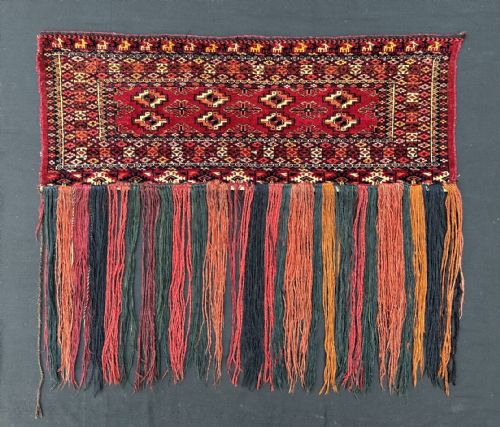
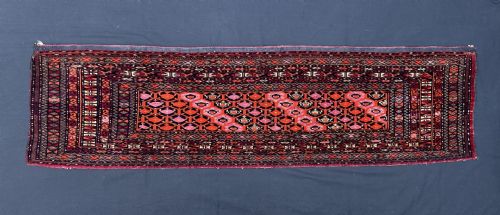
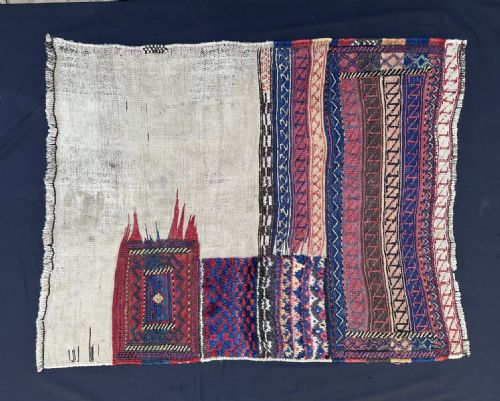
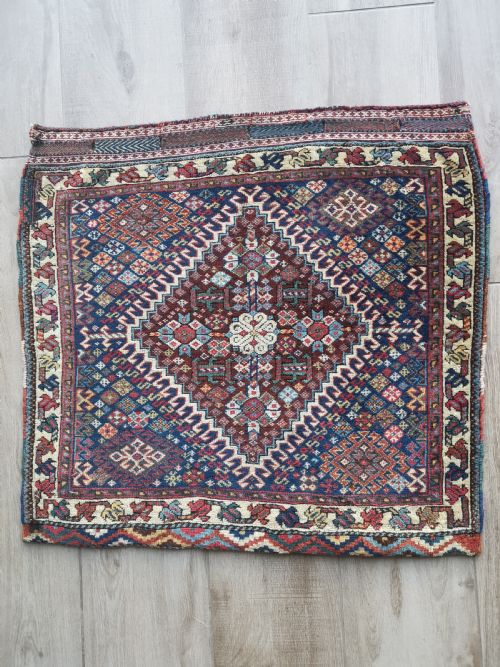

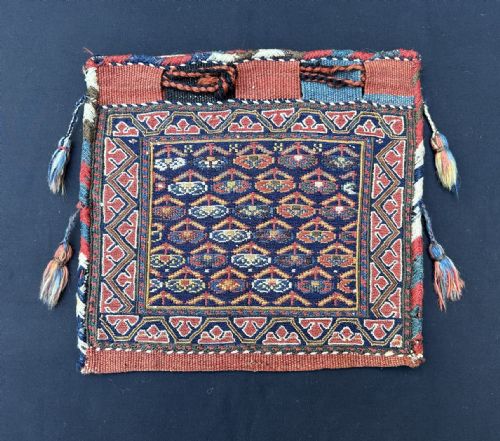
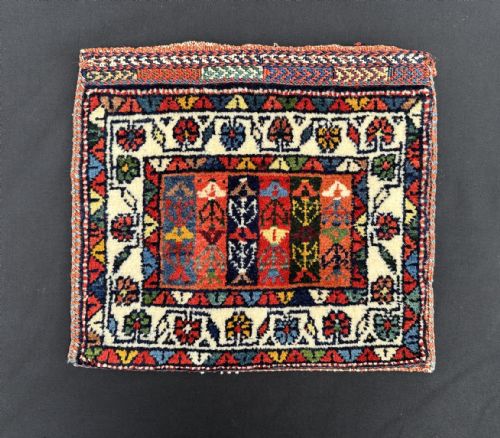
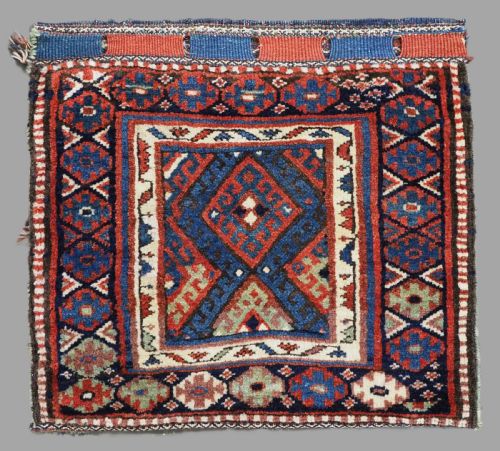

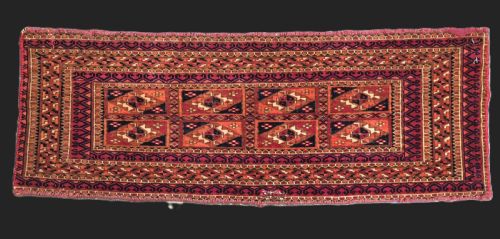
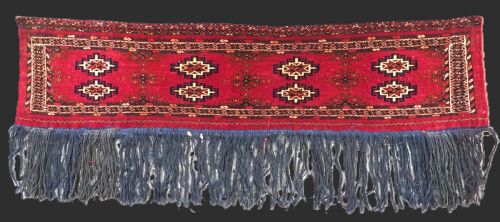
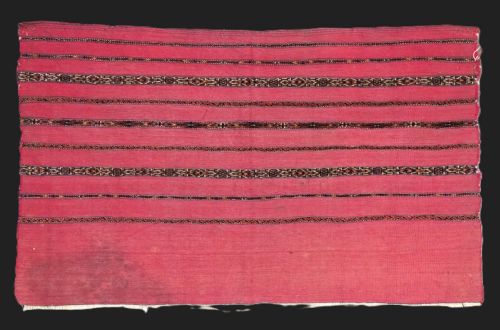
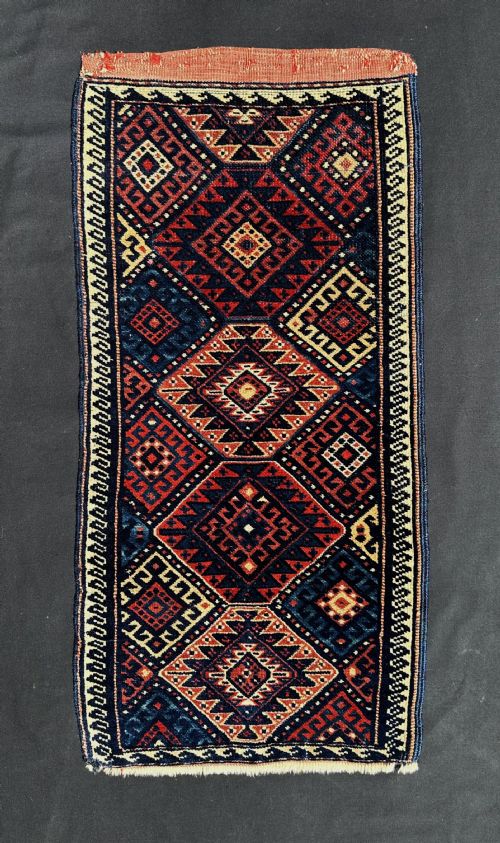


Red Tribal Bag Face
When you handle a red tribal bag face, you hold a nomadic textile fragment designed for storage and woven with traditional motifs.
Red Tribal Bag Face
A red tribal bag face represents the front portion of a nomadic storage container, saddlebag, or grain pouch created across Central Asia and Persia. These textiles were produced by tribal groups including the Turkmen, Kurdish, and Lori-Bakhtiari populations during the nineteenth and early twentieth centuries.
The version most commonly met on this page is a torba or chuval face originating from Turkmen weavers, typically dominated by madder red grounds and distinctive guls. Such pieces were originally part of larger utilitarian objects used inside tents or for transport before being separated over time.
Assessing Quality and Execution
The standard of a red tribal bag face is determined by the precision of the knotting, the handling of the wool, and the depth of the natural dyes. Superior examples display high knot density and crisp, well-proportioned tribal guls that demonstrate the weaver's mastery of proportion.
Design clarity and the integrity of the surviving textile also dictate the upper tier of quality. Pieces retaining balanced colour saturation across the red ground without disruptive repairs represent the more accomplished end of the spectrum.
Some weavers included accidental crooked lines in their borders to outsmart evil spirits who might otherwise admire the perfection of the design.
The Red Tribal Bag Face Glossary
- Gul
- A primary medallion or octagonal motif repeated across Turkmen and Central Asian tribal carpets and bags. Each tribal group traditionally utilised distinct gul variations.
- Chuval
- A large tent storage bag used by Turkmen weavers for bedding or belongings. Surviving faces show the prominent primary designs of the tribe.
- Khorjin
- A traditional double saddlebag designed for transport on animals. Many surviving examples are separated into individual bag faces.
- Flatweave
- A textile constructed without pile by interlacing warp and weft threads directly. This technique appears on the backs and borders of storage bags.
Red Tribal Bag Face: Frequently Asked Questions
What were tribal bags used for?
Nomadic communities used these woven containers inside tents and transport animals for storing grain, bedding, clothing, and domestic goods. The front panels were often the most decorative parts, displaying tribal identity through specific patterns.
Over generations, many functional bags were disassembled as the containers wore out, leaving the decorative faces preserved as individual textile fragments.
How do I hang a bag face on the wall?
Mounting a textile safely requires distributing the weight evenly along the top edge rather than piercing the fabric with pins or nails. A conservation-grade velcro strip or a custom fabric sleeve stitched to the reverse allows the piece to hang flat.
Keep the textile away from direct sunlight and high humidity to protect the natural wool fibres and dyes from fading over time.
How do I tell Turkmen tribes apart?
Tribal identification relies on the specific shape and arrangement of the guls, alongside the secondary ornament patterns and colour palettes. Tekke, Yomut, Saryk, and Ersari weavers each employed distinct geometric emblems and border structures.
Examining the weave density and the specific shades of madder red provides further clues to the regional origin within Central Asia.
Why are many pieces described as fragments?
Nomadic storage bags endured heavy daily use in harsh environments, leading the plain weave backs and sides to wear out long before the dense pile faces. Owners often cut away the damaged utility sections to preserve the artistic front panel.
This practical salvage explains why numerous historical examples survive today as single bag faces rather than complete containers.