




Red Tekke Runner
These red tekke runner pieces are woven tribal textiles from Central Asia, offering deep madder tones and precise geometric motifs that anchor any traditional hallway.
Red Tekke Runner
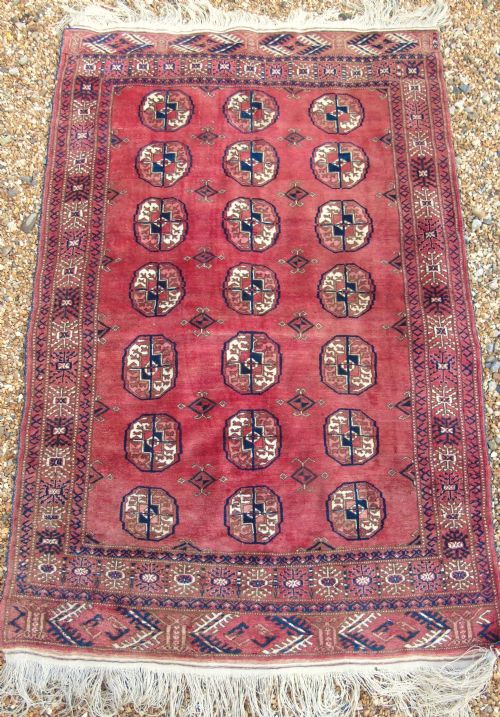
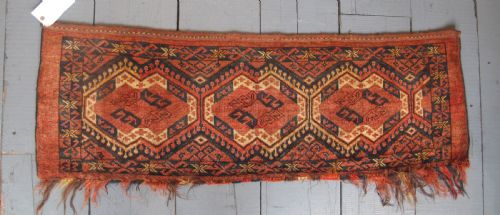
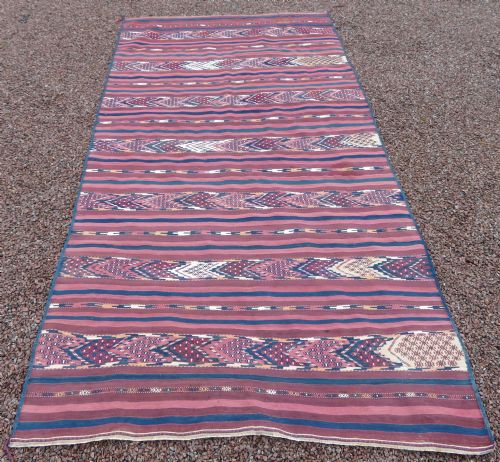
When you search for a red tekke runner, you are looking at woven tribal textiles originating from Central Asia, specifically attributed to Turkmen tribes and Turkmenistan. The selection on this page encompasses various formats including rugs, carpets, storage bagfaces, torba fragments, and flat weave kilims, alongside runners.
The objects span multiple decades from the mid-nineteenth century through to the early twentieth century, with dates recorded across the 1850s, 1880s, 1890s, 1900s, 1920s, and 1930s. These pieces reflect the rich heritage of Central Asian nomad and tribal weaving traditions, featuring characteristic Turkmen styles and structures.
Materials and construction methods
The pieces listed here are constructed primarily from wool and cotton, materials selected by weavers for durability and tensile strength. Natural fibres form the pile and foundation of these textiles, ensuring resilience across generations of use.
Techniques range from standard knotted pile construction to specialised flat weave methods such as the cicim technique seen on specific palas kilims. Each method requires precise hand-knotting or surface brocading to achieve the dense structural integrity and patterning characteristic of these works.
Listings span from the 1850s to the 1930s, utilising wool and cotton across Turkmen tribal styles.
Distinctions in quality
Quality in these textiles is demonstrated through the density of the weave and the precision of the knotting, where finer weaves allow for sharper definition of geometric motifs like guls. The condition of the pile and the structural preservation of the foundation fabric also play a vital role in separating intact examples from fragments or heavily worn items.
The integrity of the natural materials and the depth of the madder red dye further distinguish superior examples. A well-preserved weave maintains its structural tension and colour fidelity without excessive restoration.
The Red Tekke Runner Glossary
- Gul
- A primary octagonal or medallion motif repeated across Turkmen carpets and rugs. It serves as a principal design element that often identifies specific tribal groups.
- Torba
- A small storage bag produced by tribal groups for domestic use within a yurt. These pieces are frequently encountered today as fragments or complete face panels.
- Cicim
- A supplementary woof-wrap flat-weave technique where decorative patterns are embroidered or broached onto the foundation during weaving. It creates a textured surface distinct from standard pile carpets.
- Madder
- A natural red dye derived from the roots of the Rubia plant, traditionally used to achieve the characteristic deep red ground colour seen in these textiles.
- Palas
- A flat-woven textile produced without a pile, functioning as a lightweight rug or covering.
Red Tekke Runner: Frequently Asked Questions
How do I care for an antique textile?
Keep these pieces away from direct sunlight to protect the natural wool fibres and red dyes from fading over time. Regular gentle vacuuming without a beater bar helps remove dust trapped in the pile.
Professionally clean the textile only when necessary using specialists familiar with antique tribal rugs. Avoid excessive moisture and address spills immediately by blotting rather than rubbing.
Where were these textiles made?
These pieces originate from Central Asia, created by Turkmen tribes inhabiting the region that is now Turkmenistan. They reflect the nomadic and village traditions of Central Asian weavers.
The historical attribution links them directly to Tekke tribal groups working during the nineteenth and early twentieth centuries.
What is a bagface?
A bagface is the decorative front portion of a utilitarian storage sack used historically by nomads for household possessions. These panels were often preserved when the rest of the utility bag wore out.
They display the same intricate weaving and guls found on larger main carpets but in a compact format.
How are different periods identified?
Period identification relies on analyzing the weave structure, dye palette, and specific structural materials such as wool or cotton foundations. Earlier nineteenth-century examples often exhibit specific knot densities and natural dye variations.
Stylistic shifts in the guls and border patterns also provide clear indicators of whether a piece dates to the mid-nineteenth century or the early twentieth century.