

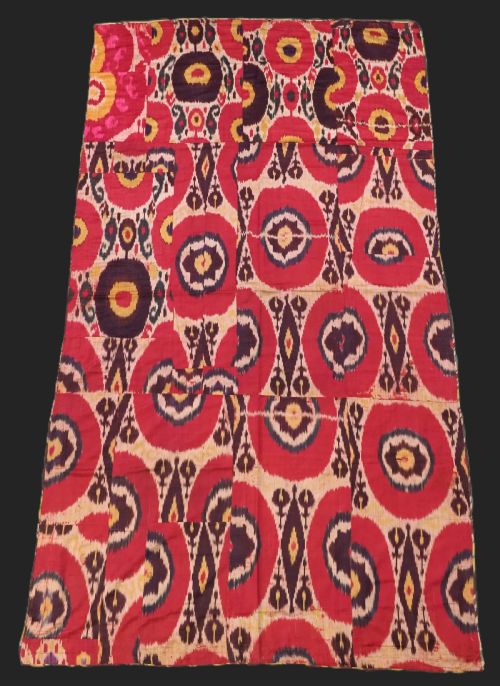


Red Silk Tapestry
Red silk tapestry panels and embroideries span Central Asian tribal traditions, Persian workshop pieces, and European historical textiles.
Red Silk Tapestry
A red silk tapestry search leads you through Central Asian Suzanis, Persian Rasht embroideries, and European wall hangings. These textiles include dowry embroideries, yurt wall hangings, and border panels originating from regions such as Bukhara, Tashkent, and Samarkand.
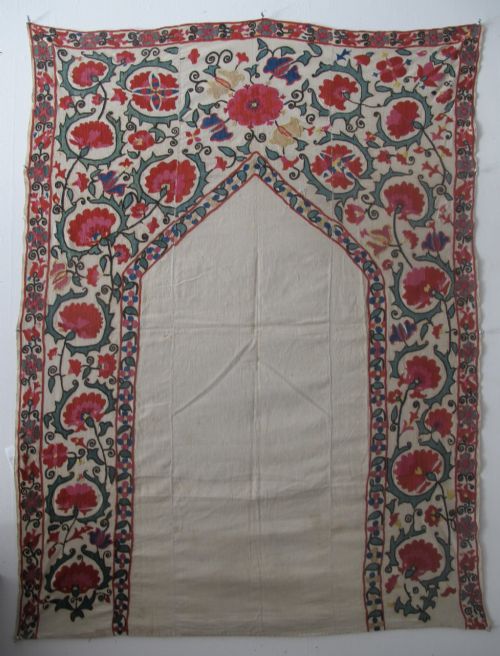
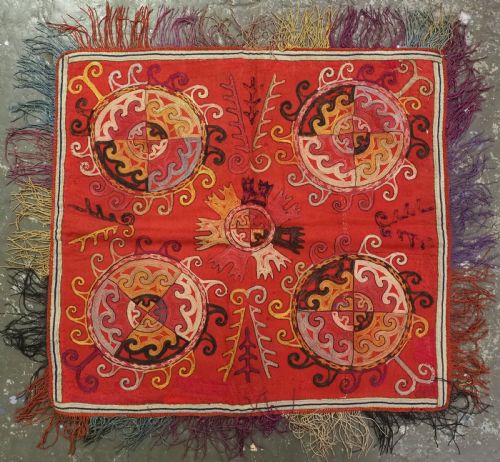
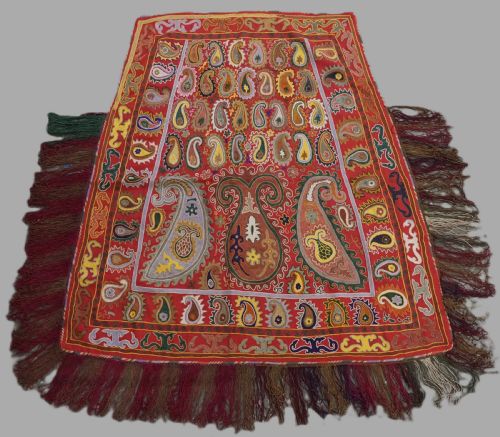
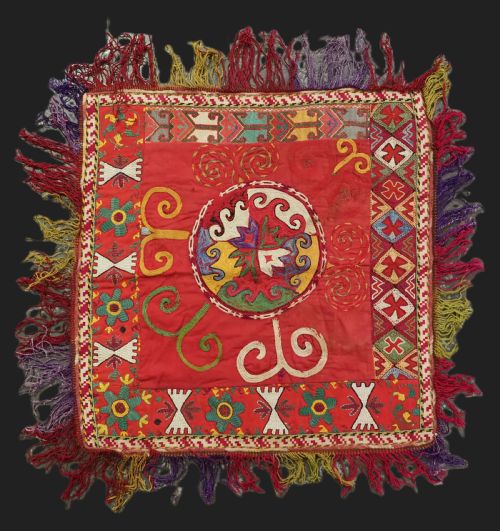
The pieces you encounter most frequently on this page are Central Asian Suzanis and tribal embroideries dating from the nineteenth and early twentieth centuries. These works typically feature vibrant silk thread or applique work set against red cotton, wool, or felt grounds.
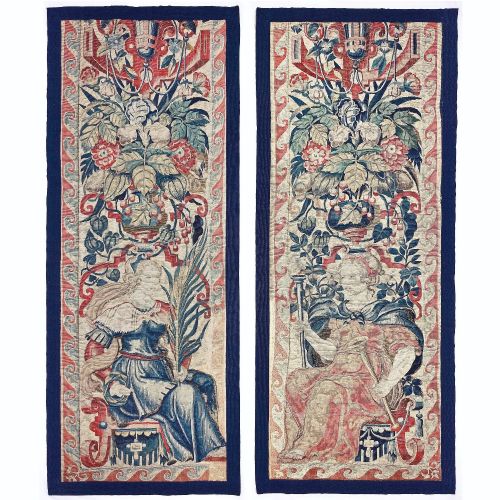
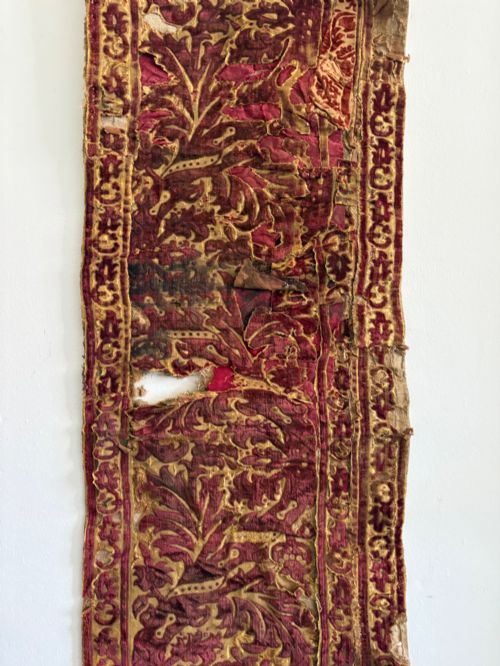
Historical European examples also appear, ranging from sixteenth-century Flemish border panels to seventeenth-century Italian Renaissance embroidered silk and velvet panels. These offer a distinct contrast to the tribal geometric and floral motifs found in Asian textiles.
Materials and construction
Materials recorded in these pieces rely heavily on natural fibres, combining silk thread and fabrics with cotton, wool, linen, and felt grounds. Artisans often incorporated metallic thread and velvet to add texture and depth to the embroidered surfaces.
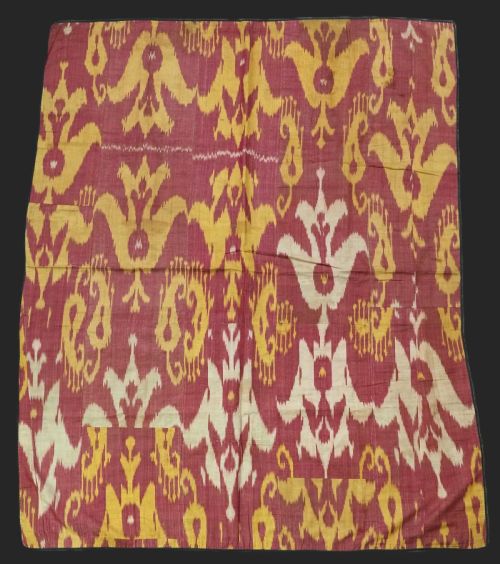
Techniques range from fine needlework embroidery and applique work to semi-silk ikat weaving and tapestry construction. Workshops and tribal makers utilised surface stitching methods to build complex floral, architectural, and star medallion designs.
Red Silk Tapestry Retail Price Guide 2026
Typical asking prices for red silk tapestry among the pieces listed under this phrase on Sellingantiques today, from the lower quarter to the upper quarter. They describe what is for sale here now, not the wider market.
Materials featured across the page include silk, cotton, wool, felt, linen, velvet, and metallic thread.
Assessing quality
Quality in these textiles depends on the density of the embroidery work and the complexity of the design layout, such as fully worked Palak Suzanis versus sparser compositions. The precision of the needlework and the preservation of the ground material dictate the visual impact of the piece.
The Red Silk Tapestry Glossary
- Suzani
- An embroidered tribal hanging originating from Central Asia, traditionally created as part of a bride's dowry. These textiles feature bold botanical and sunburst motifs.
- Ikat
- A dyeing technique where yarns are tie-dyed prior to weaving to create distinct patterned fabrics. Adras is a specific semi-silk variant often produced in Bukhara.
- Rasht embroidery
- A traditional Persian textile art form involving detailed silk embroidery and felt applique work. These panels frequently display central star medallions.
- Orphrey
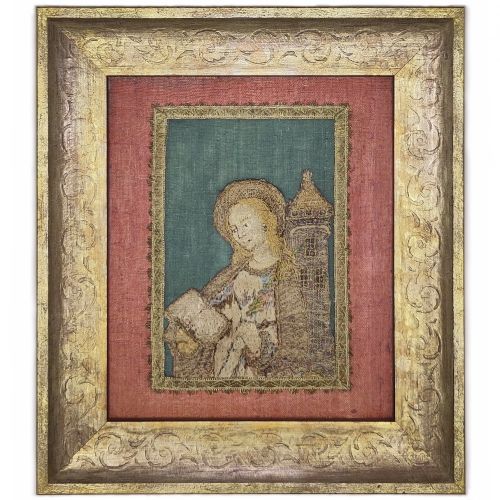
- An embroidered band or panel ornamenting ecclesiastical vestments. Surviving fragments often form decorative wall panels.
- Tush kyiz
- A large, elaborately embroidered wall hanging traditionally made by Kyrgyz women to commemorate the marriage of a son or daughter.
Red Silk Tapestry: Frequently Asked Questions
What is a suzani used for?
Suzanis were traditionally created as dowry items by Central Asian brides, serving functional roles as ceremonial covers, furnishings, or wall hangings.
Today, collectors mount these large embroidered textiles on walls to display their intricate floral and geometric patterns as primary interior focal points.
How do I care for antique silk embroidery?
Antique silk textiles require protection from direct sunlight to prevent natural dyes and silk fibres from fading or weakening over time.
Display these pieces away from high moisture areas and support their weight evenly if mounted on a wall.
How do I date a Central Asian textile?
Dating relies on examining the types of dyes used, the construction of the base fabric, and traditional regional design characteristics.
Earlier nineteenth-century examples often feature vegetable-derived dyes and hand-spun cotton or wool grounds, while later pieces shift toward synthetic colourants.
What is the difference between a Suzani and an Ikat?
A Suzani is a textile finished through surface embroidery stitched onto a pre-woven foundation fabric, usually displaying floral or medallion designs.
An Ikat is a patterned fabric where the design is dyed directly onto the threads before the weaving process takes place.