


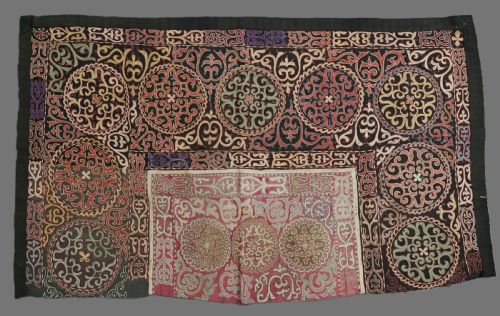

Red Silk Suzani
A red silk suzani brings vibrant Central Asian textile art into a room with striking crimson colour and historic needlework.
Red Silk Suzani
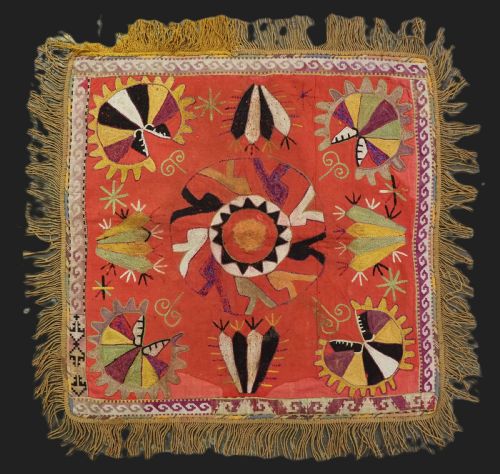
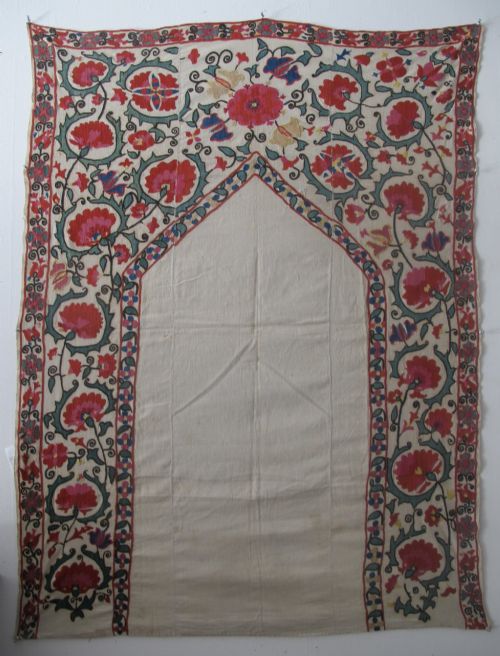
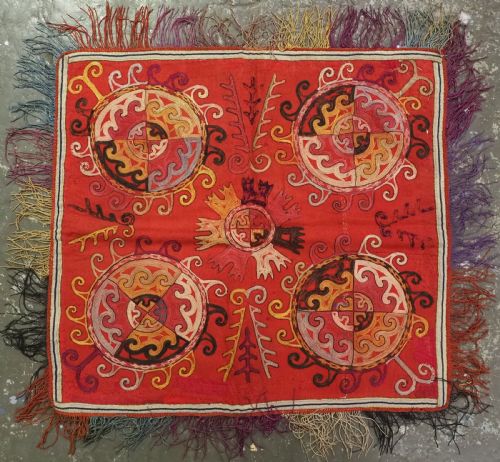
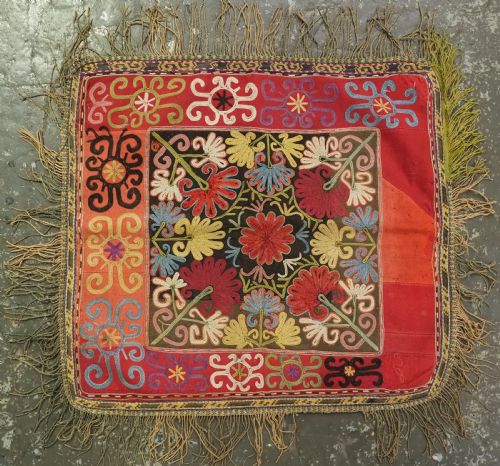
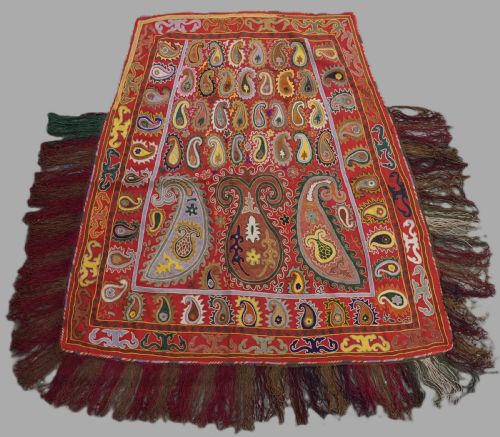
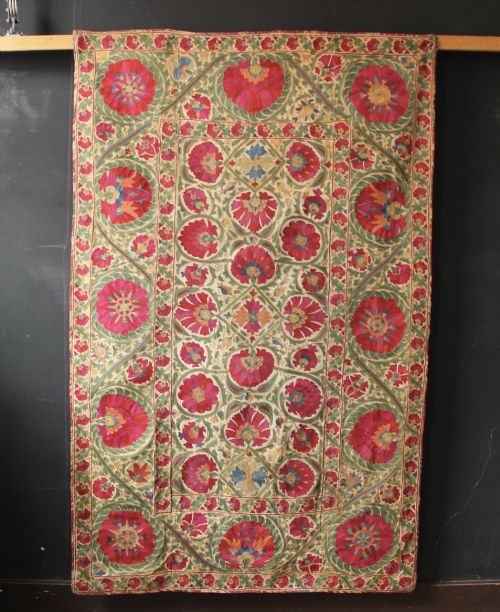
A red silk suzani is a traditional embroidered textile originating from Central Asia, most commonly associated with Uzbekistan and regional centres such as Bokhara, Tashkent and Uratube. These striking wall hangings and decorative pieces range from mid nineteenth century examples to early twentieth century works, reflecting the rich heritage of Uzbek folk art.
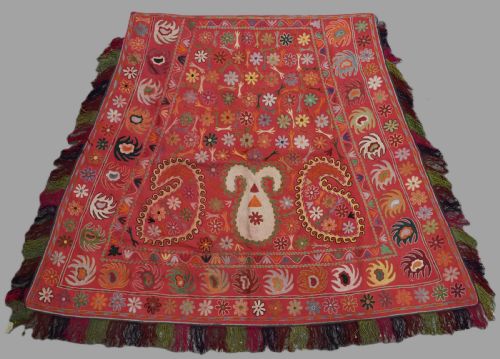
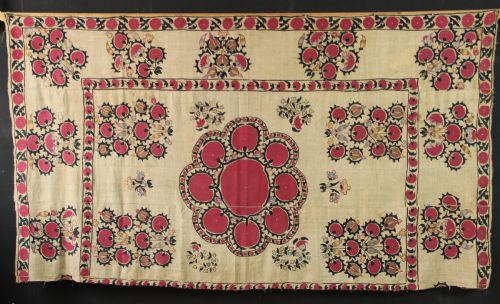
Buyers examining these textiles encounter various distinct formats, including large palak designs featuring central stars and dense full work embroidery, alongside nim suzani pieces. The assortment spans traditional tribal items attributed to groups like the Lakai alongside refined urban workshop productions.
Most pieces function primarily as textiles and wall hangings, bringing bold floral and geometric motifs into modern interiors. The recurring presence of red grounds provides a dramatic backdrop for the intricate silk stitching executed across cotton or mixed adras foundations.
How They Were Made
These textiles rely on a foundation fabric constructed from cotton, pure silk, or adras, which combines silk warps with cotton wefts. Artisans then apply extensive hand embroidery using dyed silk threads to build up dense, tactile patterns across the ground.
The construction involves specialised needlework techniques executed by hand, resulting in substantial coverage where the underlying cloth is often completely obscured by dense stitching in full work examples.
Red Silk Suzani Retail Price Guide 2026
Typical asking prices for red silk suzani among the pieces listed under this phrase on Sellingantiques today, from the lower quarter to the upper quarter. They describe what is for sale here now, not the wider market.
Listings feature cotton, silk, and adras materials across pieces dated from the mid nineteenth century to the early twentieth century.
What Varies in Quality
The distinction between standard examples and the finest pieces rests upon the density and complexity of the silk embroidery. Full work suzanis that cover the entire foundation ground demonstrate superior artisan commitment compared to more sparsely decorated versions.
Visual impact is heavily determined by the vibrancy and preservation of the red dye on the ground fabric and the surrounding silk motifs. Condition and scale also play significant roles, with larger pieces from mid nineteenth century periods commanding attention for their visual presence.
The Red Silk Suzani Glossary
- Suzani
- A traditional embroidered tribal textile from Central Asia, usually worked in silk on a cotton or adras ground. These pieces were traditionally created as part of a bride's dowry.
- Adras
- A traditional Central Asian mixed fabric woven with a silk warp and a cotton weft. It provides a sturdy yet lustrous base for heavy embroidery.
- Palak
- A large scale suzani design characterised by heavy, dense embroidery dominated by a central star or medallion motif. The term denotes full coverage of the ground fabric.
- Nim Suzani
- A smaller or half scale version of the traditional suzani hanging. These pieces offer a more compact format while retaining the same intricate silk needlework.
- Bokhara
- A historic Central Asian city and renowned centre for textile production. Pieces associated with this origin display distinct regional design traditions.
Red Silk Suzani: Frequently Asked Questions
What is a red silk suzani used for?
These historical textiles function primarily as decorative wall hangings and interior display pieces in modern homes.
They bring vibrant colour and texture to living spaces, traditionally originating as dowry items in Central Asian households.
How do I care for an antique suzani?
Protect the textile by mounting it away from direct sunlight to prevent the natural silk threads and red dyes from fading.
Keep the piece in a stable environment and consult a specialist textile conservator for cleaning rather than attempting domestic washing.
How are different periods identified?
Dating relies on examining the specific characteristics of the silk threads, the weave of the cotton or adras ground, and traditional regional design motifs.
Earlier examples from the mid nineteenth century often display distinct dye variations and denser hand embroidery compared to twentieth century pieces.
Where did these embroideries originate?
They originate from Central Asia, with specific pieces attributed to regions such as Uzbekistan, Bokhara, Tashkent, and Uratube.
Tribal groups including the Lakai also produced distinctive versions with unique stylistic markers.