
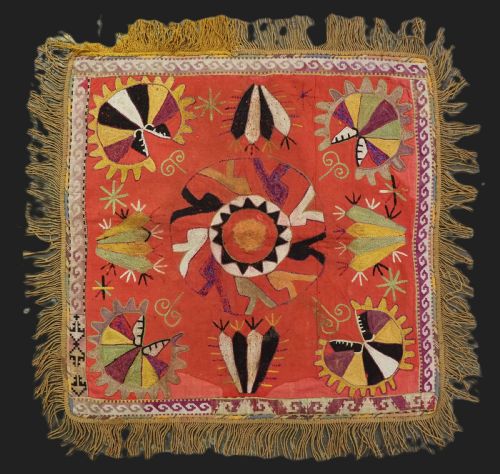
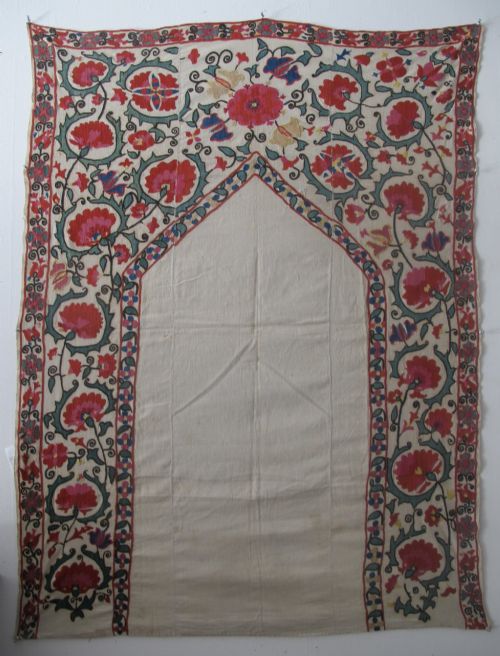
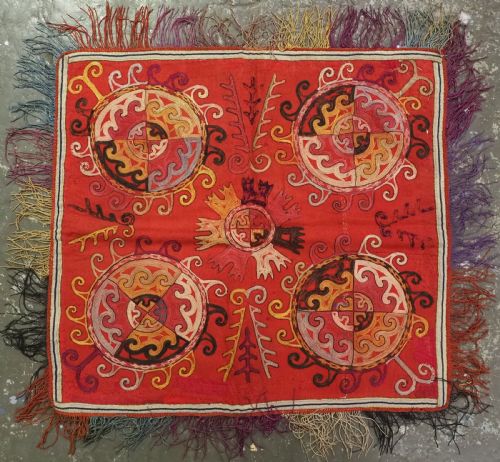
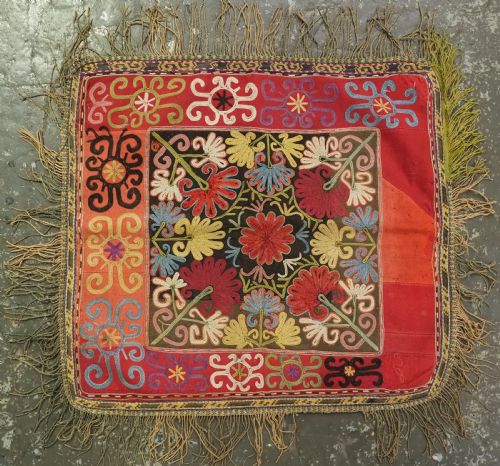


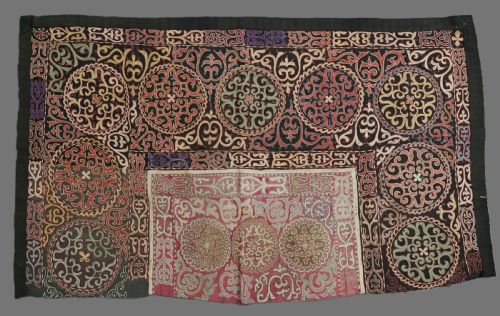

Red Silk Embroidered Suzani
When you examine a red silk embroidered suzani, you hold a piece of Central Asian textile heritage made for domestic decoration and ceremonial use.
Red Silk Embroidered Suzani
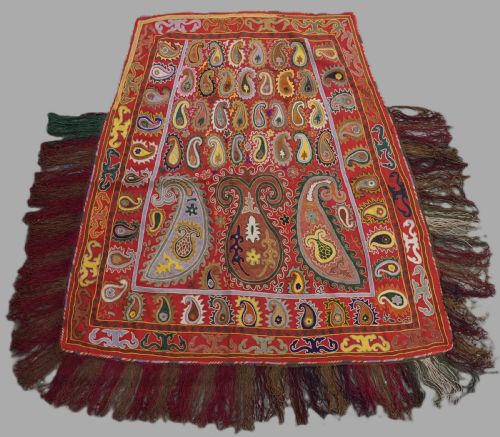
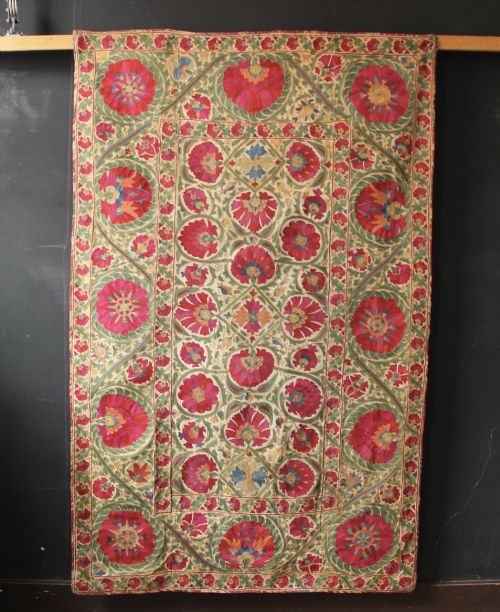
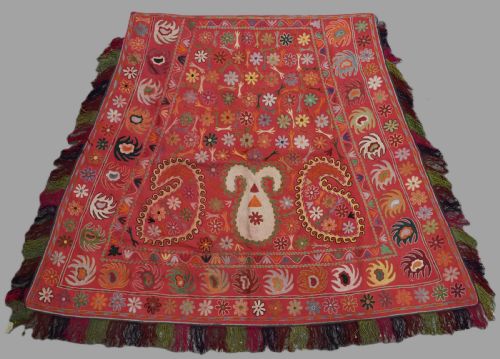
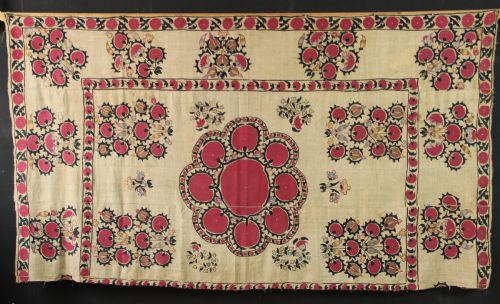
A red silk embroidered suzani is a traditional Central Asian textile originating primarily from Uzbekistan, created as wall hangings, dowry pieces, or horse covers.
Buyers on this page meet examples spanning from the mid-nineteenth century into the early twentieth century, incorporating regional styles such as Bokhara, Tashkent, Nurata, and Lakai tribe works.
These pieces function as significant decorative textiles, often displaying dense floral motifs, architectural elements, or central stars on grounds of cotton, wool, or adras silk-cotton blends.
How They Were Made
Artisans embroidered silk thread onto foundation fabrics of cotton, wool, or adras, building complex patterns by hand.
Ground cloths vary between red cotton, red wool, and mixed adras weaves, providing a stable base for the dense surface embroidery.
The listings span nineteenth and early twentieth-century production across Uzbekistan, featuring regional designations like Bokhara, Tashkent, and Nurata alongside nomadic Lakai tribal works.
What Varies in Quality
The density of the embroidery separates standard panels from fully worked examples, where the foundation fabric remains largely hidden beneath the silk threads.
Design complexity and precision in regional motifs define individual pieces, distinguishing simple floral layouts from intricate architectural or palak compositions.
The Red Silk Embroidered Suzani Glossary
- Suzani
- An embroidered tribal textile from Central Asia, traditionally worked by women as part of a bride's dowry. These panels served as wall hangings, bed covers, or ceremonial drapery.
- Nim Suzani
- A smaller half-size format of the traditional textile, often measuring around half the dimensions of a standard wall hanging. These compact pieces were suited for smaller domestic spaces.
- Palak
- A fully embroidered design style featuring large central stars or medallions covering the entire ground cloth. This layout represents intensive needlework originating from urban centres like Tashkent.
- Adras
- A traditional hand-woven fabric combining silk warp threads and cotton weft threads. It provides a textured foundation for silk embroidery in regional textiles.
- Ilgich
- A specific type of dowry embroidery or hanging associated with nomadic groups such as the Lakai tribe. These items often feature distinct geometric and figurative motifs.
Red Silk Embroidered Suzani: Frequently Asked Questions
How were suzanis used in traditional homes?
Families utilised these textiles as decorative wall hangings, wedding displays, and ceremonial covers within nomadic yurts and urban houses. They formed an essential part of domestic life and cultural identity.
Over generations, these panels moved from functional household settings into collections, prized for their visual impact and historic needlework.
How do I distinguish regional suzani styles?
Regional types present distinct characteristics, such as the architectural designs of Bokhara or the dense star motifs of Tashkent palaks. Lakai pieces often show smaller, more abstracted tribal patterns.
Studying the specific ground cloth and embroidery density helps attribute a piece to a particular town or nomadic group.
Can I hang a textile on the wall?
Mounting these panels requires distributing the weight evenly across the entire upper edge using professional conservation methods. Direct pinning causes stress to the historic fabric and threads.
Proper support ensures the textile remains secure and visible without damaging the delicate silk embroidery.
What materials make up these embroideries?
Artisans worked primarily with vibrant silk threads to execute the surface designs, relying on hooked needles or tambour hooks. The foundation fabrics consist of locally woven cotton, wool, or adras silk-cotton mixtures.
These natural fibres interact differently with age, contributing to the texture and drape of each piece.