




Red Painted Trunk
A red painted trunk brings immediate warmth to a room, offering practical storage disguised in rich pigment and folk character.
Red Painted Trunk
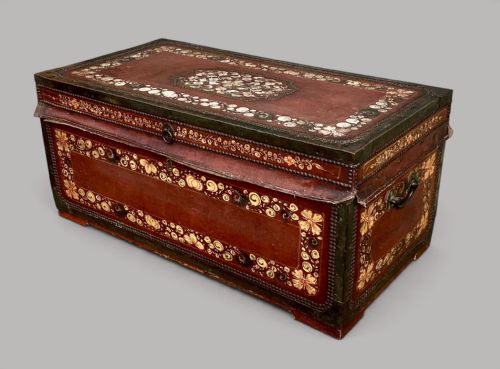
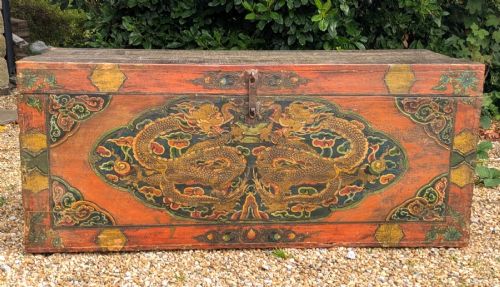
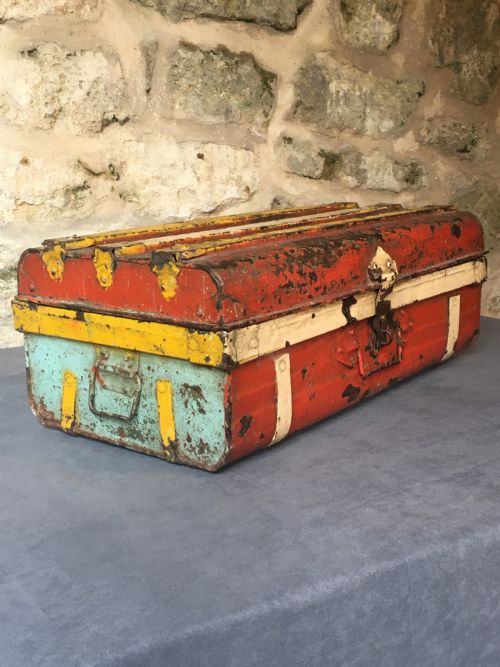
A red painted trunk spans humble pine blanket boxes, dowry chests, and travel coffers from the eighteenth century through to the early twentieth century. Buyers seeking a red painted trunk encounter regional variations ranging from Scandinavian folk art pieces to Chinese export camphor-wood chests and Hungarian coffer boxes.
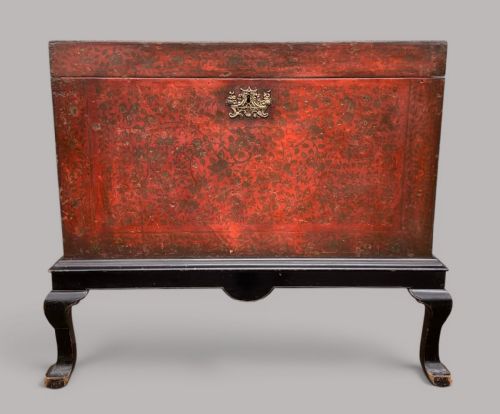
Domestic pine examples frequently appear alongside trade trunks bound in leather and brass, or lacquered cashier boxes originating from Persia and the East. These objects served utilitarian storage functions for journeys, linens, and valuables before evolving into decorative interior furnishings.
How they were made
Pine and camphor-wood provide the structural timber base for these constructions, shaped into dome-top or flat-lid forms. Iron, brass, and metal bindings reinforce corners and edges for travel durability.
Surfaces receive layers of pigment, lacquer, and paint, often displaying floral motifs or original patination applied directly to the wood.
Red Painted Trunk Retail Price Guide 2026
Typical asking prices for red painted trunk among the pieces listed under this phrase on Sellingantiques today, from the lower quarter to the upper quarter. They describe what is for sale here now, not the wider market.
Listings feature nineteenth-century pine, iron, and brass across Scandinavian, Hungarian, and Chinese export origins.
What varies in quality
The survival of original surface pigment distinguishes untouched examples from those carrying later re-paint. Depth of tone and the integrity of regional folk art decoration dictate the visual weight of the piece.
Structural joinery, the presence of period hardware such as brass locks and iron hinges, and untouched interior linings separate standard utility boxes from high-status marriage and dowry chests.
The Red Painted Trunk Glossary
- Coffer
- A heavy chest traditionally used for storing valuables or documents. These sturdy containers often feature hinged lids and iron reinforcement.
- Mule chest
- A storage chest fitted with one or more drawers beneath the main compartment. This form bridges the gap between traditional blanket boxes and modern drawer chests.
- Dowry chest
- A decorative trunk commissioned or decorated for a marriage. These pieces frequently display specific regional motifs, initials, or dates celebrating the union.
- Campaign case
- Portable furniture designed for travel by military officers or merchants. They often incorporate brass corners and recessed handles for protection on journeys.
- Lacquer
- A durable finish applied in multiple coats and polished to a hard sheen. It protects wooden surfaces while providing a vibrant base for pigment.
Red Painted Trunk: Frequently Asked Questions
What were red painted trunks used for?
These trunks primarily served as secure containers for clothing, blankets, and personal valuables during transit or domestic storage. Marriage and dowry chests specifically held household linens and wealth brought to a new household by a bride.
Over time, merchants and travellers also utilised specialised trunks for trade goods, documents, and jewellery on long journeys across continents.
How do I date an old painted trunk?
Dating relies heavily on construction methods, timber choice, and the type of hardware attached to the box. Hand-cut dovetails, forged iron hinges, and original paint characteristics point towards specific periods like the Georgian era or the nineteenth century.
Inscriptions, painted dates, or tax stamps occasionally found on the interior surface provide precise chronological markers for individual pieces.
Are these trunks suitable for daily storage?
Their original utility translates well into modern interiors for storing blankets, shoes, or bulky household items out of sight. The sturdy pine and camphor-wood construction handles everyday use while functioning as a coffee table or bench.
Care should be taken to protect historic painted surfaces from excessive moisture and direct sunlight to preserve the pigment.
How do Scandinavian and Chinese trunks differ?
Scandinavian examples typically utilise local pine decorated with folk art floral motifs or geometric patterns in earthy red pigments. They reflect rural European traditions associated with dowry boxes and strong rooms.
Chinese export pieces often feature camphor-wood, elaborate brass hardware, leather coverings, and lacquered finishes tailored for maritime trade and colonial markets.