

Red Mahogany Chest
When you search for a red mahogany chest, you enter a tradition of fine cabinet-making spanning the Georgian and Victorian eras.
Red Mahogany Chest
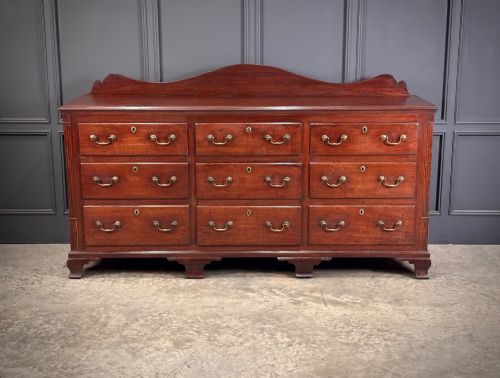
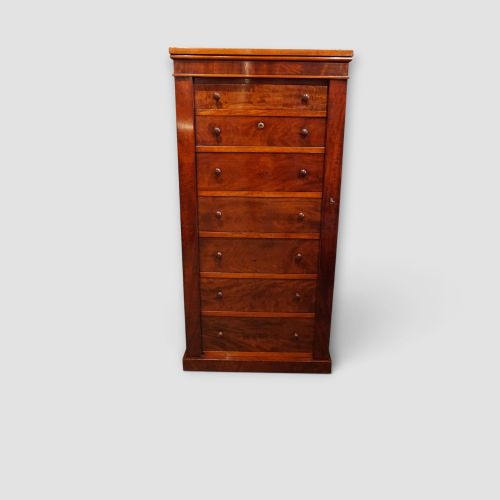
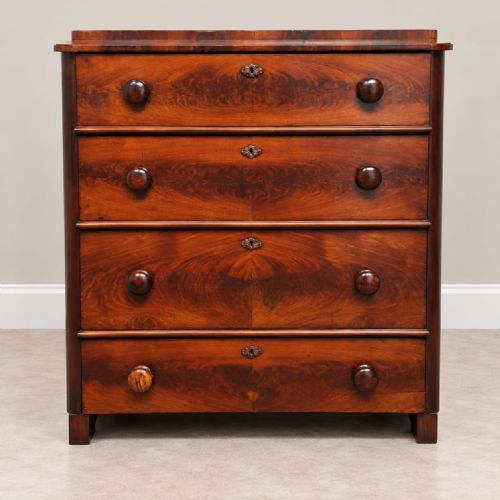
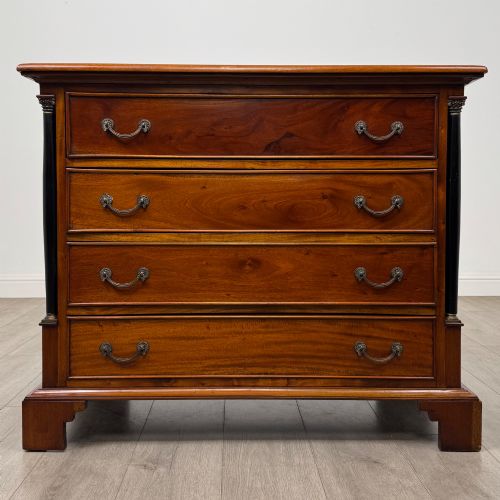
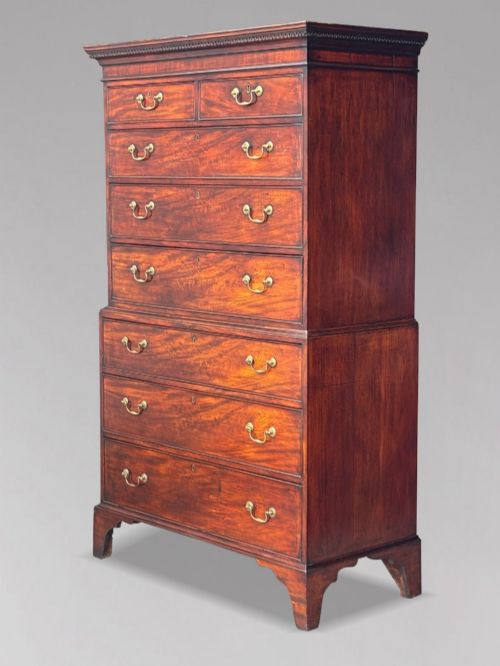
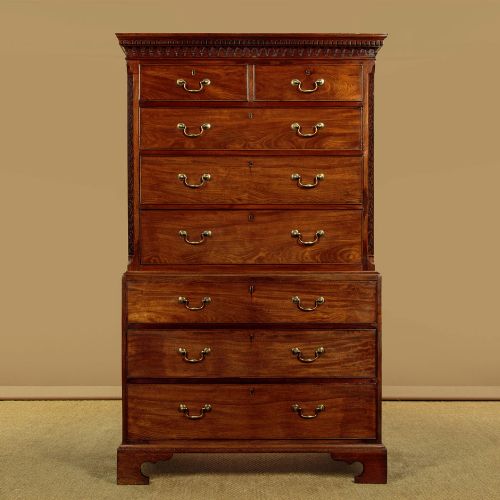
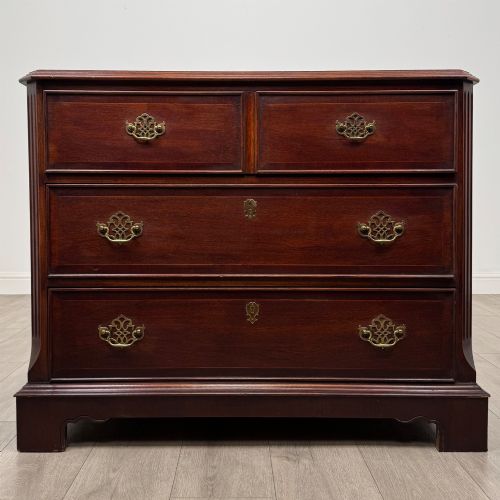
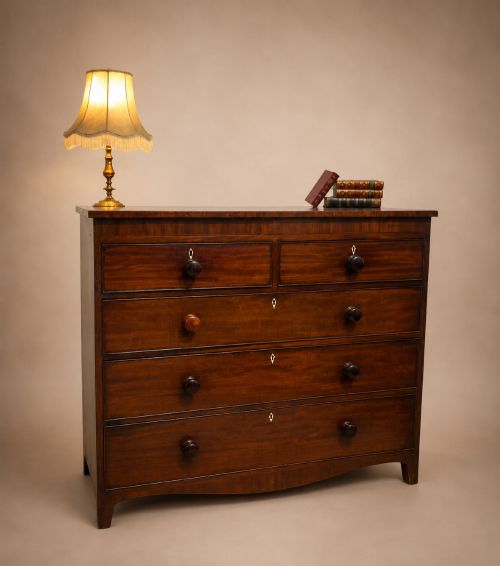
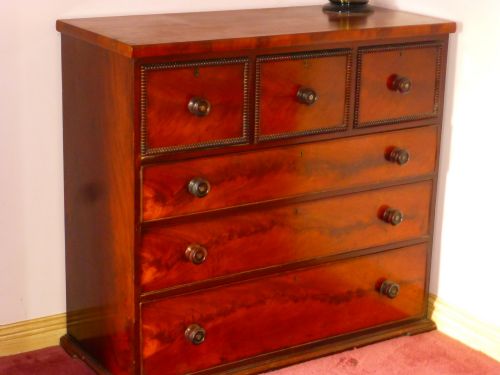
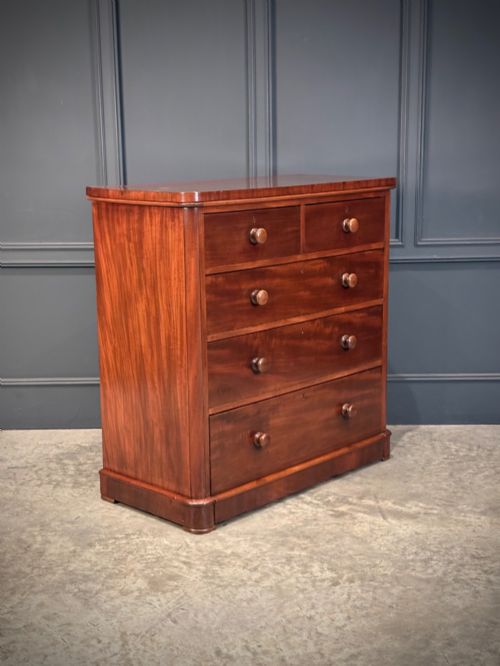
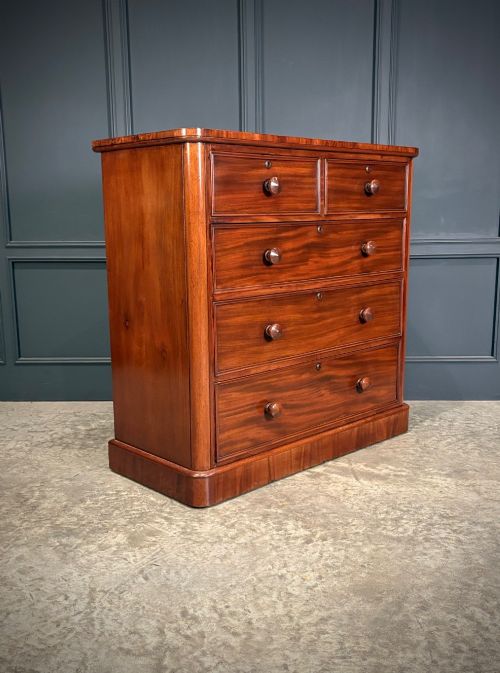
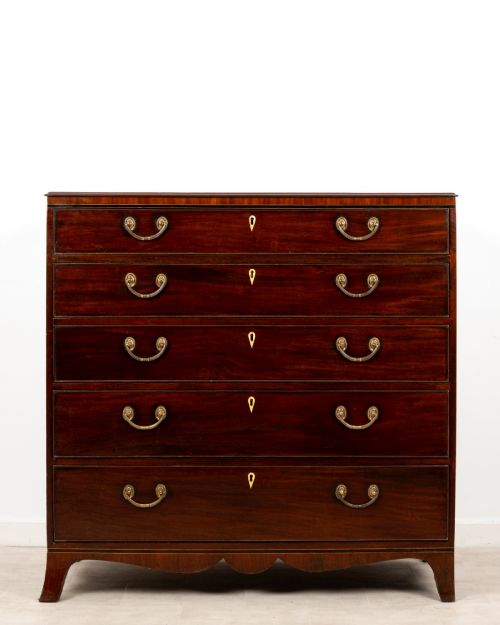
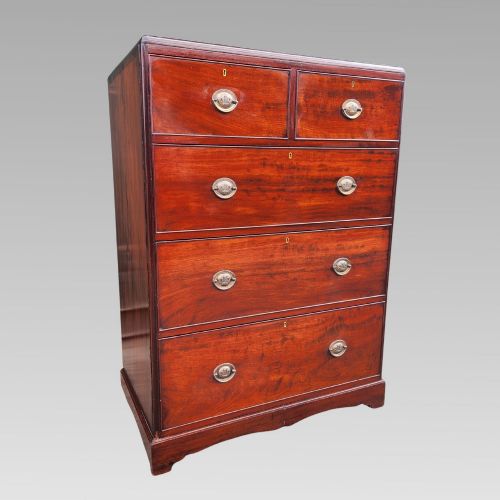
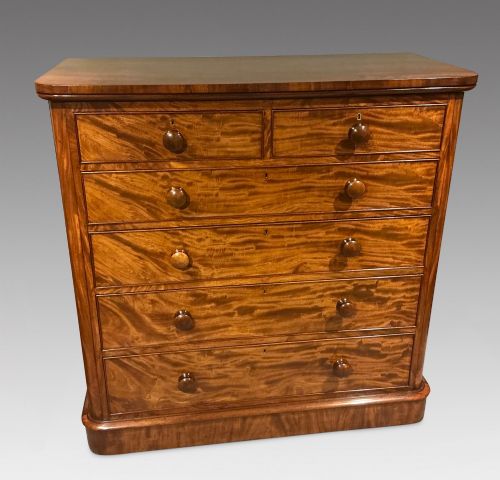
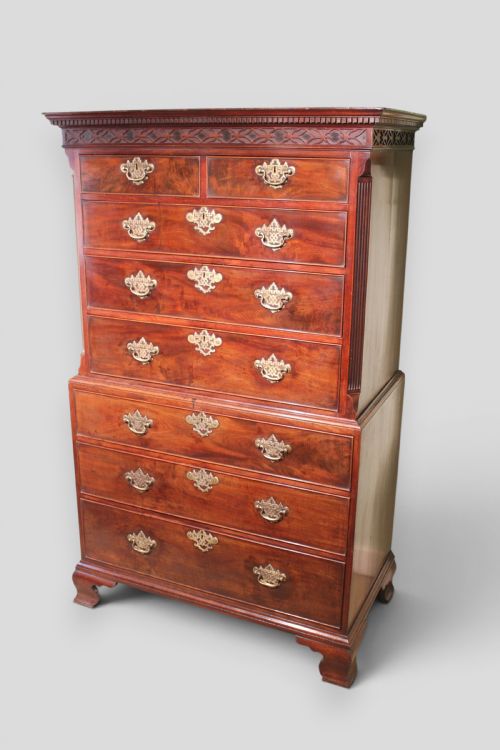
A red mahogany chest is primarily a drawer-based storage unit, taking the form of traditional chests of drawers, tallboys, and larger chest-on-chest configurations.
The pieces appearing on this page stem predominantly from the eighteenth and nineteenth centuries, including Georgian, Regency, and Victorian periods.
Beyond standard chests, the selection encompasses specialised items such as secretaire chests, miniature drawers, apothecary boxes, and collector cabinets.
How they were made
Construction relies heavily on solid mahogany and flame mahogany veneer applied to secondary timbers such as oak and pine.
Cabinet-makers integrated functional details including brass hardware, bone escutcheons, leather inserts, and ebonised wood accents.
Drawer interiors frequently feature durable secondary woods like oak, whilst specialised locking mechanisms and sliding boards add utility.
Red Mahogany Chest Retail Price Guide 2026
Typical asking prices for red mahogany chest among the pieces listed under this phrase on Sellingantiques today, from the lower quarter to the upper quarter. They describe what is for sale here now, not the wider market.
Listings feature periods spanning from the early 18th century through to the Edwardian era, utilising mahogany, flame veneer, brass, and leather.
What varies in quality
Quality rests significantly upon the choice of timber, with highly figured flame mahogany veneers and rich red tones separating superior examples from plain ones.
The precision of period details, such as hand-cut dovetailing, original brass handles, and working locks with keys, marks the division between standard utility pieces and finer workshop output.
Hallett & Sons·Jas Shoolbred London·Mon Krieger
The Red Mahogany Chest Glossary
- Flame mahogany veneer
- A decorative wood slice cut from the branch junction, producing a distinct flickering flame pattern. It requires great skill to match across multiple drawer fronts.
- Tallboy
- A tall chest of drawers made by stacking one chest upon another taller base chest. This form originated in the late seventeenth century for vertical storage.
- Secretaire
- A chest incorporating a fitted writing drawer with a drop-front flap. Inside reveal small pigeonholes and subsidiary document drawers.
- Bow front
- A convex curved front facade popular during the Regency and Edwardian periods. It softens the linear profile of standard case furniture.
Red Mahogany Chest: Frequently Asked Questions
How do I date a chest?
Dating relies on observing construction methods, timber choice, and hardware styles across periods. Georgian pieces often show hand-cut dovetails and oak drawer linings, while Victorian examples introduce machine-sawn elements.
Changes in handle design and carcase proportions also help distinguish an eighteenth-century piece from a later nineteenth-century revival or Edwardian interpretation.
What is a bachelor chest?
A bachelor chest is a compact drawer unit featuring a pull-out wooden slide above the main drawers. This folding or sliding shelf served as a temporary writing surface.
These pieces typically date from the Georgian period and were designed for smaller dressing rooms or private chambers.
Are the handles original?
Determining originality involves inspecting the interior of the drawer front for filled pinholes left by earlier backplates. Replacement hardware was common during routine maintenance over centuries of use.
Original brass drop handles or bail pulls will show appropriate surface wear and match the exact period mounting pattern.
How should I maintain the wood?
Maintenance requires keeping the mahogany away from direct heat sources and strong sunlight to prevent the red finish from fading. Regular dusting with a dry, soft cloth preserves the polished surface.
Occasional application of traditional beeswax feeds the timber and enhances the depth of the figured grain without building up synthetic residue.