


Red Leather Stool
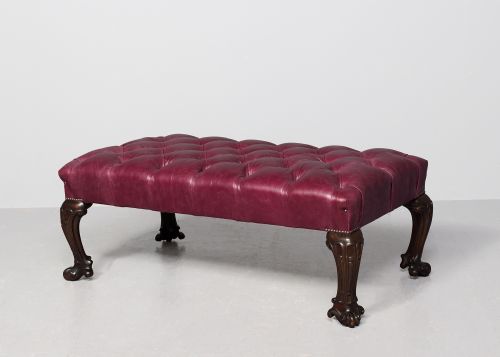
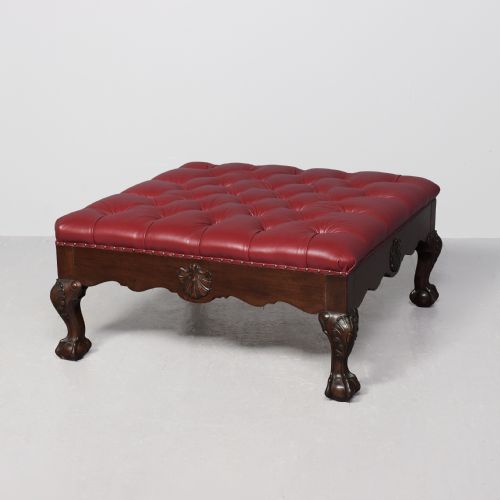
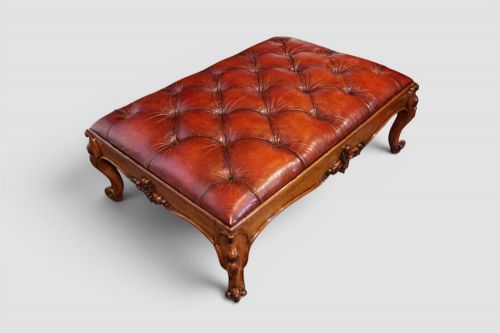
These red leather stool examples span the nineteenth century to the Edwardian era, bringing together rich hide upholstery and sturdy timber frames.
Red Leather Stool
A red leather stool serves multiple domestic purposes across the periods, appearing as low footstools, piano seats, and substantial long ottomans. The search phrase covers pieces originating from the Regency era through to the late Victorian period and Edwardian decades.
Most items you encounter on this page rely on nineteenth-century craftsmanship, utilising timbers like mahogany, walnut, and oak. Footstools and ottomans dominate the selection, often featuring buttoned upholstery and characteristic wood frames.
The aesthetic leans heavily toward traditional British design, including George III styles and Chippendale revival pieces with carved details. You also find specialised forms such as adjustable piano stools, duet seats, and library steps paired with leather tops.
Materials and construction
Timbers form the structural foundation of these pieces, with solid mahogany, walnut, and oak shaped into cabriole legs, reeded supports, and frames. Wood selection dictates the weight and overall presence of each stool.
Leather upholstery covers the tops, secured frequently with brass-studded detailing and traditional buttoning techniques. Hand-dyed hides in burgundy, oxblood, and red provide a durable surface designed for frequent use.
Listings feature woods including mahogany, walnut, and oak across Victorian, Edwardian, and Regency periods.
Evaluating the craftsmanship
Superior examples display careful timber carving and precise joinery in the frame, particularly where legs meet the seat rails. Finer pieces often incorporate high-grade mahogany or walnut with rich natural grain patterns.
The quality of the leather treatment and buttoning work distinguishes better items from standard variants. Hand-coloured or hand-dyed hides with even tension across the tufting demonstrate superior workshop standards.
The Red Leather Stool Glossary
- Buttoned
- Upholstery secured with deep indentations held by fabric or leather-covered buttons. This technique creates a distinctive quilted texture across the seat.
- Cabriole leg
- A furniture leg that curves outward and then tapers inward, mimicking an animal's leg. It often terminates in a pad or claw foot.
- Ottoman
- A low, upholstered seat or box stool without arms or a back. They frequently feature hinged lids for interior storage.
- Reeded
- A decorative moulding consisting of parallel convex strips resembling parallel reeds. It appears on the legs and frames of nineteenth-century seating.
Red Leather Stool: Frequently Asked Questions
How do I date a red leather stool?
Dating relies on timber choice, leg styles, and construction methods characteristic of specific periods like the Victorian era or Regency years. Examining the type of screws, joinery, and wear patterns helps narrow the timeframe.
Stylistic revivals during the late nineteenth century also emulate earlier Georgian forms, requiring careful inspection of the wood age and upholstery tacking.
Were these stools used as coffee tables?
Many large nineteenth-century footstools and ottomans find contemporary use as coffee tables due to their robust proportions and flat surfaces. Their sturdy timber frames support trays and books comfortably.
Historic workshops originally built them to rest feet or provide extra seating in grand drawing rooms and libraries.
What is buttoned leather upholstery?
Buttoned leather involves pulling the hide tight against internal stuffing and securing it with recessed buttons arranged in a geometric pattern. This method holds the padding firmly in place while creating distinct folds.
Craftsmen often employ this technique on larger Victorian and Edwardian footstools to add visual depth to the surface.
How should I care for antique red leather?
Maintaining antique leather requires regular dusting with a soft cloth and occasional treatment with appropriate leather conditioners to prevent drying. Avoiding direct sunlight protects the hand-dyed red or burgundy colour from fading.
Gentle cleaning preserves the original patina built up over decades of domestic use.