





Red Indigo Tribal Weaving
Red indigo tribal weaving brings together hand-spun wool and natural dyes in rugs, carpets and flatweaves created by nomadic and village makers across the Caucasus and Persia.
Red Indigo Tribal Weaving
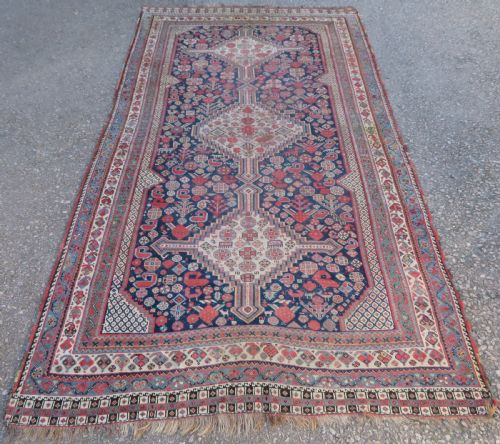
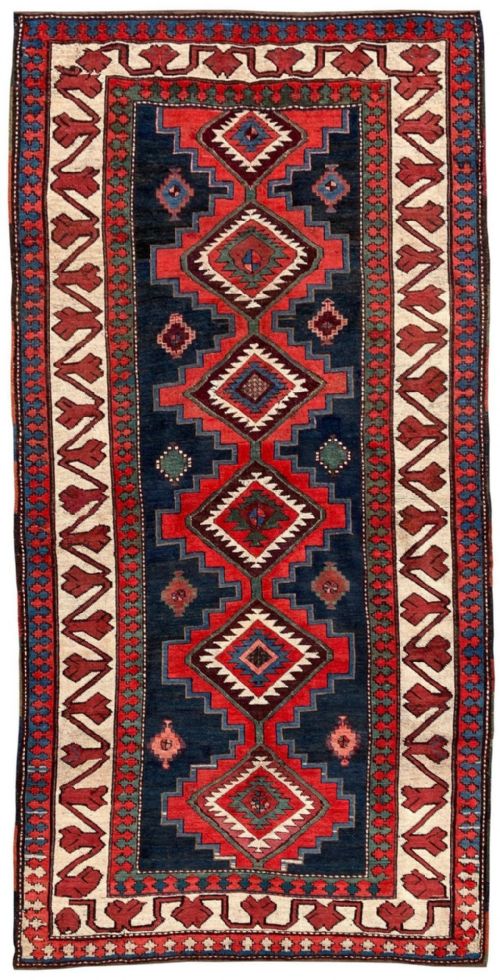
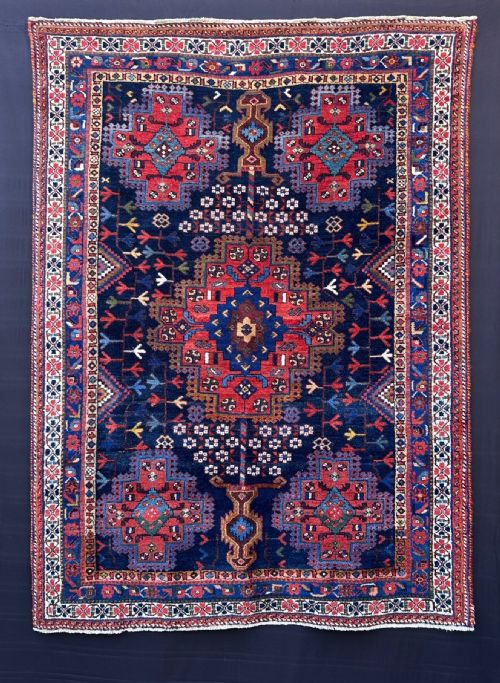
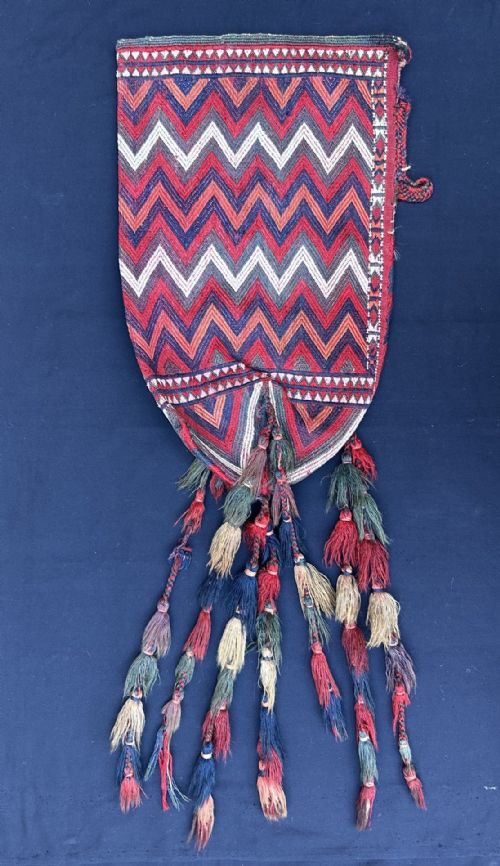
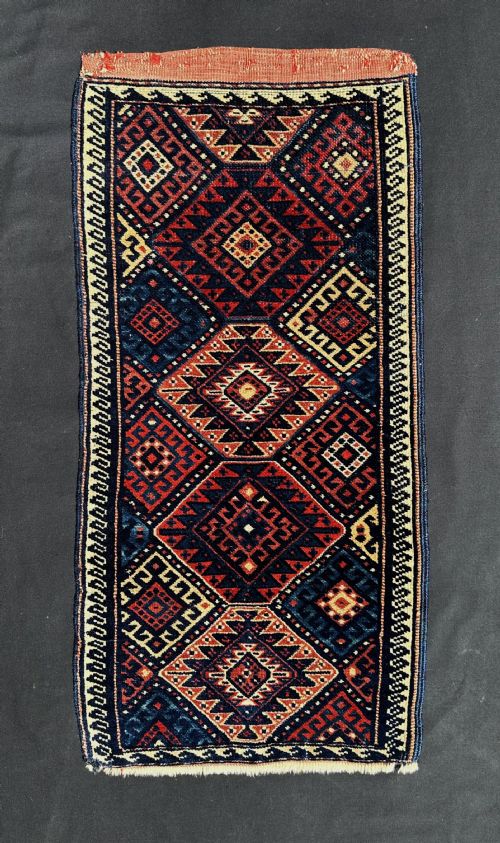
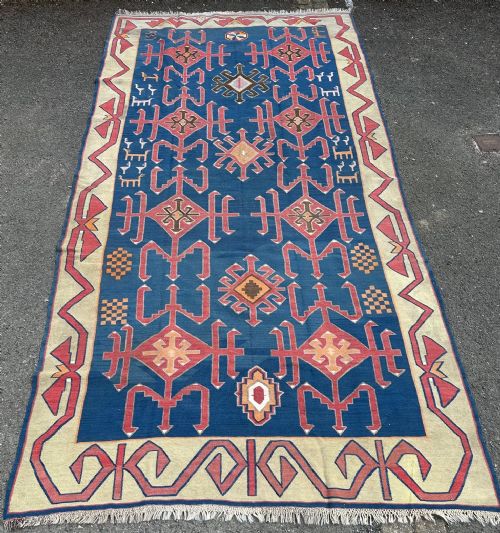
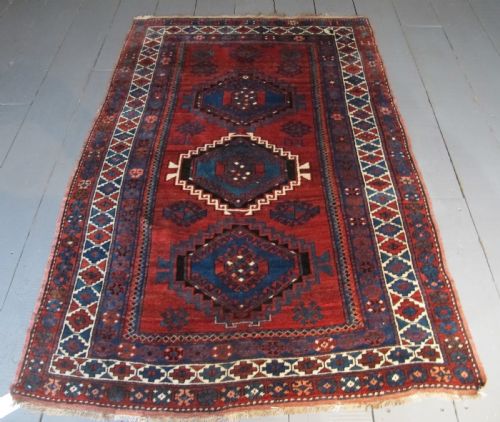
Red indigo tribal weaving encompasses regional wool textiles, including Kazak rugs, Baluch carpets, Afshar bag faces and Yomut torbas produced from the mid-nineteenth century through to the mid-twentieth century. Buyers encounter smaller utilitarian items such as salt bags, vanity bags and sofres alongside larger area rugs and floor coverings.
The objects stem from specific tribal confederations and village groups, recording distinct cultural designs like the Kepse gul, Mina Khani patterns and single medallions. These pieces functioned as practical furnishings within nomadic camps and village households before entering the antique market.
Materials and Construction Techniques
Makers utilised hand-spun wool and cotton combined with natural dyes to construct pile rugs, kilims and Soumak flatweaves. The resulting textiles display substantial structural integrity through dense knotting and flat-weave panel construction.
Weavers worked on portable horizontal looms set up in camps or permanent village frames, joining narrower strips or separate bag faces together to form larger carpets and covers.
Listings feature items dated from 1860 through to 1940, originating from Caucasian, Persian, and Turkmen tribal groups.
Assessing Quality and Execution
Quality rests upon the purity of the natural dyes, the handling of the hand-spun wool and the precision of the tribal motifs. Superior examples maintain rich saturation in the red and blue fields alongside balanced proportions in the central medallions and border geometry.
The integrity of the weave, whether fine pile or complex Soumak work, dictates the durability and visual impact of the piece. Well-executed pieces show careful alignment of tribal symbols and consistent handling across the entire surface.
The Red Indigo Tribal Weaving Glossary
- Soumak
- A flat-weave technique where coloured wool wrap threads are whipped around the warp threads to create a textured, durable surface. This method appears frequently on storage bags and covers.
- Sofre
- An eating cloth or spread woven by tribal groups for domestic use during meals. These textiles often feature geometric field patterns in wool and cotton.
- Torba
- A small storage bag or hanging sack produced by Turkmen and related tribes. They display distinct gul designs and were traditionally used inside tents for possessions.
- Kilim
- A tapestry-woven, pileless rug or panel produced flat across various tribal regions. These items serve as floor coverings, wall hangings or structural components.
- Gul
- A repeating octagonal or medallion motif used extensively in Turkmen and Baluch tribal weaving. Each pattern identifies specific tribal lineages.
Red Indigo Tribal Weaving: Frequently Asked Questions
How were these tribal pieces used?
Nomads and villagers utilised them for floor coverings, bedding, tent decorations, and practical storage for salt, grain, and personal belongings.
Many smaller formats functioned as saddlebags, eating cloths, or vanity bags tailored for daily transit and domestic life.
How do I care for an antique rug?
Protect the hand-spun wool and natural dyes by keeping the textile out of direct sunlight and using a breathable, non-slip underlay.
Vacuum gently without a rotating brush roll and consult a specialist in antique textiles for professional cleaning.
How can I tell different tribal groups apart?
Distinctive design elements, colour palettes, and structural techniques separate groups like the Baluch, Afshar, Yomut, and Kazak.
Specific medallions, border arrangements, and wool characteristics provide clear markers for regional attribution.