




Antique Persian Saddle Bag
These woven textiles are portable containers made by nomadic and village weavers across Persia, carrying the history of tribal craft in wool and natural dyes.
Antique Persian Saddle Bag
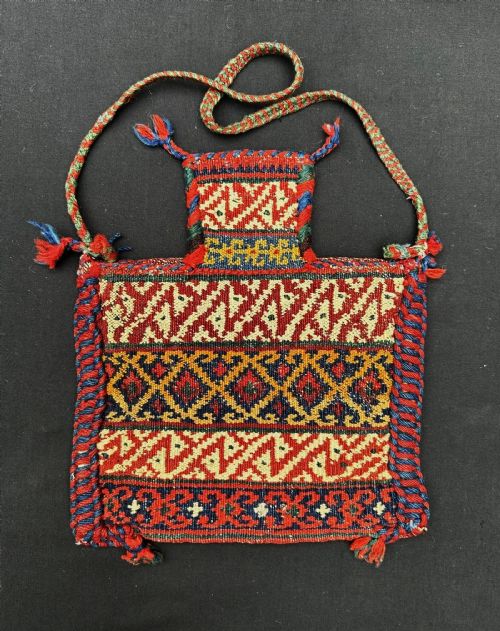
When you search for an antique persian saddle bag, you encounter utilitarian weavings created by nomadic confederations such as the Qashqa'i, Shahsavan, Afshar, Luri, Khamseh, and Kurdish tribes. These pieces functioned as practical pack animals' cargo carriers, woven in pairs to balance across a horse, donkey, or camel.
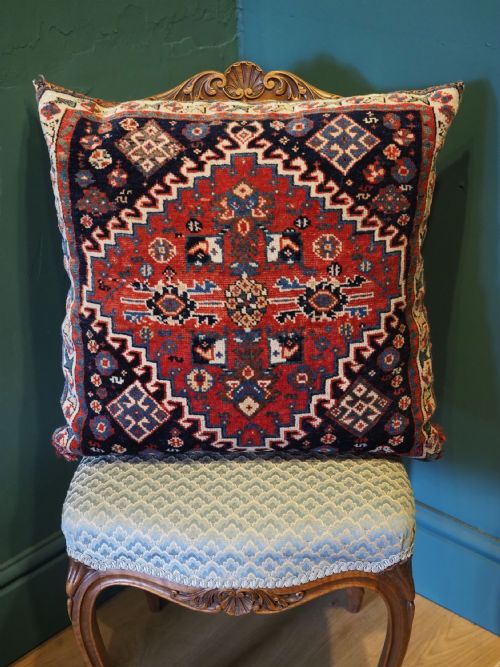
You are most likely to meet complete pairs, single faces, or half bags dating from the middle of the nineteenth century through the early decades of the twentieth century. They often appear repurposed today as small rugs, wall hangings, or floor cushions.
The regional origins span from the northwest in Azerbaijan down through the Zagros mountains and into the southern provinces of Fars and Kerman. Each tribal group utilised distinct design repertoires, structural formats, and colour palettes tied to their specific heritage.
How they were made
The foundation structures rely predominantly on hand-spun wool for both warp and weft, occasionally incorporating cotton for structural stability. Artisans deployed natural dyes derived from plants and insects to colour the fleece, yielding rich, saturated hues that develop deep patination over time.
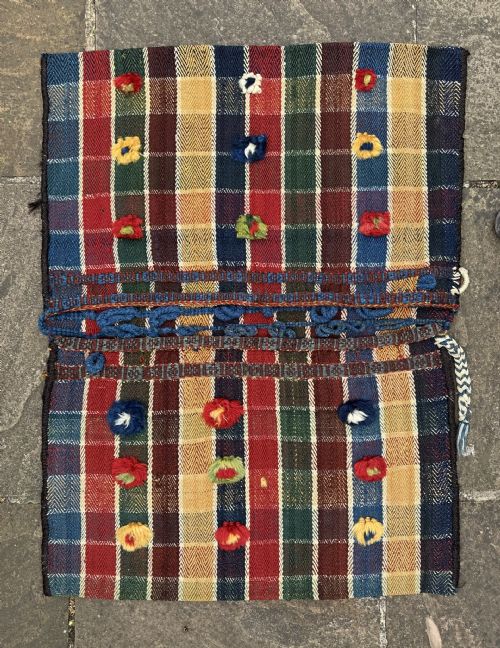
Weaving techniques vary between pile knots and flat-woven structures such as sumac and kilim. Complete examples frequently combine a patterned face with a plain-weave back, and some incorporate leather or metal elements for reinforcement.
Nomadic workshops produced these items on portable horizontal looms set up in camps. The handling of materials reflects a direct relationship between the weaver's immediate environment and the functional demands of transport.
Antique Persian Saddle Bag Retail Price Guide 2026
Typical asking prices for persian saddle bag among the pieces listed under this phrase on Sellingantiques today, from the lower quarter to the upper quarter. They describe what is for sale here now, not the wider market.
Listings demonstrate bag faces and complete pairs produced by nomadic groups across Azerbaijan, Fars, Luristan, and Kerman.
What varies in quality
The standard of materials dictates the primary tier of quality, notably the grade and lustre of the hand-spun wool used in the pile or flatweave. Pieces displaying deep, luminous wool and varied, complex natural dye baths stand apart from those with flat or stiff fibre handling.
Structural integrity and completeness influence the distinction between examples. A surviving piece retaining its original plain-weave back, or a matching pair intact with side cords and closure loops, holds greater archaeological and aesthetic coherence than a detached single face.
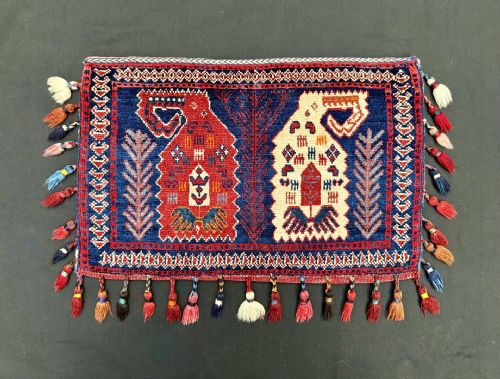
Design execution and precision of the tribal motifs - such as boteh, tile patterns, or geometric lattice work - demonstrate the weaver's technical skill and fluency within their regional tradition.
The Antique Persian Saddle Bag Glossary
- Khorjin
- The traditional Persian term for a saddle bag. It refers specifically to the double-pouch format designed to be slung over a pack animal.
- Sumac
- A supplementary weft-wrapping technique producing a textured, durable surface without pile. This method is frequently found on pieces originating from Shahsavan weavers.
- Boteh
- A recurring teardrop or almond-shaped motif with a curved upper tip. It represents a stylized floral or cypress form widely distributed across Persian tribal weaving.
- Face
- The decorative front of the storage pouch that remained visible when the bag was packed and mounted. Many surviving examples exist as individual bag faces detached from their original backs.
- Kilim
- A flat-woven textile structure created by tightly interlocking the coloured wefts across the warps. This technique forms the reverse sides or structural closures of many bags.
Antique Persian Saddle Bag: Frequently Asked Questions
How were saddle bags used?
Nomadic families utilised these containers to store household goods, bedding, and provisions while travelling. They served as secure storage units within temporary encampments.
When livestock was stationary, the bags acted as trunks or chests inside tribal tents, organising daily possessions.
How do I live with one?
These textiles adapt well to modern interiors as small floor rugs, wall hangings, or framed decorative art. Many complete bags are also lightly stuffed to function as unique floor cushions.
Placing them out of direct sunlight preserves the natural dyes, while gentle vacuuming without a rotating brush maintains the wool pile.
How do I identify different tribes?
Tribal attribution relies on recognising specific structural techniques, colour combinations, and characteristic motifs. Shahsavan pieces often feature crisp sumac work, while Afshar examples frequently display boteh designs.
Geographic origins such as Azerbaijan or Fars province are reflected in the distinct palette and wool preparation employed by each group.