



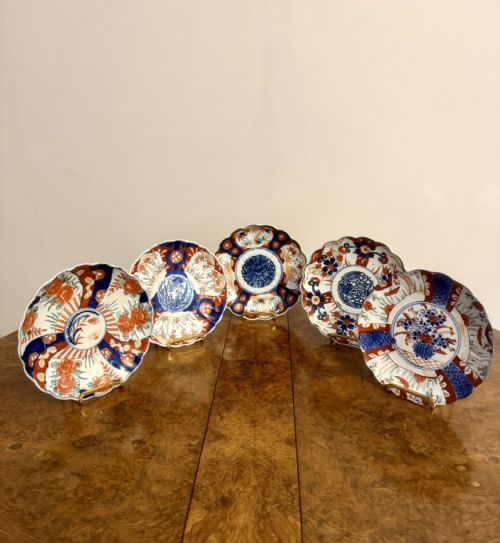
Red Imari Wall Plate
A red imari wall plate brings bold iron-red and cobalt decoration to a room, offering rich colour and pattern for display.
Red Imari Wall Plate
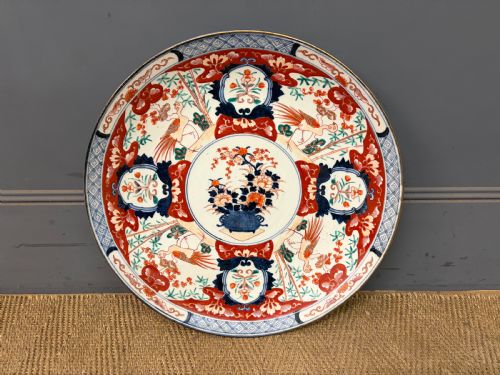
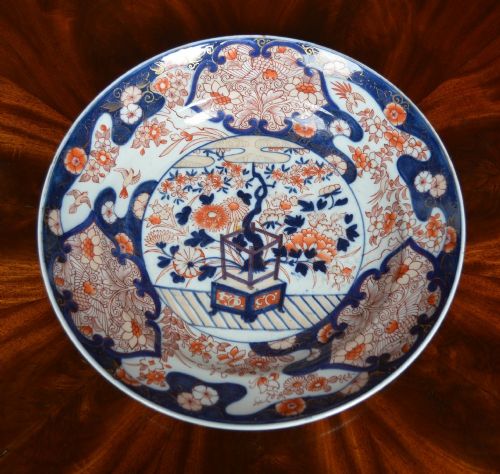
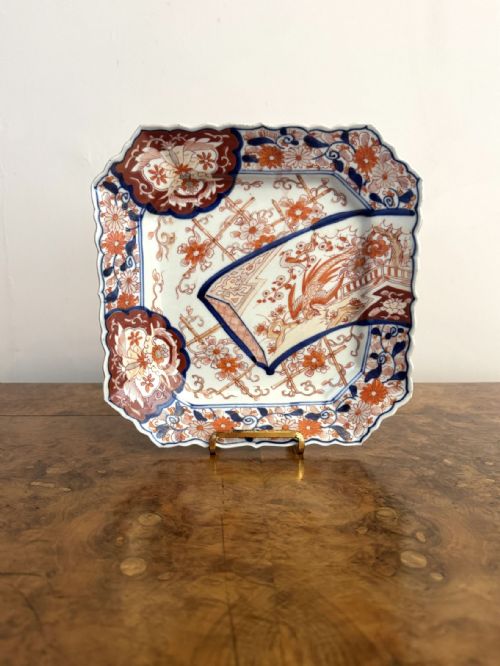
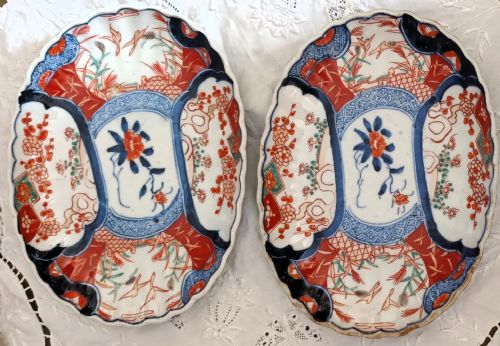
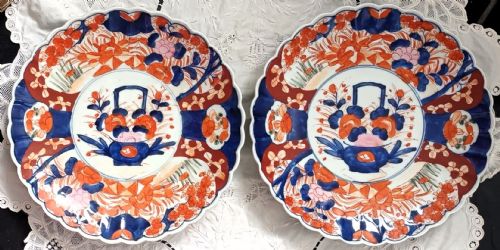
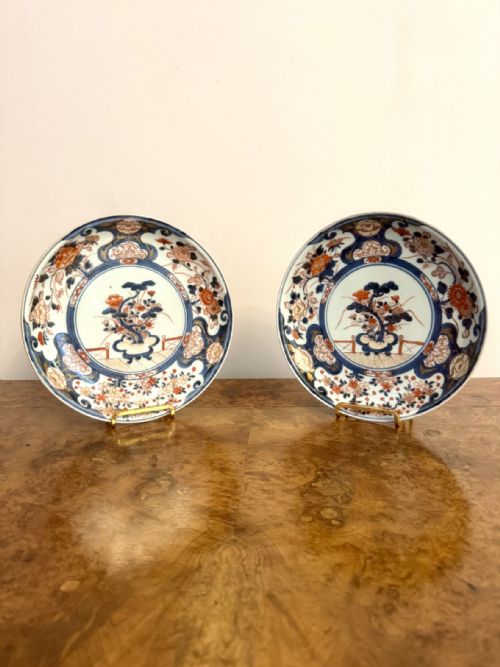
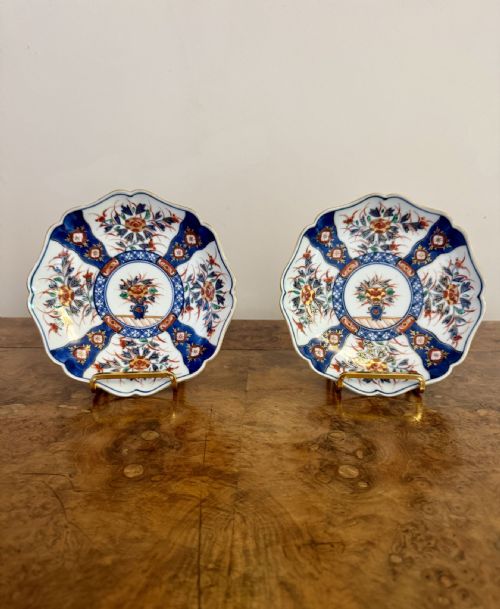
A red imari wall plate represents centuries of ceramic artistry, originating in Japan and later inspiring European makers. These pieces range from standard circular dishes to unusual square, oval, ribbon and shell shapes designed specifically for display.
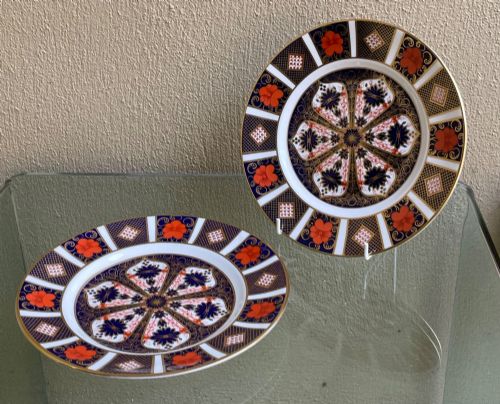
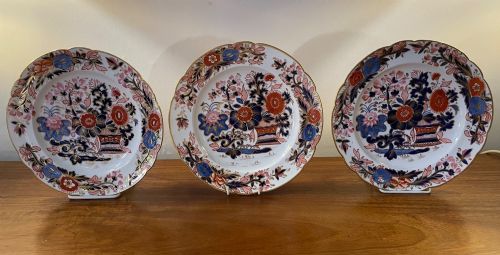
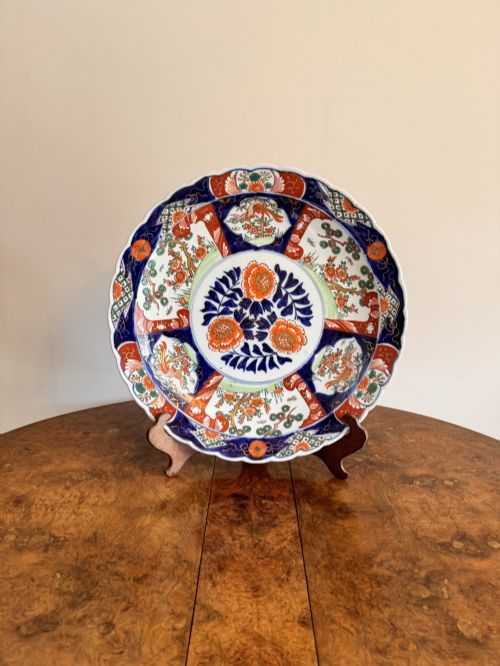
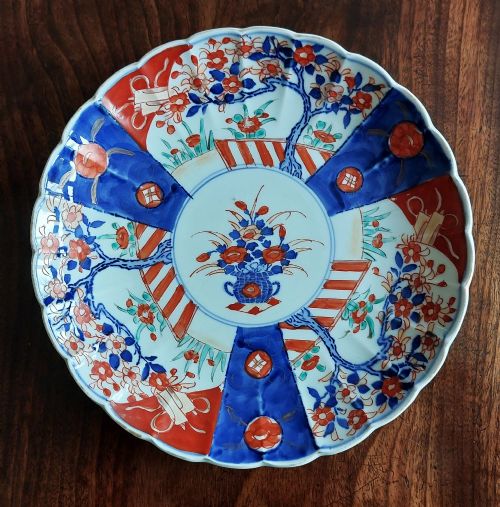
The pieces on this page are predominantly Japanese examples from the Meiji period and the nineteenth century, alongside English bone china and earthenware interpretations. Chargers and large decorative plates dominate the selection, offering substantial presence on a wall or dresser.
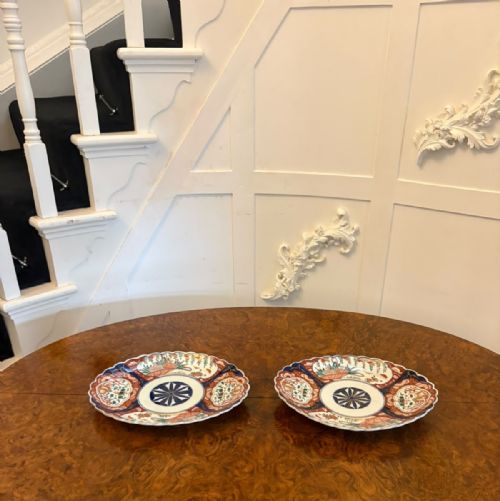
Buyers will find individual plates, pairs, and matched sets depicting subjects such as exotic birds and the Seven Lucky Gods. The palette relies on deep underglaze blue and vibrant iron-red, frequently accented with gilt and enamel details.
Materials and Craftsmanship
The foundation of these objects is hard-paste porcelain or ceramic, shaped by hand or moulded into scalloped, hexagonal, and circular forms. Potters applied underglaze cobalt blue before the initial firing, establishing the deep blue tones characteristic of the style.
Overglaze decoration followed, utilising iron-red enamel and gold leaf to build up complex floral, geometric, and figurative scenes. A final firing fused the enamel and gilt to the glaze, creating a durable surface with a distinct tactile quality.
Listings feature porcelain, earthenware, and bone china decorated with glaze, enamel, gold leaf, and gilt across the nineteenth and twentieth centuries.
Judging Quality and Execution
Quality in a red imari wall plate lies in the crispness of the hand-painted brushwork and the precision of the cobalt and iron-red pigments. Finer pieces demonstrate meticulous control over intricate patterns, while lesser examples show hasty or blurred execution.
The application of gold leaf and enamel also separates standard production from superior output, with better items retaining rich metallic lustre and detailed layering. Form matters equally, as unusual square, ribbon, or shell shapes demand greater technical skill from the potter than simple round dishes.
Royal Crown Derby
The Red Imari Wall Plate Glossary
- Imari
- A style of Japanese porcelain decorated in underglaze blue, iron-red, and gold. It originated in the town of Arita and was exported through the port of Imari.
- Charger
- A large decorative plate intended for display on a wall or sideboard rather than for dining use. These pieces often measure twelve inches or more in diameter.
- Meiji
- A period in Japanese history spanning from 1868 to 1912, characterised by extensive trade with the West and high-output decorative arts. Meiji ceramics frequently display vibrant colours and complex motifs.
- Scalloped edge
- A decorative rim shaped into a series of rounded curves rather than a plain circle. This technique required careful trimming of the soft clay before firing.
- Overglaze enamel
- Coloured glass paste applied on top of the fired glaze and fixed in a subsequent low-temperature firing. This method allows for brilliant reds and greens that sit slightly proud of the surface.
Red Imari Wall Plate: Frequently Asked Questions
How do I hang a heavy charger?
Heavy chargers require specialised wire wall hangers that grip the rim securely without putting pressure on the ceramic body. Ensure the fixing is anchored directly into a wall stud or uses an appropriate plaster toggle.
Avoid spring-loaded hooks with sharp metal prongs that might chip the glazed edge. A padded flat-strap hanger distributes the weight evenly across the back of the plate.
Are these plates meant for dining?
Most pieces categorized as wall plates or chargers are intended purely for decorative display. Their generous size and delicate overglaze enamel work make them unsuited for regular table use.
Cutlery can scratch the gilt and iron-red surface decoration, and historic glazes may contain components not recommended for modern food contact. Enjoy them safely on walls, plate stands, or dressers.
How do I distinguish Japanese from English imari?
Japanese pieces, particularly from the Meiji period, typically feature finer porcelain bodies and dense, asymmetrical patterns incorporating exotic birds or deities. The iron-red tends to have a slightly orange or coral tone.
English interpretations, such as those from Staffordshire or Derby, often use bone china or earthenware substrates. Their floral motifs can feel more ordered or Europeanized in composition.