



Red Gilt Japanese Vase
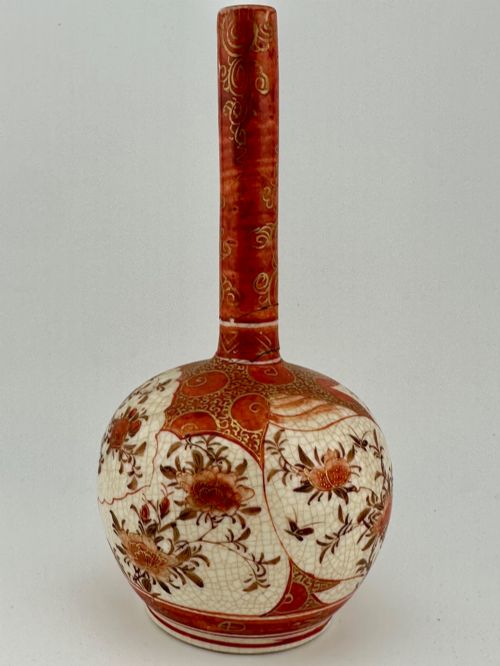
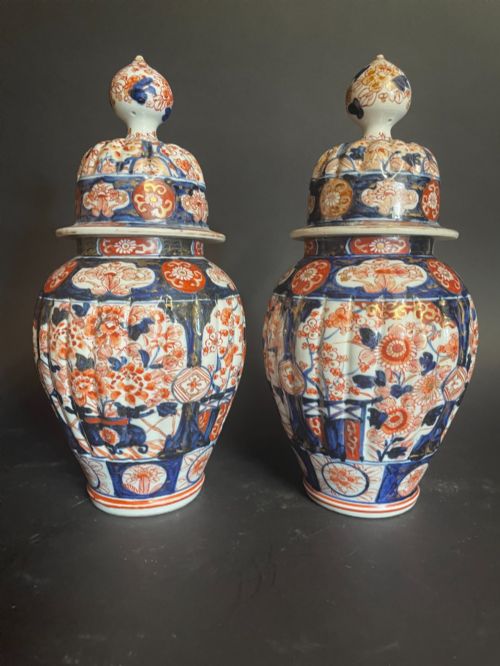
These red gilt japanese vase examples bring rich ceramic artistry to any room, offering the bold contrast of iron red and shining gold.
Red Gilt Japanese Vase
A red gilt japanese vase combines traditional ceramic forms with striking iron red pigments and gold leaf detailing. The pieces appearing here span centuries of production, from the Edo and Meiji periods through to later Taisho and Edwardian examples.
Vessels take many shapes, including cylindrical profiles, long neck bottle vases, fluted bodies, and lidded jars alongside table lamp conversions. The Kutani and Imari traditions dominate the selection, showing vibrant enamel work across porcelain bodies.
Assessing quality
Quality rests in the precision of the hand-painted enamel work and the crispness of the gilt detailing across the porcelain body. Stronger examples display balanced proportions, clean throwing marks, and well-preserved surface colours without heavy rubbing.
The complexity of the floral and pictorial scenes also defines the standard of the piece. Firmer control over the iron red and gold leaf indicates greater skill in the kiln and workshop.
Red Gilt Japanese Vase Retail Price Guide 2026
Typical asking prices for red gilt japanese vase among the pieces listed under this phrase on Sellingantiques today, from the lower quarter to the upper quarter. They describe what is for sale here now, not the wider market.
Several tall cylindrical vessels were originally built to hold slim wooden sticks used for lighting candles before matches became common.
The Red Gilt Japanese Vase Glossary
- Imari
- A style of Japanese porcelain decorated in underglaze blue, iron red, gold, and supplementary colours. This aesthetic became popular for export during the Edo period and continued into later eras.
- Kutani
- A style of Japanese painted porcelain known for bold colour palettes, particularly iron red and gold. These wares often feature detailed pictorial scenes and intricate border patterns.
- Meiji Period
- A time in Japanese history spanning from 1868 to 1912 characterised by the opening of trade with the West. Ceramics from this era often show high technical skill aimed at international markets.
- Gilt
- A thin layer of gold applied to the surface of the porcelain or metal fittings. This technique highlights decorative motifs and adds warmth to the ceramic design.
- Spill vase
- A tall, narrow vessel designed originally to hold wooden spills used for lighting candles or fires. These cylindrical pieces sit well on mantelpieces and side tables.
Red Gilt Japanese Vase: Frequently Asked Questions
Were these vases made for export?
Many pieces created during the Meiji period and later were produced specifically for Western markets. Artisans adapted traditional Japanese forms to suit European and American tastes.
Export wares often included lidded jars and large decorative pairs intended for prominent display in drawing rooms.
How do I spot an Imari piece?
Imari ceramics typically feature a distinct palette combining underglaze cobalt blue with iron red and gilt accents. The patterns often incorporate floral arrangements and brocade motifs.
These designs cover much of the porcelain body, leaving little plain white space visible.
Can I use these lamps safely?
Pieces converted into table lamps should be checked by a qualified electrician to ensure current wiring standards. Many conversions use fabric shades that complement the colours of the ceramic base.
Placement away from direct sunlight preserves the vibrancy of the iron red and gold pigments over time.