





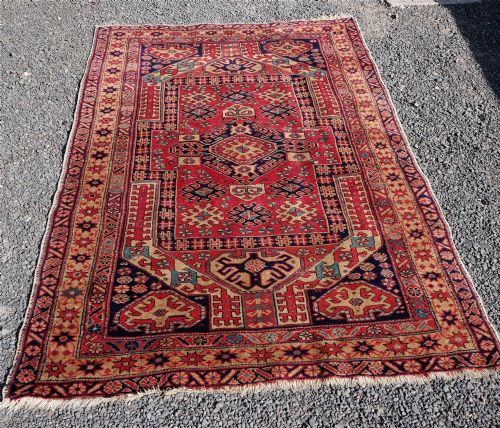
Red Geometric Wool Rug
A red geometric wool rug brings warmth and structured pattern to a room, drawing on centuries of tribal weaving traditions.
Red Geometric Wool Rug
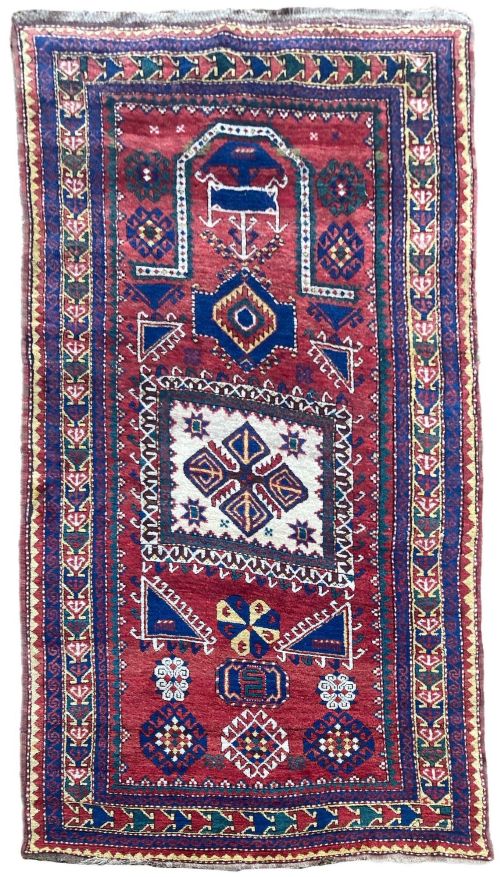
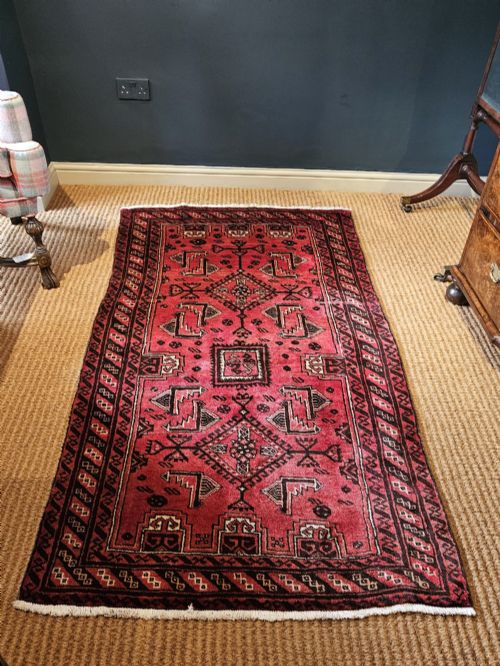
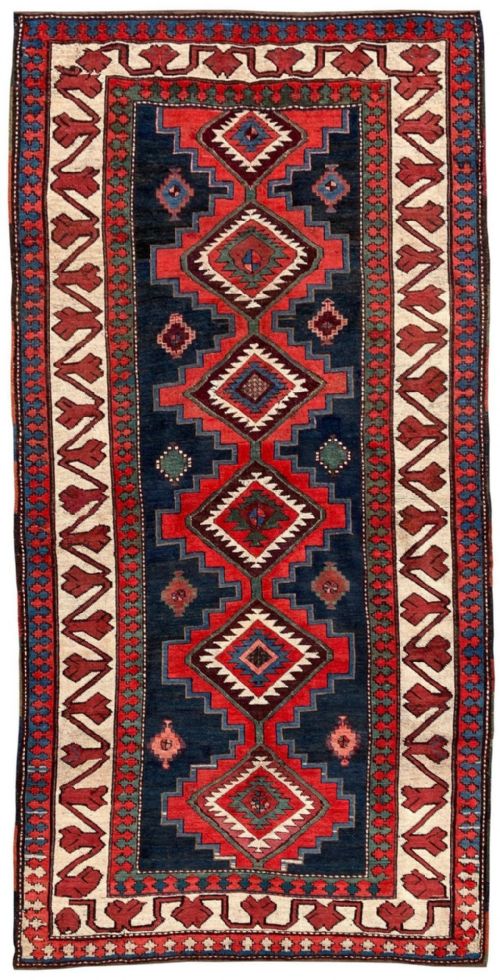
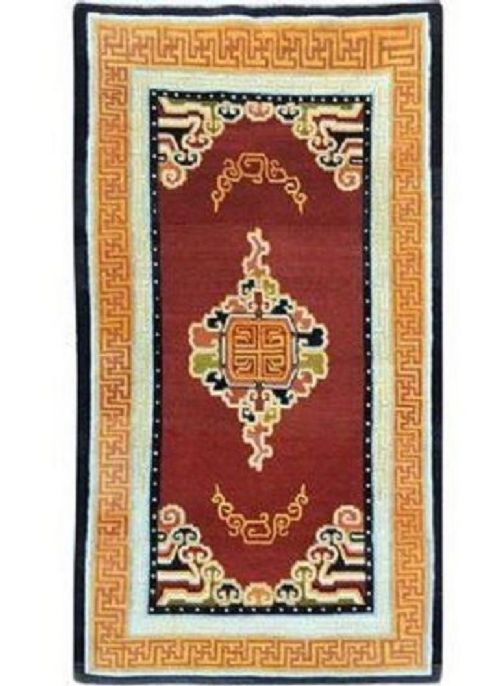
A red geometric wool rug encompasses hand-woven carpets, runners, and village textiles originating from tribal and regional weaving centres such as Persia, the Caucasus, Anatolia, and Turkmenistan. These floor coverings rely on angular motifs, medallions, lattice patterns, and repeat symbols set against rich crimson and madder grounds.
The pieces available span from the late nineteenth century through the 1930s, representing traditional nomadic and village production methods. Buyers encounter everything from small hearth rugs and prayer mats to large room-sized carpets and long runners.
Originating from specific tribal groups including the Afshar, Baluch, Kazak, Yomut, and Kurdish weavers, these textiles reflect distinct regional aesthetics while sharing a heavy reliance on bold geometric layouts.
Materials and construction
Construction relies primarily on wool and hand-spun wool, often paired with cotton foundations, utilising hand-knotting or flat-weaving techniques depending on the tribal tradition. The heavy pile and sturdy weave provided durability for nomadic and village daily use.
Natural dyes produced deep red hues, ranging from soft terracotta to vibrant crimson, through traditional plant and insect extractions. These organic colorants interact with the wool fibres to create nuanced tonal variations across the surface of each textile.
Red Geometric Wool Rug Retail Price Guide 2026
Typical asking prices for red geometric wool rug among the pieces listed under this phrase on Sellingantiques today, from the lower quarter to the upper quarter. They describe what is for sale here now, not the wider market.
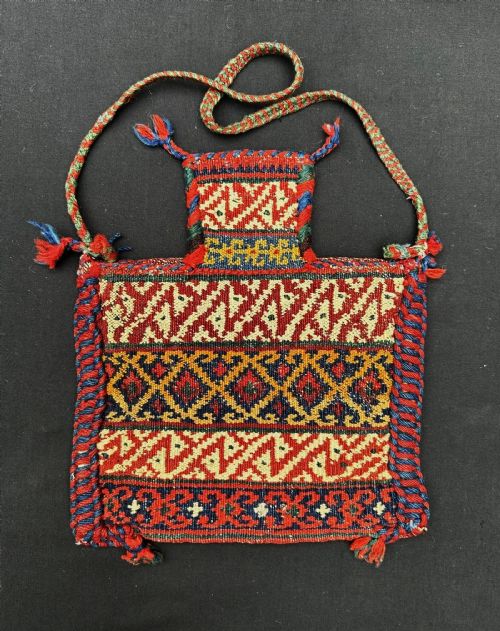
Some saddle bags and small cushion covers managed to survive centuries of nomadic travel intact.
Judging quality in tribal textiles
Quality rests upon the fineness of the knotting, the precision of the geometric layout, and the depth achieved through natural dyes. Tighter construction and careful wool preparation produce a more resilient handle and a sharper definition of motifs.
The vibrancy and stability of the red tones indicate the skill of the dyer and the purity of the wool used. Uniformity in weave combined with expressive, unhurried design execution separates standard utility pieces from exceptional tribal examples.
The Red Geometric Wool Rug Glossary
- Pile
- The upright wool loops or cut ends that form the soft surface of a knotted rug, providing insulation and texture.
- Natural Dyes
- Colourants derived from plants, roots, and insects rather than synthetic chemicals, known for developing a rich patina over time.
- Prayer Rug
- A smaller format rug featuring a mihrab or niche design, traditionally used for individual daily prayers pointing towards Mecca.
- Medallion
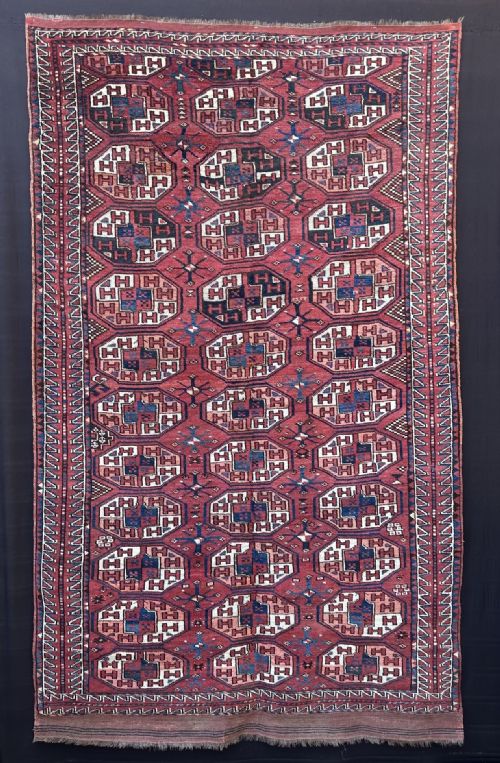
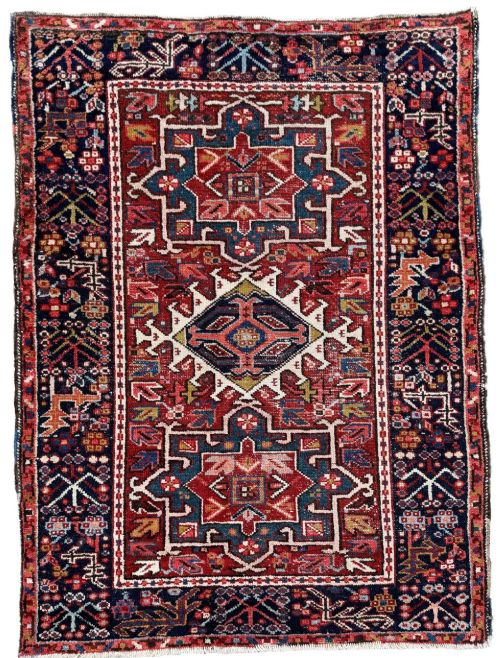
- A central ornamental motif, often circular, octagonal, or diamond-shaped, anchoring the geometric composition of the field.
- Kilim
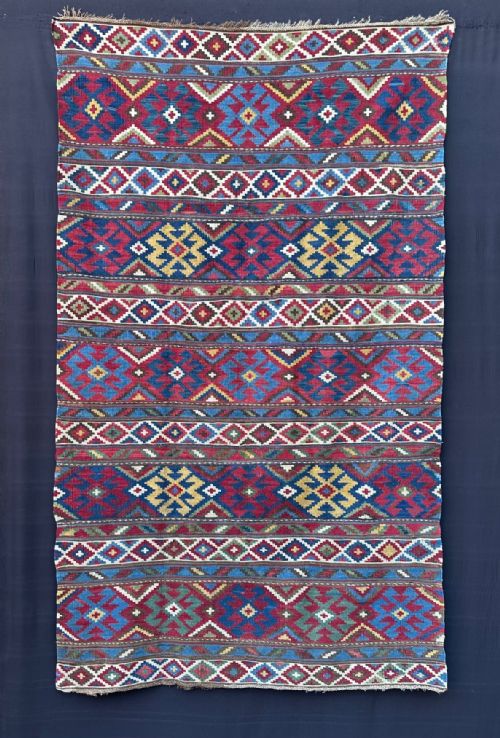
- A flat-woven carpet or textile produced without a pile, resulting in a lightweight structure with sharp geometric pattern edges.
Red Geometric Wool Rug: Frequently Asked Questions
How do I clean an antique wool rug?
Maintenance requires gentle vacuuming without a rotating brush to protect the wool pile from unnecessary friction and wear.
Professional specialist washing is recommended for deeper cleaning, as household immersion or harsh detergents can damage natural dyes and cotton foundations.
Where were these rugs made?
Production centres span across tribal and village regions in Persia, the Caucasus, Anatolia, and Turkmenistan, often tied to specific nomadic groups.
Weavers in areas such as Shirvan, Kazak, Heriz, and Baluchistan developed distinct regional palettes and geometric repertoires.
Are these rugs suitable for high-traffic areas?
The durable nature of hand-spun wool and dense knotting makes many of these antique runners and carpets resilient underfoot.
Placing a proper underlay beneath the rug helps absorb impact, prevent slipping, and extend the active lifespan of the textile.
How can I tell the age of a rug?
Dating relies on examining the specific wool preparation, the chemical composition of natural dyes, and stylistic indicators unique to late nineteenth and early twentieth-century production.
Structural traits such as hand-spun yarns and regional knotting techniques help narrow the period of origin within the available timeline.