
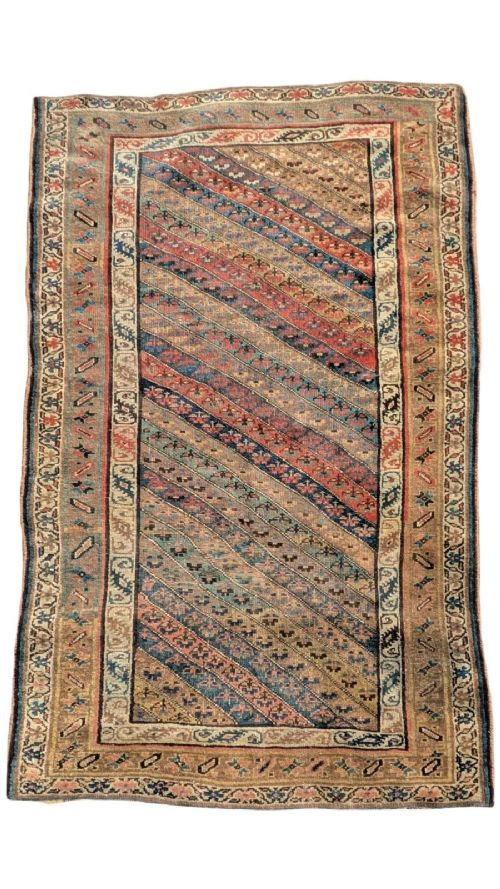
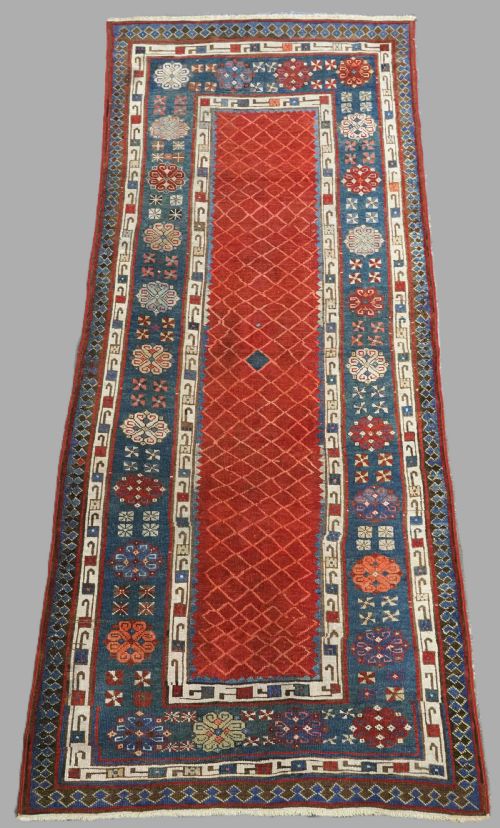
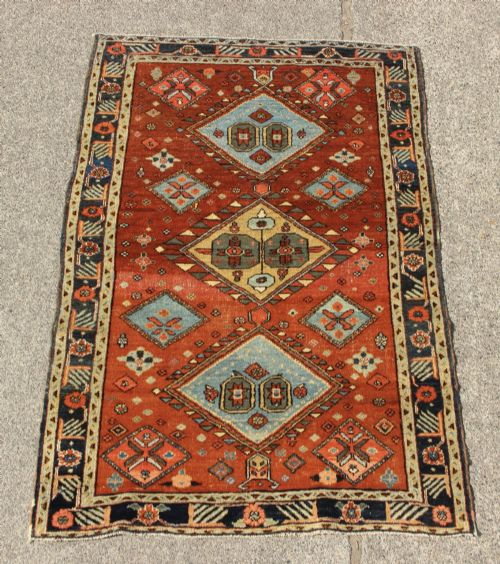
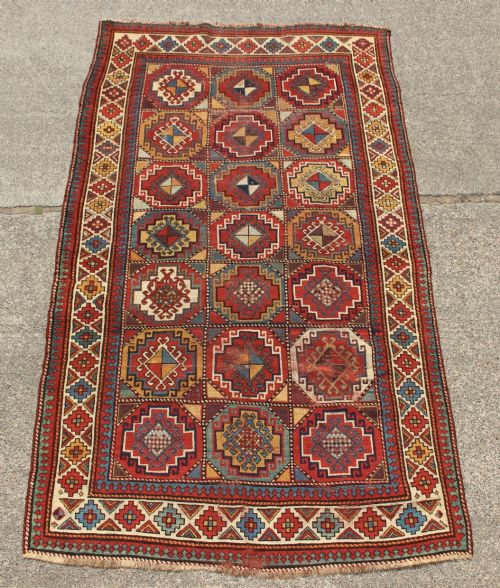
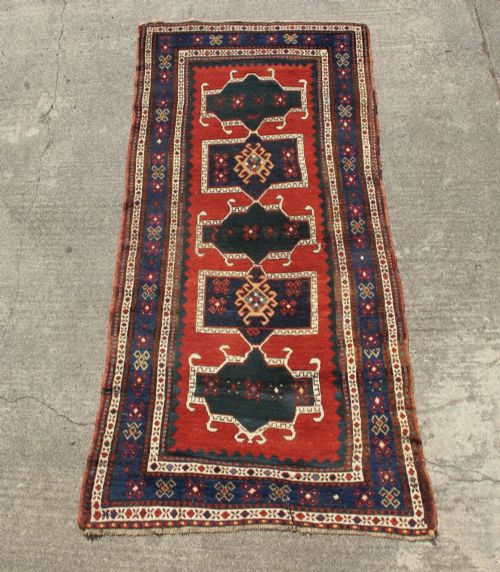
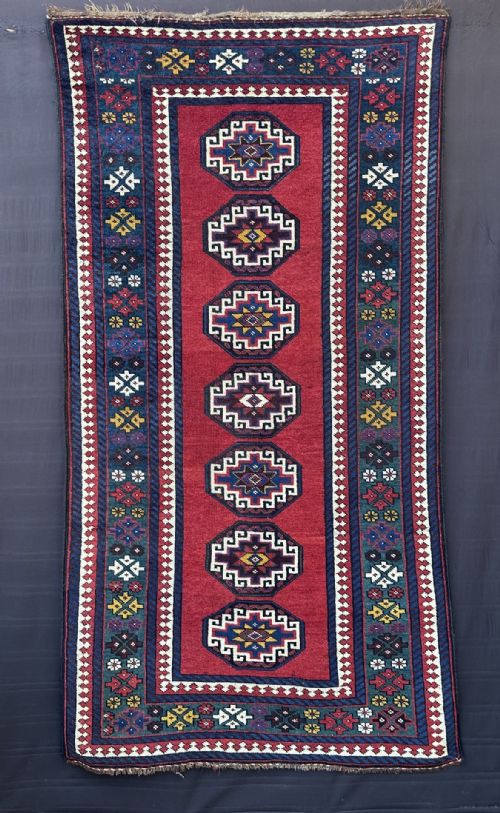
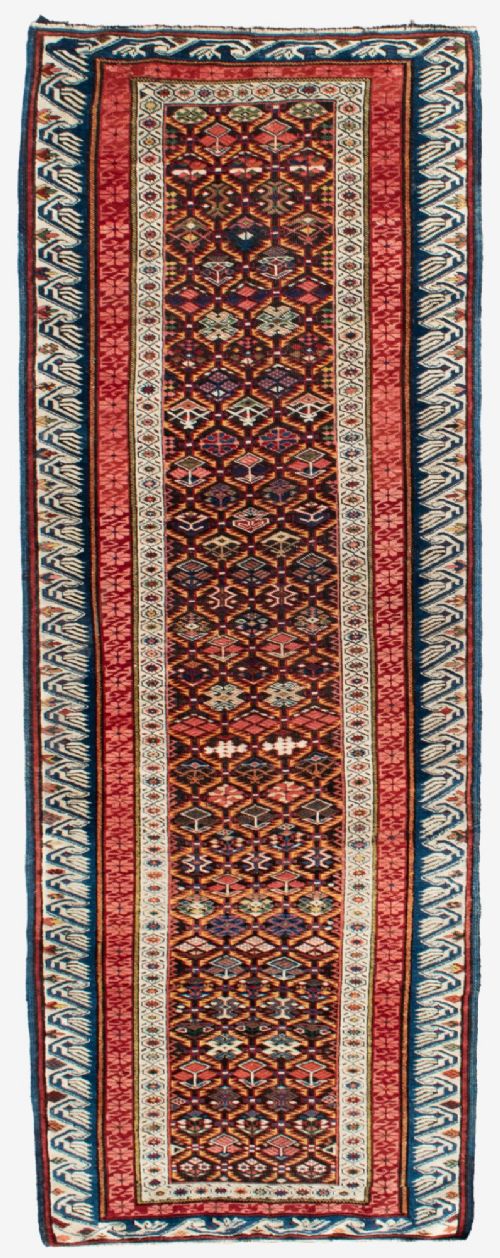
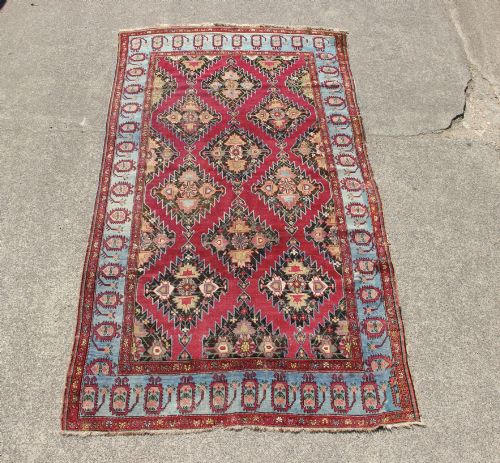
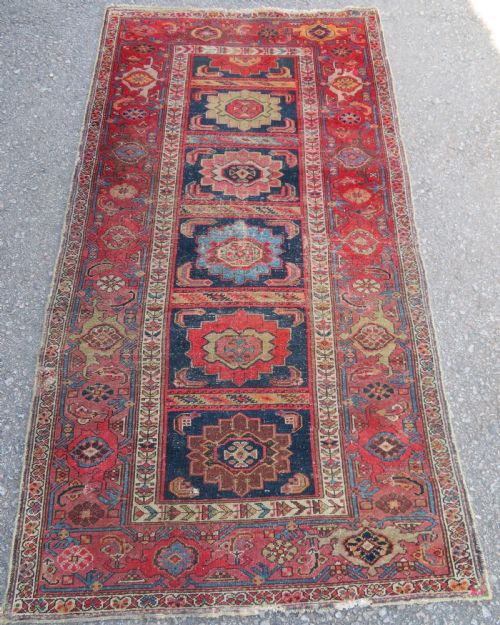
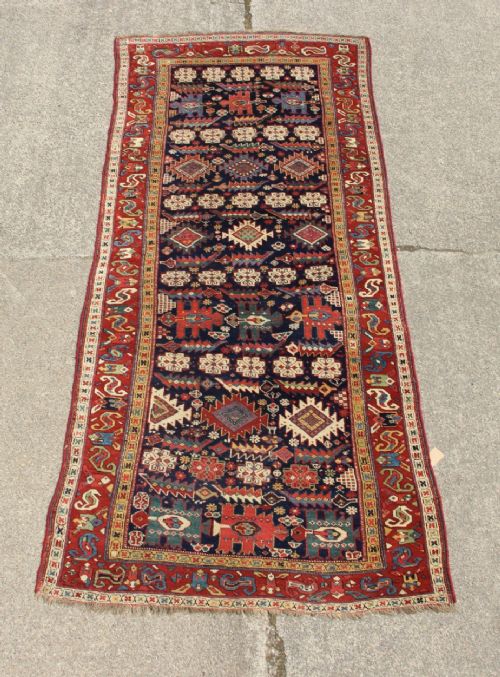
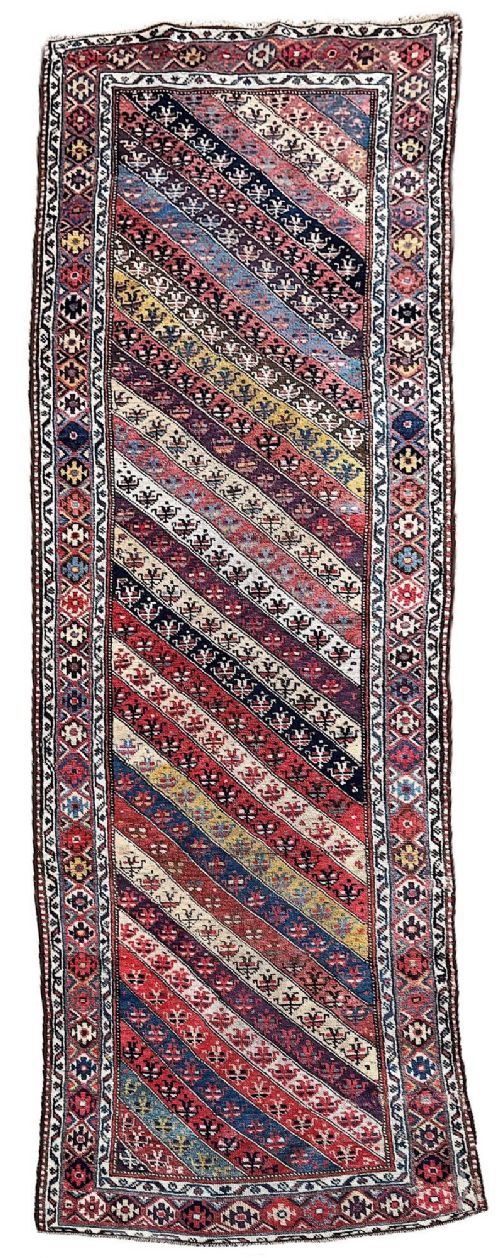
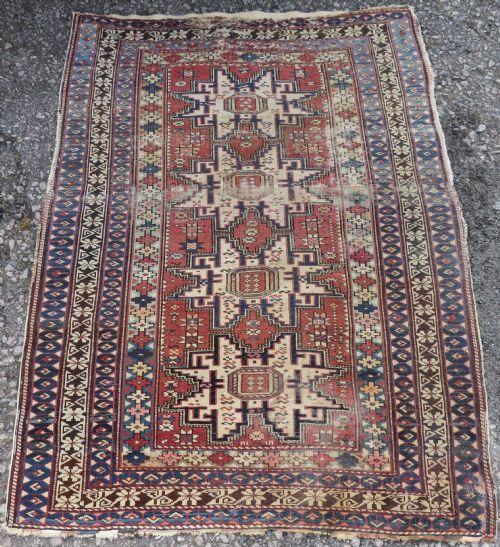
Red Caucasian Runner
A red caucasian runner brings bold geometry and rich madder tones to a hallway, woven by village hands across the Caucasus.
Red Caucasian Runner
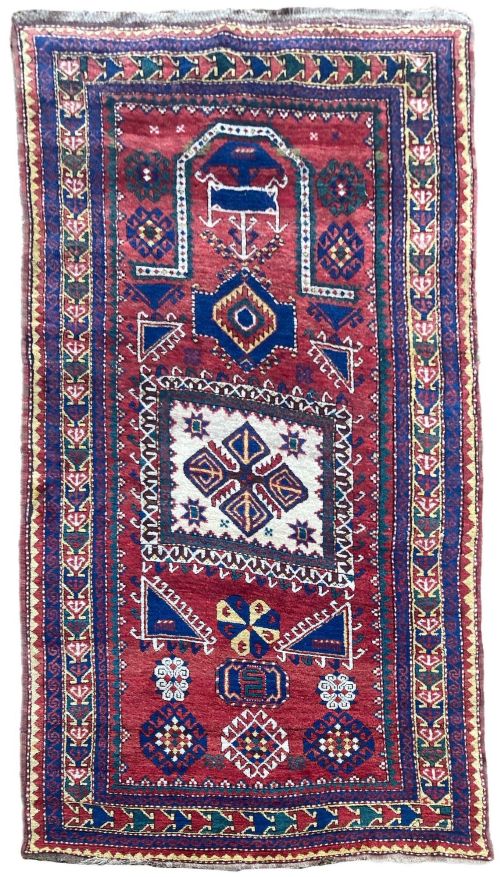
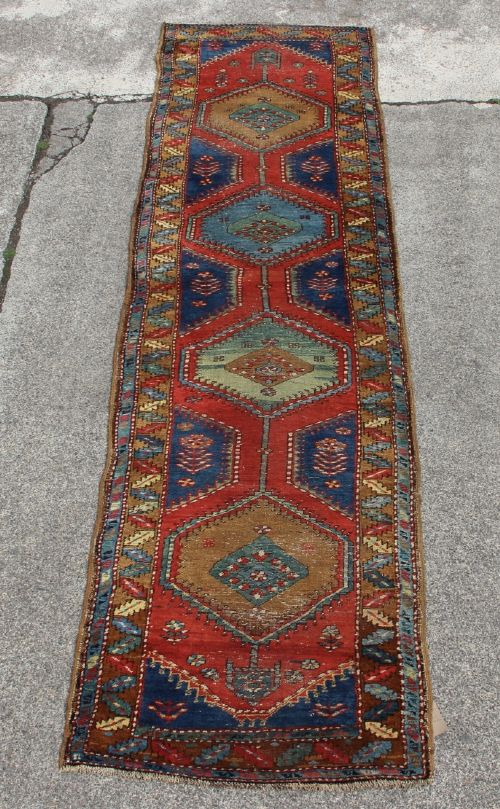
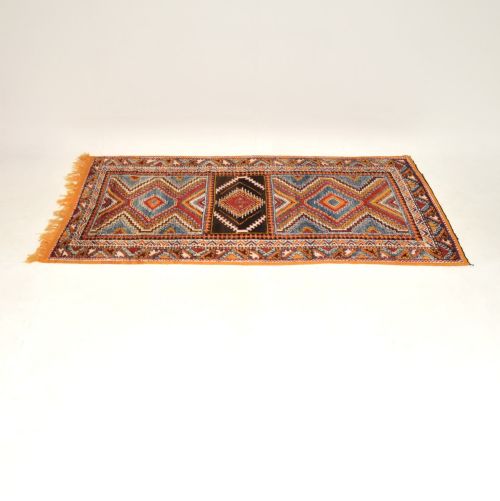
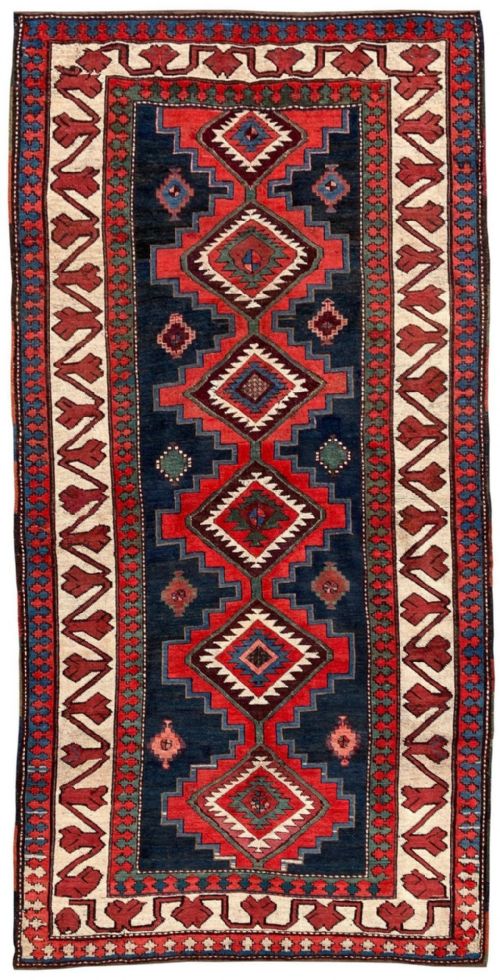
A red caucasian runner is a long, narrow hand-knotted floor covering produced in the villages and mountainous regions of the Caucasus during the nineteenth and early twentieth centuries. These pieces serve primarily as functional hallway and corridor furnishings, designed to withstand heavy foot traffic while providing vibrant decorative impact.
The specimens found here encompass specific regional types including Kazak, Talish, Shirvan, and Daghestan designs alongside broader tribal and Kurdish attributions. Collectors encounter formats ranging from strict long runners to room-sized carpets and prayer rugs bearing characteristic medallion and lattice motifs.
How They Were Made
Weavers constructed these textiles using hand-spun wool for both the pile and the foundation threads, occasionally incorporating cotton. This natural wool holds lanolin, giving the finished textile resilience and a soft lustre.
Colour comes from natural dyes derived from plants and insects, fixed onto the wool by traditional mordant methods. Hand-knotting techniques secure the pile firmly to the warp and weft threads, creating a dense structure that endures for generations.
Red Caucasian Runner Retail Price Guide 2026
Typical asking prices for red caucasian runner among the pieces listed under this phrase on Sellingantiques today, from the lower quarter to the upper quarter. They describe what is for sale here now, not the wider market.
Listings span production dates from the mid-nineteenth century through the early twentieth century, utilising wool, cotton, and natural dyes.
What Varies in Quality
Quality rests upon the crispness of the drawing and the saturation of the natural dyes, which determine the visual depth of the field. Tighter knot density and finer hand-spun wool create a crisper geometric definition across the motifs.
The integrity of the original wool foundations and the completeness of the side cordings dictate the structural longevity of each piece. Variations in wool preparation and dye saturation separate standard village production from finer workshop examples.
The Red Caucasian Runner Glossary
- Kazak
- A type of rug originating from the western and southern Caucasus, known for bold geometric medallions and saturated primary colours.
- Talish
- A narrow runner format from the southeastern Caucasus, typically featuring an open field flanked by multiple distinct borders.
- Knot density
- The count of individual knots per square inch or decimetre, influencing the durability and detail of the woven design.
- Natural dyes
- Colourants extracted from plants, roots, and insects before the introduction of synthetic alternatives.
- Warp
- The vertical foundation threads stretched tightly on the loom onto which the pile knots are tied.
Red Caucasian Runner: Frequently Asked Questions
Where should I place a runner?
These narrow formats suit long hallways, entryways, and corridors where linear geometry complements the architectural flow.
They also function effectively beside beds or in galley kitchens, provided the placement avoids excessive moisture.
How do I clean a wool runner?
Routine maintenance requires gentle vacuuming without the beater bar to protect the hand-spun wool pile and delicate flat-woven ends.
Professional specialist cleaning is necessary for deep washing to preserve the stability of the natural dyes.
Are these runners durable?
The combination of hand-spun wool and dense knotting provides natural resilience against regular domestic wear.
Using a quality underlay helps absorb foot impact and prevents slipping on hard floors.
How do I identify a Kazak piece?
Kazak examples display bold geometric medallions, hooked polygons, and primary red and blue palettes.
The wool is typically thick and lustrous, reflecting the highland sheep breeds of the region.