




Red Blue Soumak Weave
These red blue soumak weave textiles are tribal rugs, bags, and carpets prized for their rich flat-woven structures and striking nomadic designs.
Red Blue Soumak Weave
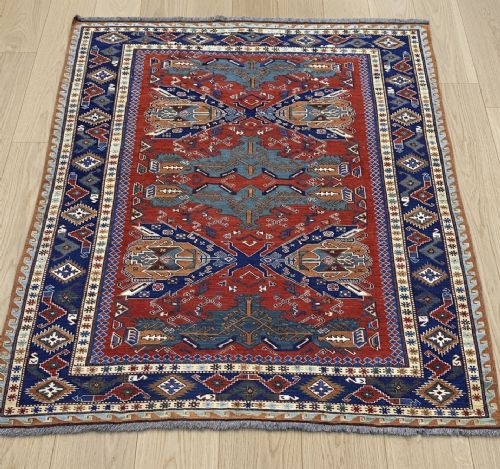
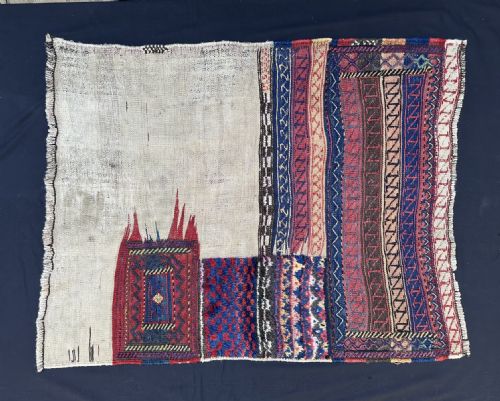
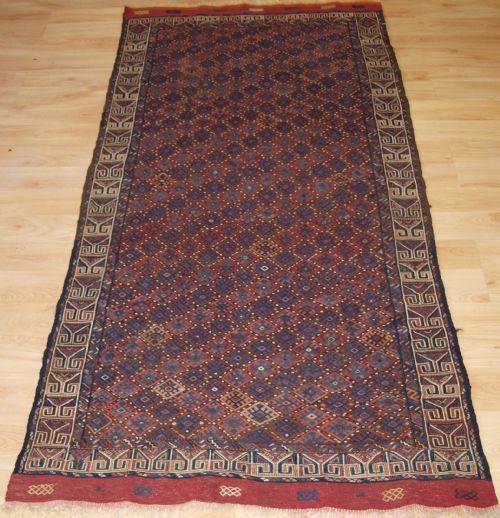
When you search for red blue soumak weave, you encounter authentic nineteenth-century tribal textiles including carpets, saddlebags, salt bags, and mafrash panels originating from Persian and Caucasian regions. These pieces represent the nomadic weaving traditions of groups such as the Shahsevan, Afshar, Lori-Bakhtiari, and Quchan Kurds.
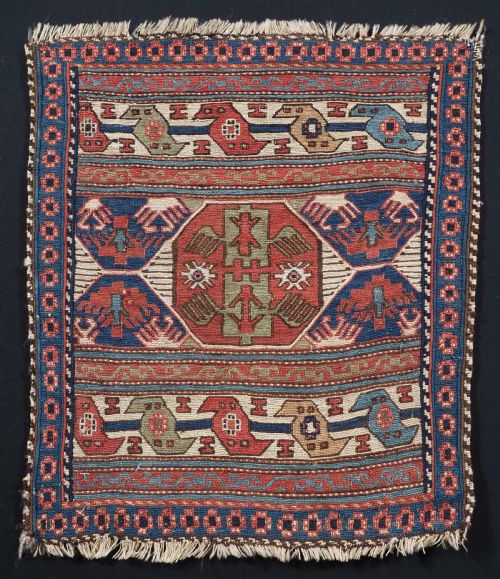
The most common formats on this page are bag faces and panels showcasing traditional motifs like birds, dragons, and geometric triple medallions. Dating primarily from the middle to the late nineteenth century, these textiles reflect the distinct aesthetic and utilitarian craft of tribal makers.
The objects served practical purposes in nomadic life, functioning as storage containers, horse equipment, or floor coverings before becoming collectible textile art. Each piece carries the visual language of its specific region, from the Moghan region of Azerbaijan to Western Persia.
How they were made
The structure relies on hand-spun wool foundation yarns combined with supplementary weft wrapping techniques that create a distinctive textured surface without a piled nap. Artisans utilised vegetable and natural dyes to achieve deep red and blue tones that define the palette of these nineteenth-century items.
Cotton often appears alongside wool in the structural elements, providing stability and contrast within the flat-woven fabric. The intricate Soumak work requires precise finger dexterity to wrap coloured wefts around the warp threads in specific patterns.
Red Blue Soumak Weave Retail Price Guide 2026
Typical asking prices for red blue soumak weave among the pieces listed under this phrase on Sellingantiques today, from the lower quarter to the upper quarter. They describe what is for sale here now, not the wider market.
Look closely to spot stylized dragons woven by nomadic hands that sometimes resemble cheerful prehistoric lizards guarding your floor.
What varies in quality
The distinction between ordinary and exceptional examples lies in the crispness of the tribal motifs, such as the delineation of dragons, birds, and medallions. Tightly executed weave structures with balanced proportions distinguish the finer regional panels and bag faces.
Complexity of design and depth of colour saturation elevate certain works above others, particularly where natural and vegetable dyes have aged with rich patination. The integrity of the original wool and the retention of complete borders or panels mark the higher tiers of the range.
The Red Blue Soumak Weave Glossary
- Soumak
- A flat-weave textile technique where decorative weft threads wrap around the warp threads, creating a durable face with raised surface detail. This method allows for precise geometric and figurative pattern work.
- Khorjin
- A traditional pair of saddlebags used by nomadic groups for transport and storage. These pieces frequently feature intricate face designs.
- Mafrash
- A large rectangular storage bag or container panel used in nomadic camps for bedding and household goods. They often display striking medallion or repeat patterns.
- Tacheh
- A specific type of tribal textile or container associated with nomadic weaving traditions. These items exhibit regional spinning and dyeing characteristics.
- Natural Dyes
- Colourants derived from plant, insect, or mineral sources rather than synthetic chemicals. They produce harmonious, nuanced shades that age with distinct character.
Red Blue Soumak Weave: Frequently Asked Questions
How were these tribal bags used?
Nomadic groups utilised these woven containers for practical storage and transport during seasonal migrations. They held household goods, salt, or bedding within the tribal tent.
Over time, many complete bags were separated into individual bag faces to be displayed as decorative textile art due to their striking visual patterns.
Where did these textiles originate?
The pieces originate from various tribal regions across the Caucasus and Persia, including Azerbaijan and Western Persia. Distinct nomadic groups like the Shahsevan and Afshar produced these works.
Each region developed specific design vocabularies and structural techniques that identify the origin of the textile.
How do I care for a textile?
Protect the wool surface from direct sunlight to preserve the natural and vegetable dye colours. Gentle vacuuming without a beater bar removes dust and debris effectively.
Professional conservation cleaning should be undertaken sparingly by specialists familiar with antique flat-woven carpets.
What defines the Soumak technique?
Soumak is a supplementary weft-wrapping technique that creates a durable, textured surface without pile knots. The working threads wrap continuously across the warps for added strength.
This method permits intricate curvilinear and geometric designs to appear with great clarity on the face of the textile.