


Red Blue Porcelain Set
These red blue porcelain set pieces bring together bold cobalt and rust-red enamels, offering rich colour and pattern for any room.
Red Blue Porcelain Set
A red blue porcelain set spans diverse forms including plates, dishes, vases, garnitures, and tea services. These groupings originate from British potteries as well as Japanese and Chinese kilns, crossing centuries from the Edo and Meiji periods to the nineteenth century.
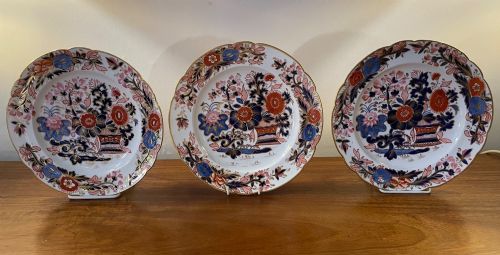
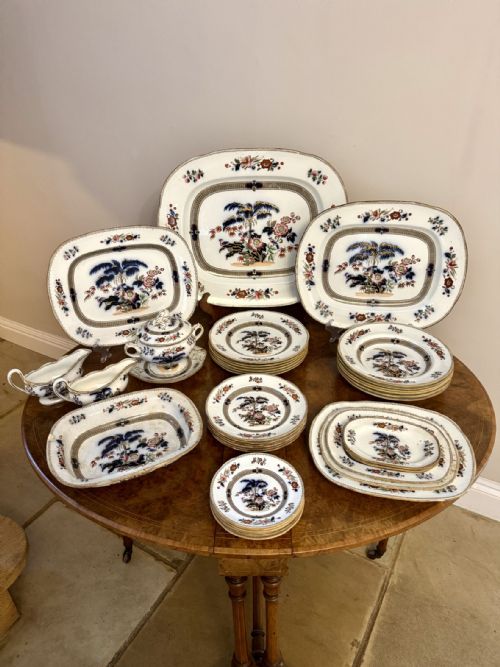
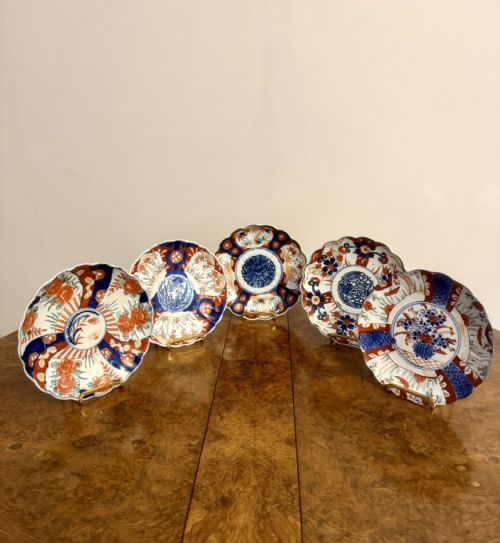
The English examples on this page include Staffordshire plates and Victorian part dinner services and tea sets, often following the Imari palette. Alongside these, the selections feature numerous Japanese Imari plates, shaped dishes, and lidded vases, plus Chinese export pieces from the Qianlong dynasty.
How they were made
Makers shaped porcelain, earthenware, and glaze before applying cobalt blue underglaze and iron-red enamel overglaze. Artisans frequently added gold leaf, gilding, and enamelled details to enrich the decorated surfaces.
Kiln workers fired these wares at high temperatures to set the cobalt beneath the glaze, followed by lower-temperature firings for the enamel and gold highlights.
Look closely at the nineteenth-century Imari plates to spot the dramatic black ship motifs hiding among the traditional floral patterns.
What varies in quality
The precision and crispness of the hand-painted cobalt and iron-red motifs determine the visual strength of each set. Finer examples display meticulous brushwork and balanced compositions across plates, vases, and dishes.
The preservation of original gold leaf and enamel details influences the overall integrity of the set. Matching components that share consistent tones and uniform wear retain greater visual harmony.
The Red Blue Porcelain Set Glossary
- Imari palette
- A decorative scheme typically combining underglaze blue, iron-red enamel, and gold. This style originated in Japan and inspired European potteries.
- Garniture
- A matching set of vases designed to be displayed together on a mantelpiece or sideboard. These arrangements usually consist of three or more matching pieces.
- Underglaze
- Pigment applied to the ceramic body before the glaze is applied and fired. Cobalt is the most common underglaze colour used in these pieces.
- Enamel
- Opaque glass applied over a fired glaze and fired a second time. This technique allows for bright red and secondary decorative colours.
Red Blue Porcelain Set: Frequently Asked Questions
How do I care for a red blue porcelain set?
Wash ceramic pieces by hand in warm soapy water using a soft cloth, avoiding harsh scouring pads that can damage the enamel and gilding.
Keep older tea services and decorative plates away from sudden temperature changes and direct sunlight to protect the surface colours.
Are these sets meant for daily use?
Most antique plates and tea sets are better suited for display or occasional gentle use rather than heavy daily service.
Older glazes and delicate gold leaf can show wear from modern dishwashers and cutlery.
How do I tell Japanese Imari from English copies?
Japanese export pieces from the Edo and Meiji periods often use distinct porcelain bodies and characteristic iron-red and cobalt tones.
English makers such as Staffordshire potteries adapted the palette onto their own earthenware and porcelain bodies during the nineteenth century.
What is a garniture set?
A garniture is a matched group of three or more vases made to sit together as a decorative display.
These sets often feature a central taller vase flanked by matching smaller vessels.