
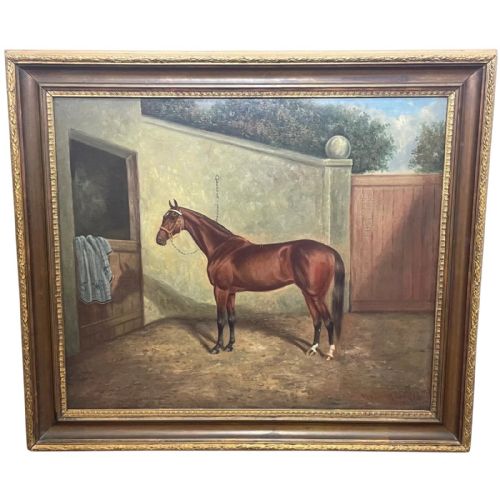
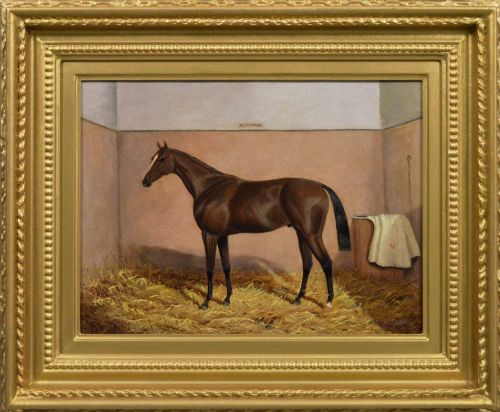
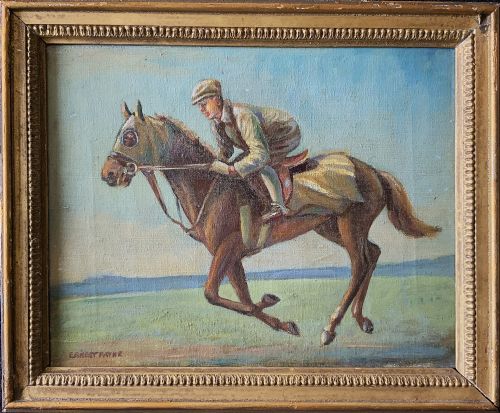
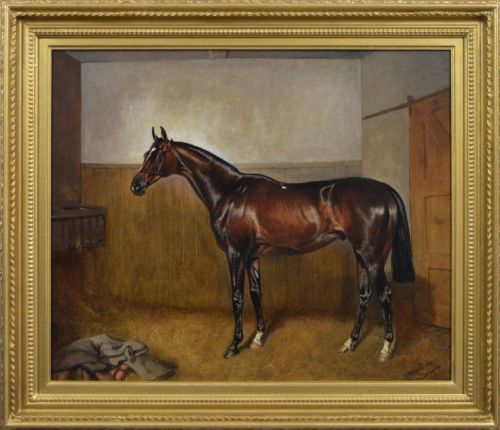


Racehorse Portrait Painting
These racehorse portrait painting works capture the speed, power, and prestige of thoroughbred champions through historic brushwork.
Racehorse Portrait Painting
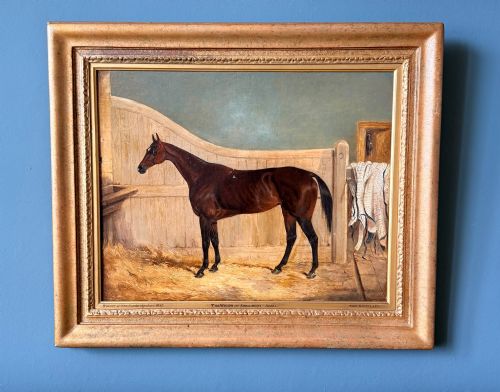
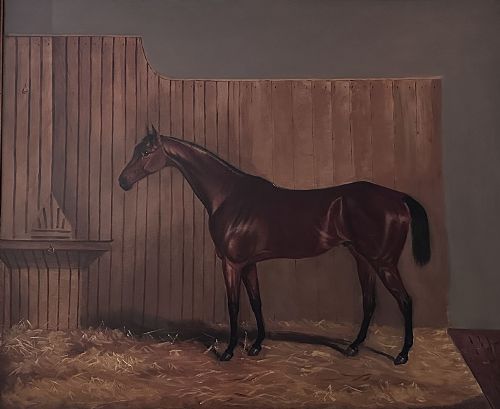
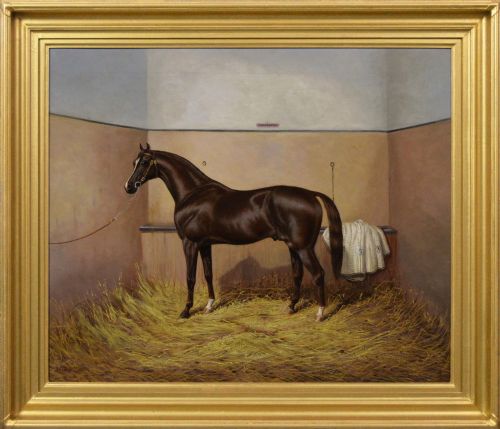
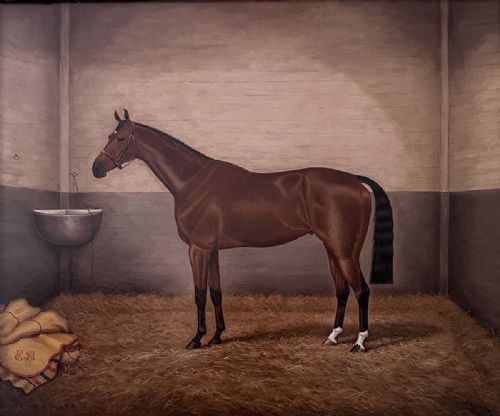
A racehorse portrait painting depicts celebrated equine winners, often shown with their jockey up or recorded at notable tracks such as Epsom, Newmarket, and Kempton Park. You will frequently encounter works from the nineteenth century, the Victorian period, and the Edwardian era.
These canvases celebrate specific horses of renown, including Derby winners and royal thoroughbreds owned by figures like King Edward VII. The subjects range from detailed studies of famous racers to atmospheric trackside compositions.
Most examples survive within period frames, typically executed in oil paint upon canvas or wood panels. They serve as historical records of British equestrian sporting art and racing heritage.
How They Were Made
Artists utilised oil paint applied to canvas or wood supports to build depth and texture within each racehorse portrait painting. This medium allowed painters to render the musculature of the animal and the sheen of its coat with precision.
Giltwood and gold leaf frequently frame these works, providing a decorative border that complements the traditional oil technique. Many pieces also incorporate meticulous inscriptions detailing the horse, the jockey, and the race.
Several jockeys are immortalized alongside their winning mounts, including riders named up in the specific colours of notable patrons.
What Varies in Quality
The anatomical accuracy of the horse and the convincing portrayal of the jockey determine the artistic merit of a racehorse portrait painting. Superior works capture the tension and energy of the animal rather than relying on stiff or formulaic postures.
Provenance and documented identification elevate certain pieces, especially when the artist, the winning horse, and the owning patron are clearly recorded. The preservation of the original canvas and the accompanying giltwood frame also influences desirability.
Frederick Albert Clark·John Alfred Wheeler·Thomas Walker Bretland·Samuel Spode·Isaac Cullin
The Racehorse Portrait Painting Glossary
- Oil paint
- A slow-drying paint made from pigment suspended in a drying oil, typically linseed oil. This medium defines the surface of nearly every canvas listed here.
- Giltwood
- Wood carved and covered with a thin layer of gold leaf or gold paint. Frames of this material frequently encase nineteenth-century sporting art.
- Eglomise
- A technique where gold or metal leaf is applied to the rear of glass and rendered into a design. This method appears in specialised reproductions within the genre.
- Victorian sporting art
- A genre of painting dedicated to documenting rural sports, hunting, and horse racing during the nineteenth century. These works emphasise accurate portraiture of prized animals and notable jockeys.
Racehorse Portrait Painting: Frequently Asked Questions
How do I identify the horse in a painting?
Many works include contemporary inscriptions on the canvas or frame recording the name of the winner, the race, and the associated jockey.
Historical racing records and archival photographs from the nineteenth and twentieth centuries help verify these named subjects.
What periods do these paintings come from?
The available selection spans from the nineteenth century through the Edwardian era and into the nineteen thirties.
Victorian and Edwardian pieces dominate the offerings, reflecting the peak of British equestrian sporting art.
Where were these races usually held?
Subjects often commemorate historic victories at prominent British courses such as Epsom, Newmarket, and Kempton Park.
Some international tracks, including Colombo races, also appear within the scope of these historic portraits.
How should I hang and care for them?
Keep oil paintings out of direct sunlight to prevent the pigment and canvas from degrading over time.
Maintain stable room temperatures and avoid excessive moisture to protect both the canvas and the original giltwood frames.