






Country House Horse Portrait
A country house horse portrait captures the spirit of the stable and the field, offering a direct window into the equestrian life of past centuries.
Country House Horse Portrait
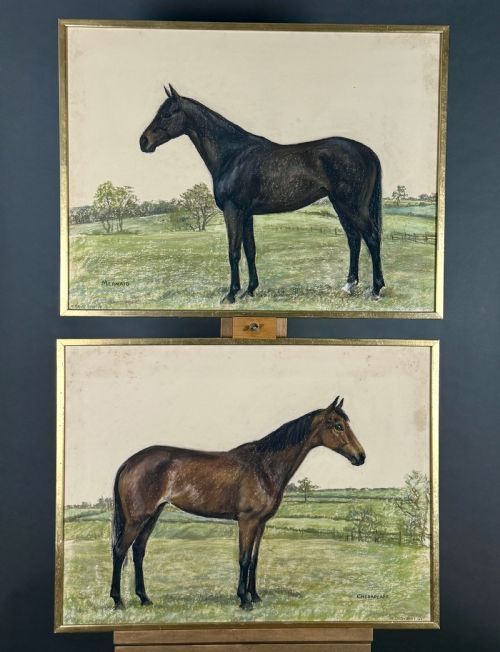
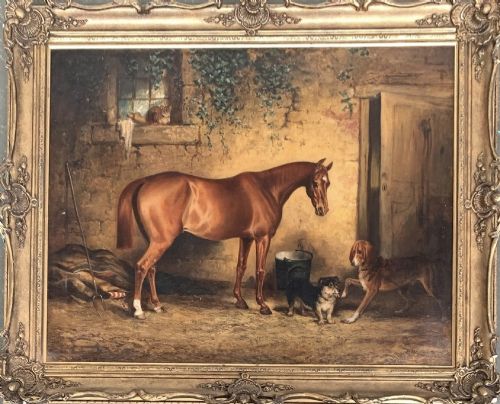
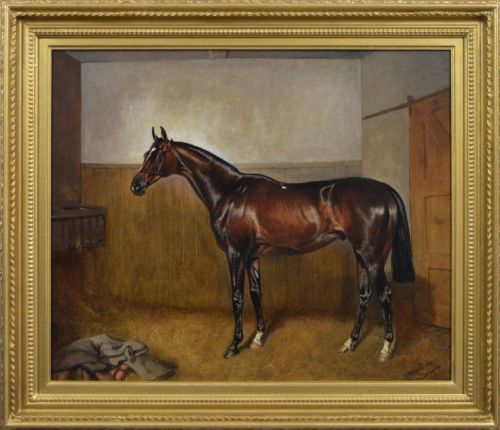
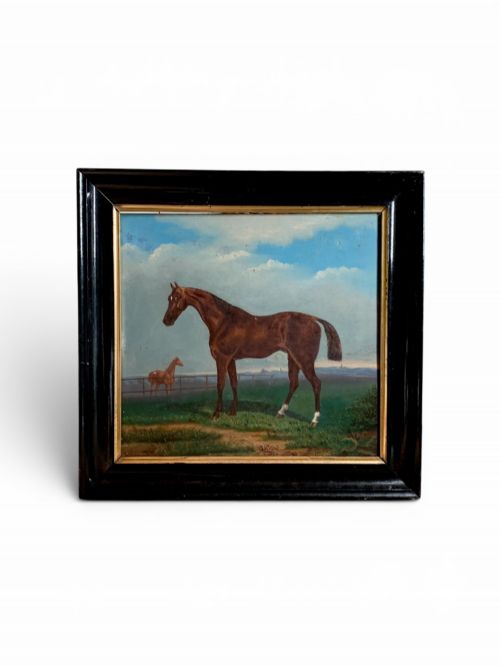
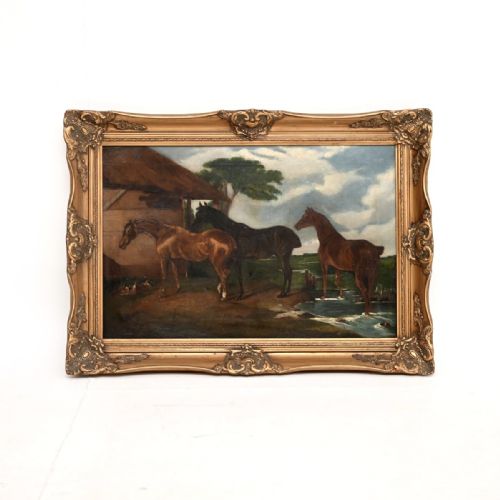
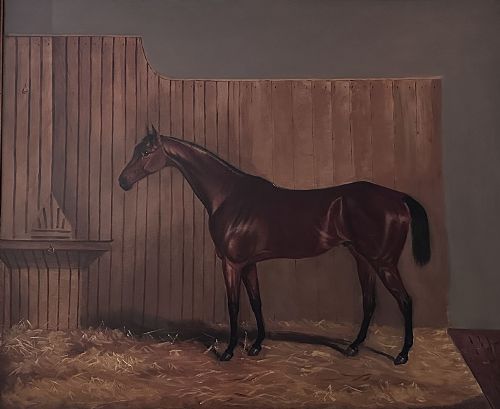
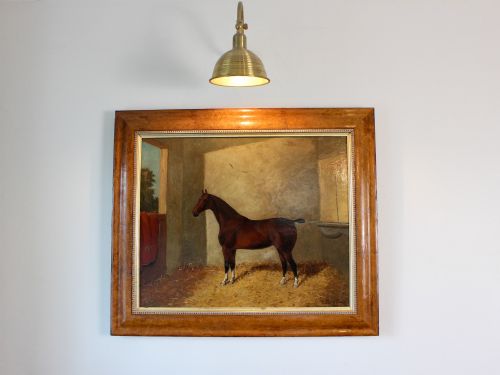
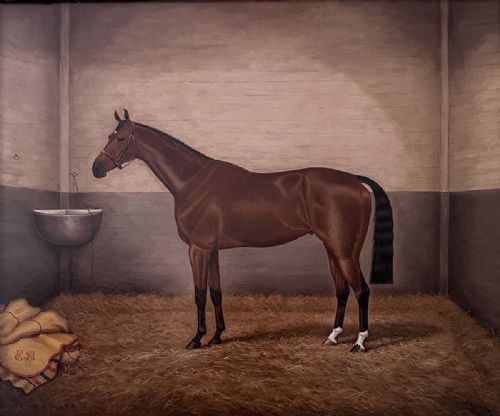
A country house horse portrait serves as a visual record of valued animals, capturing specific racehorses, hunters, and ponies with individual character. These works range from intimate studies of horses in stables to grand depictions set within expansive landscapes, often accompanied by grooms or hounds.
The selections span various periods including the Georgian, Victorian, and Edwardian eras, reflecting changing tastes in sporting art across the nineteenth and twentieth centuries. Oil on canvas works predominate, supplemented by occasional watercolours and panels, showcasing both British and French academic approaches.
Buyers encounter named subjects such as General Peace and William The Conqueror alongside anonymous mounts, each piece carrying the distinct patina of its age. Such paintings anchor a room with traditional gravitas, bringing the heritage of the country estate into domestic interiors.
Evaluating Quality and Execution
An animal portrait relies heavily upon the artist's anatomical precision and ability to convey the individual temperament of the horse. Superior examples display subtle tonal variations in the coat, accurate perspective in the surrounding architecture or landscape, and a confident hand in the handling of light.
The reputation of the named painter introduces another layer of distinction, as documented hands command greater recognition than anonymous studio productions. The integration of the subject within its setting, whether a stable interior or open pasture, dictates the visual balance of the composition.
The selection spans from the Georgian era through to the mid-twentieth century, employing oil on canvas, panel, and watercolour.
C R Breytle·John Alfred Wheeler·F.A. Clark·George E Sharpe·Samuel Spode·Benjamin Cam Norton·Clifton Tomson·Alfred Moginie Bryant·Molly Maurice Latham·Benedict Angell Hyland·James Barenger
The Country House Horse Portrait Glossary
- Oil on Canvas
- A traditional painting medium where oil paints are applied to a woven fabric support. This combination allows for rich blending of colours and durable longevity.
- Giltwood
- Wood that has been coated with a thin layer of gold leaf or gilt. This material is standard for period frames designed to enhance the artwork.
- Watercolour
- A painting method where pigment is suspended in a water-based solution on paper. It results in translucent washes that highlight delicate draftsmanship.
- Equestrian
- Pertaining to horses, horse riding, or the depiction of horses in art. This term groups together hunting scenes, racing portraits, and stable studies.
- Panel
- A rigid support surface, often wood, used instead of canvas for painting. Panels offer a smooth ground that accommodates fine, detailed brushwork.
Country House Horse Portrait: Frequently Asked Questions
How do I hang a horse painting?
These works suit traditional spaces such as libraries, dining rooms, and hallways, where their scale and subject matter interact naturally with period furniture. Ensure the placement avoids direct sunlight to protect oil pigments and paper supports.
Hang the painting at eye level, allowing adequate wall space for the heavy gilt frames typical of nineteenth-century framing conventions. Secure the weight of the canvas and frame using appropriate fixings suited to your wall type.
What is a bay horse?
A bay horse possesses a red-brown or chestnut body with black points on the mane, tail, and lower legs. This coat colour appears frequently in Victorian and Edwardian sporting art.
Painters often highlighted the rich mahogany tones of a bay coat against shadowed stable interiors or bright green pastures to create visual depth.
How do I date an antique horse portrait?
Dating relies upon stylistic clues within the painting, such as the cut of the rider's clothing, the design of the tack, and the framing materials. Signatures and inscriptions on the reverse or front often provide direct links to the artist and year.
Catalogues and historical records for named racehorses, such as General Peace or William The Conqueror, offer precise temporal anchors for the creation of the portrait.
Are watercolours as durable as oils?
Watercolour paintings require more protective measures than oil paintings because paper and water-based pigments react sensitively to light and moisture. They must remain under glass with acid-free mounts to prevent fading and degradation.
Oil on canvas works tolerate ambient indoor conditions more readily, though both mediums benefit from stable humidity levels away from heat sources.
Why are some horses shown in stables?
Stable scenes allowed artists to showcase the prized animal in its private domain, often attended by grooms or surrounded by stable gear. This setting emphasised the substantial investment country house owners placed in their bloodstock.
The dim lighting of the stable interior provided painters with an opportunity to practice chiaroscuro, contrasting deep shadows with the highlighted flanks of the horse.