


Racehorse Canvas Artwork
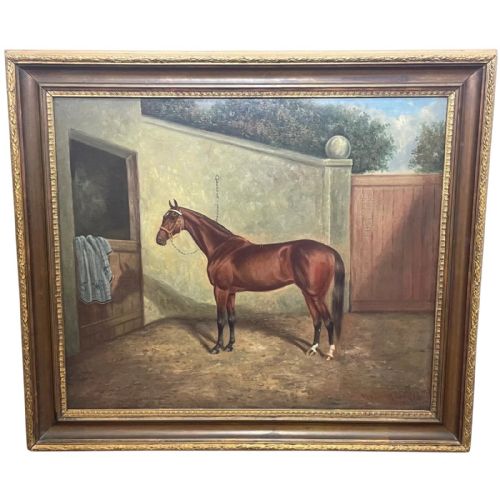
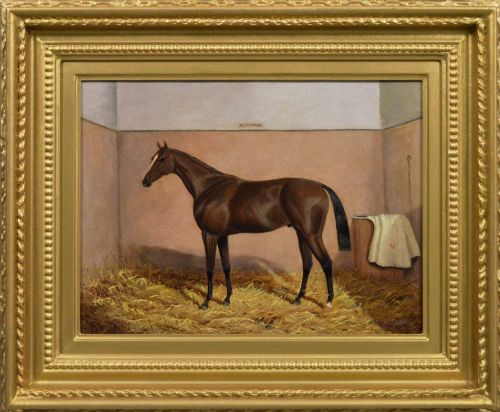
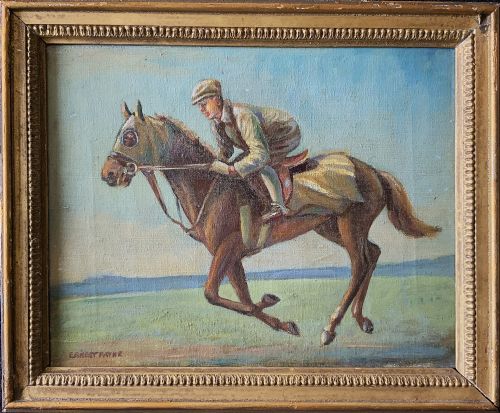
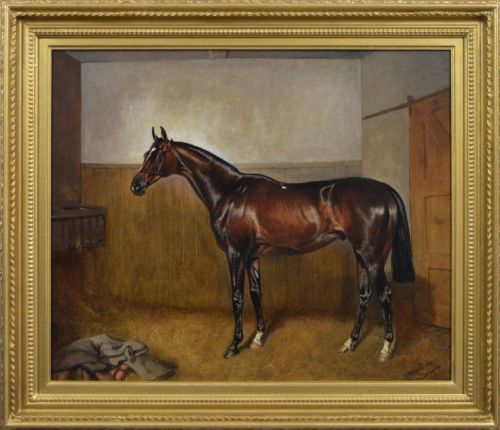
Racehorse canvas artwork captures the spirit of the turf through painted studies of notable thoroughbreds and their jockeys.
Racehorse Canvas Artwork
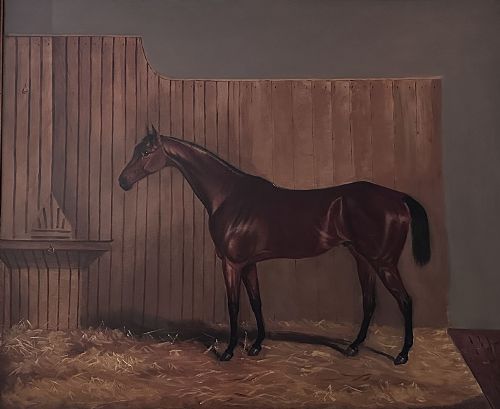
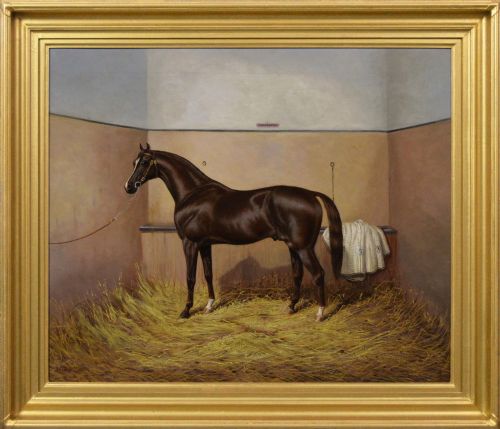
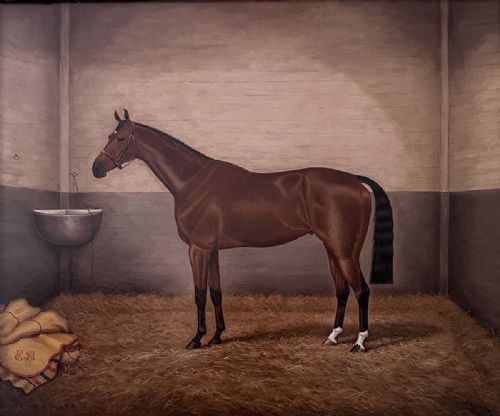
A racehorse canvas artwork focuses on equine portraits and turf scenes, depicting famous winners like Spion Kop, Flying Fox, and Persimmon alongside historical jockeys. These pieces span the Victorian, Edwardian, and early twentieth-century periods, capturing the pageantry and athletic power of British and international racing.
The works take the form of oil paintings on canvas, often housed in period frames such as giltwood. Portraits range from intimate head studies of named horses to dynamic compositions showing jockeys in racing silks before the start of a race.
Materials and construction
These works are painted in oil paint on woven canvas stretched over wooden supports. Artists utilised rich pigments to render the muscular form of the horse, the gloss of the coat, and the vibrant colours of the racing silks.
Many of the surviving canvases are retained in their original wooden frames, frequently finished with gold leaf or giltwood accents that complement the tonal depth of the nineteenth and early twentieth-century oil palette.
Several canvases immortalise horses with grand names like General Peace and William The Conqueror, ridden by legendary jockeys such as Fred Archer.
Evaluating quality and execution
Quality rests upon the artist's anatomical precision in rendering the horse and the ability to capture the likeness of specific animals and riders. Finer works display meticulous brushwork in the musculature and facial expression of the subject rather than relying on formulaic backgrounds.
The significance of the subject matter also influences distinction, with depictions of renowned Derby winners or royal thoroughbreds commanding greater historical interest than anonymous portraits.
Frederick Albert Clark·Ernest Payne·John Alfred Wheeler·Samuel Spode·John Parker Davis
The Racehorse Canvas Artwork Glossary
- Oil paint
- A medium consisting of pigments suspended in a drying oil, typically linseed, allowing for smooth blending and deep colour saturation on canvas.
- Canvas
- A heavy woven fabric used as a surface for oil painting, stretched firmly across a wooden frame before work begins.
- Giltwood
- Wood that has been treated with a thin layer of gold leaf or metallic gilt, commonly used to frame nineteenth-century sporting art.
- Sporting art
- A genre of painting dedicated to equestrian subjects, racing, hunting, and rural sports, particularly prominent during the Victorian and Edwardian eras.
- Thoroughbred
- A horse breed developed for horse racing, frequently documented by period artists for its refined conformation and athletic capability.
Racehorse Canvas Artwork: Frequently Asked Questions
What periods do these paintings come from?
The listings consist entirely of nineteenth-century, Victorian, Edwardian, and early twentieth-century works produced between the 1890s and the 1930s.
This era coincides with a golden age of British sporting art, when patrons frequently commissioned portraits of their prize-winning racehorses and famous jockeys.
How do I identify the horse in the painting?
Many works include inscriptions or titles on the canvas or frame that record the specific name of the racehorse, such as Flying Fox or Persimmon.
Reference to historical racing records and the colours worn by the depicted jockeys often helps confirm the identity of the animal.
Where should I hang an equestrian oil painting?
These canvases suit traditional studies, libraries, or living rooms with adequate wall space to display framed oil paintings properly.
Keep the artwork away from direct sunlight and excessive humidity to protect the oil paint and canvas from degradation over time.
What is the difference between a portrait and a racing scene?
Portraits focus closely on the conformation and likeness of a single named horse, sometimes accompanied by its jockey or trainer.
Racing scenes depict broader action, such as horses gathered before the start of a race on the turf.