
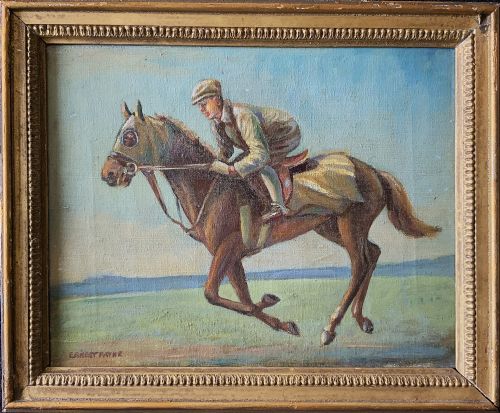
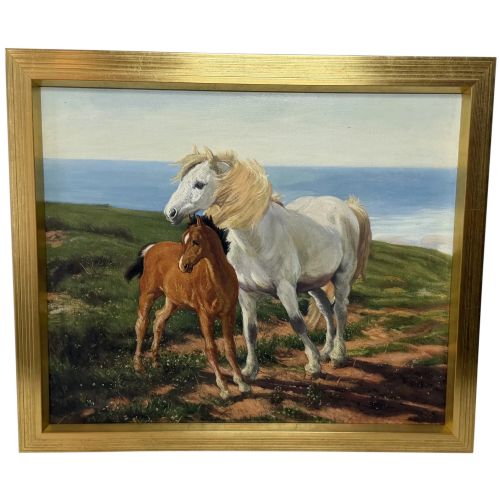
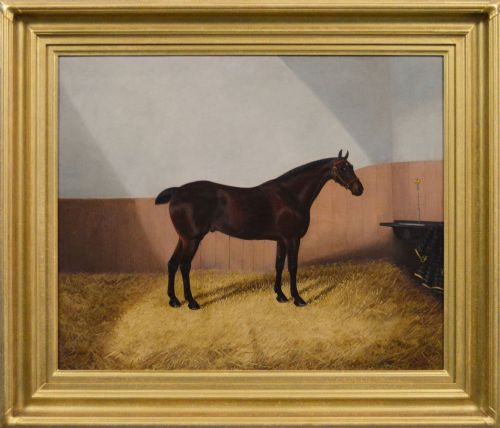
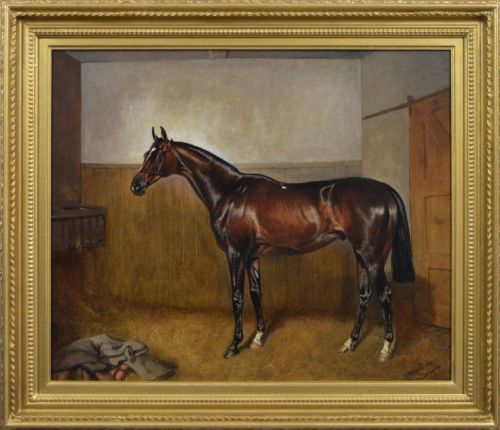
Brown Horse Portrait Art
Brown horse portrait art captures the physical presence and character of individual equine subjects through traditional painting and drawing.
Brown Horse Portrait Art
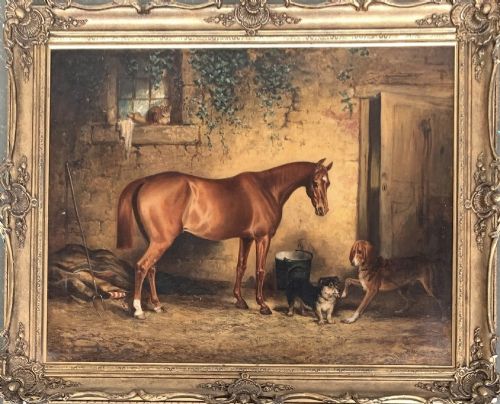
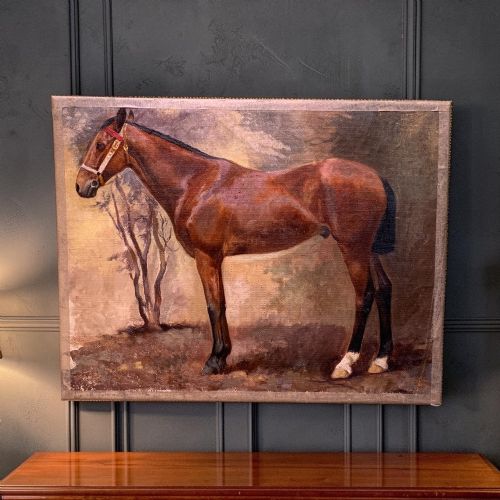
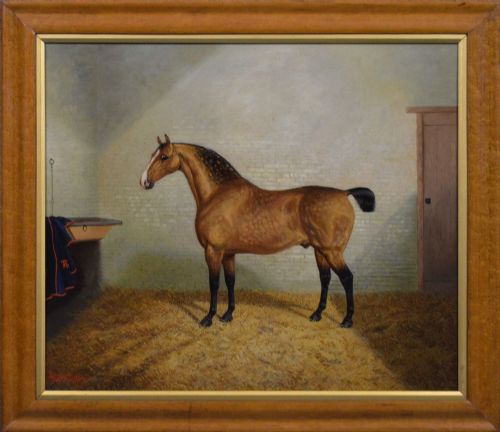
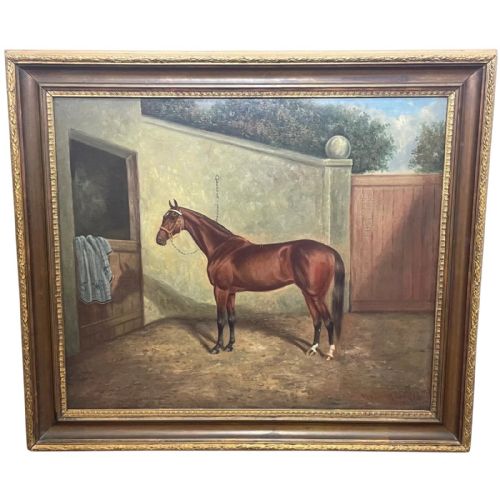
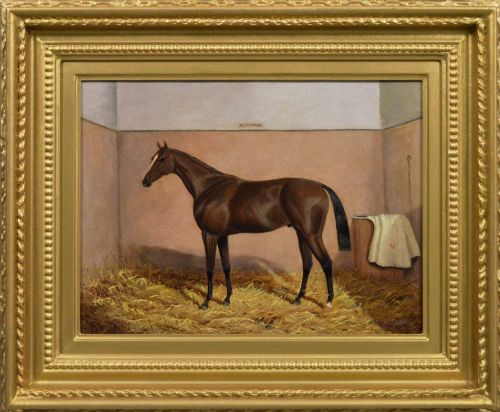
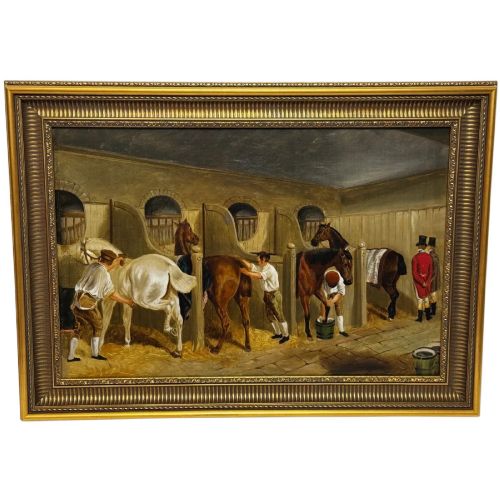
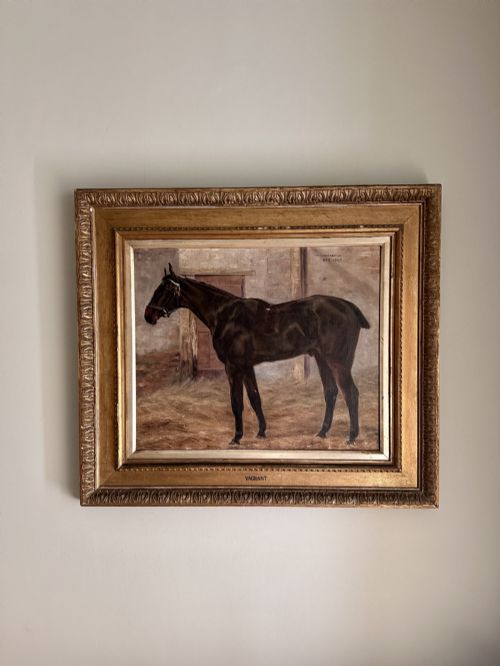
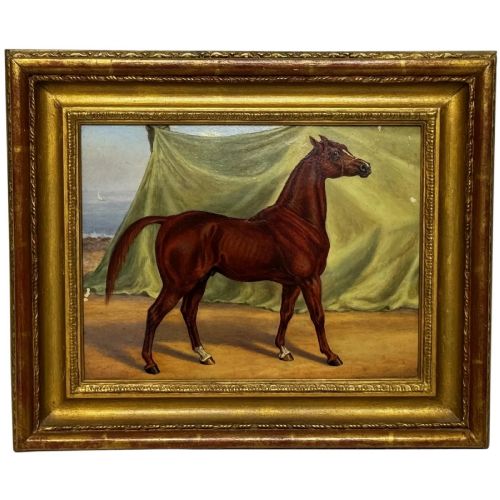
Brown horse portrait art encompasses depictions of equines ranging from named racehorses and hunters to stable studies across several centuries. The pieces available draw from British and European traditions, with a strong representation of nineteenth-century oil paintings on canvas and panel.
Buyers encounter works spanning from the Georgian period through the Victorian era and into the early twentieth century. These portrayals frequently highlight specific animals, often recording celebrated winners or valued mounts alongside landscapes and stable interiors.
Materials and Methods
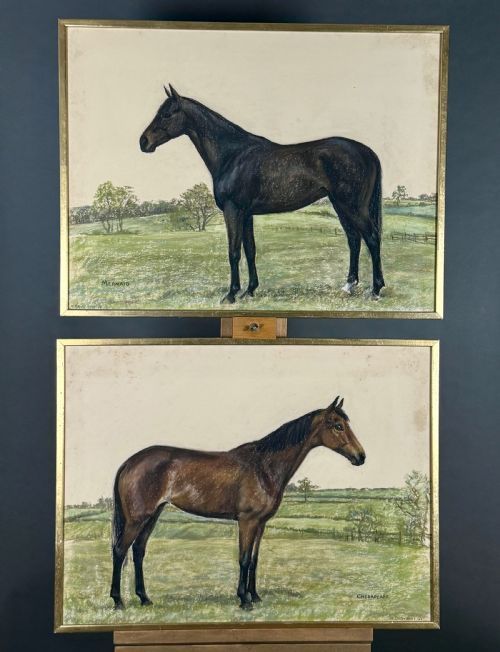
The primary medium across these works is oil paint applied to canvas, wood panels, or pine, supported by occasional watercolours and pastels on paper. Canvases are frequently housed in period giltwood frames that complement the depth of the pigments.
Artists utilised traditional layering techniques to render the sheen of coats, muscle structure, and facial expressions accurately. Support materials range from stretched canvas and heavy paper to solid wood panels suited for detailed equestrian studies.
Listings feature oil paint, canvas, wood, paper, and giltwood applied across Georgian, Victorian, and Edwardian periods.
Determinants of Quality
Quality in these portraits rests upon the artist's anatomical precision, the handling of light on the horse's coat, and the vitality of the expression. Superior examples convey distinct personality and accurate conformation rather than generic equine outlines.
The integration of the subject within its environment, whether a detailed stable interior or an open landscape, dictates the visual depth of the piece. Preservation of the original paint layer and the authenticity of the associated period frame also influence the overall standing of the work.
Henry Barraud·Albert Clark·John Ferneley Senior·John Alfred Wheeler·Thomas Walker Bretland
The Brown Horse Portrait Art Glossary
- Bay
- A coat colour of horses characterised by a reddish-brown body with a black mane, tail, and lower legs. This colouration appears frequently in nineteenth-century sporting paintings.
- Giltwood
- Wood, typically carved timber, coated with gold leaf or gold paint. Frames of this material are commonly found enclosing Victorian and Georgian oil paintings.
- Equestrian study
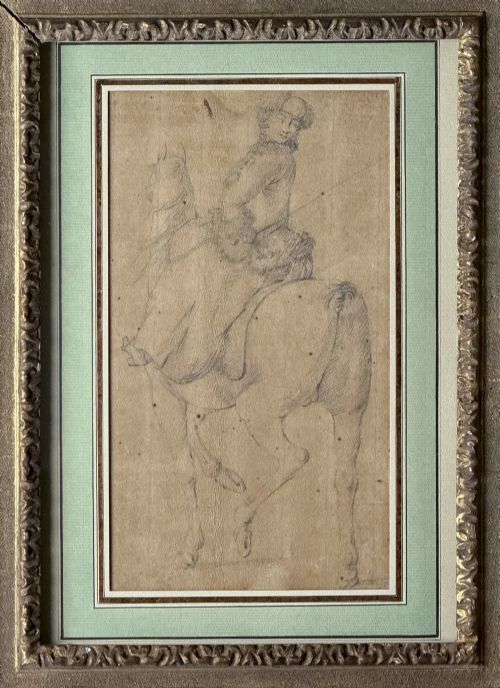
- A preparatory drawing or finished painting focusing specifically on the form and movement of horses. These works often predate larger formal compositions.
- Provenance
- The chronology of the ownership of a work of art, used as a guide to authenticity and history. Documented lineage connects specific portraits to notable estates or collections.
Brown Horse Portrait Art: Frequently Asked Questions
What periods do these horse portraits date from?
The works span from the eighteenth century through the Victorian and Edwardian eras up to the mid-twentieth century. Many pieces originate from the nineteenth century when equine portraiture flourished.
Dates are established through signatures, stylistic analysis, and framing evidence where available. Earlier pieces often reflect Northern European or British sporting art traditions.
How were these paintings originally displayed?
Equine portraits were typically commissioned by owners to hang in country houses, estate offices, and stables. They served as records of prized bloodstock, hunters, and race winners.
Many retain their original giltwood frames, designed to complement the domestic interiors of the period.
How do I identify a named racehorse in a portrait?
Inscriptions on the canvas, stretcher, or frame often record the name of the horse, sometimes accompanied by the owner, trainer, or race victory. Researching the recorded dates and jockeys provides further context.
Artists frequently noted significant achievements directly on the work to commemorate specific racing triumphs.
What media besides oil on canvas are used?
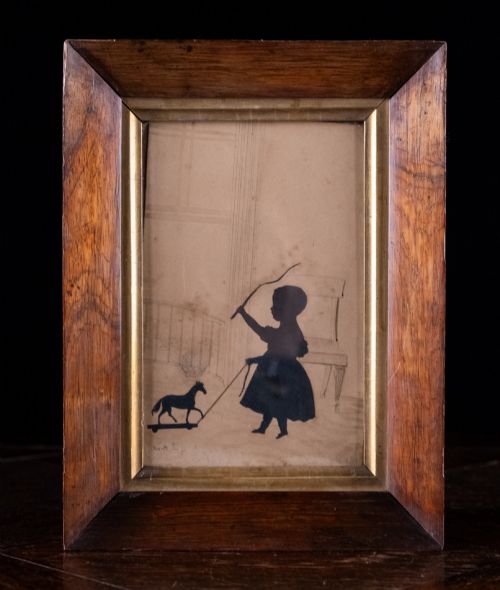
While oil on canvas is the predominant medium, selections also include oil on wood panel and pine board. Works on paper feature watercolours, pastels, and detailed drawings.
Support choices varied according to the artist's preference and the intended scale of the finished portrait.