


Queen Anne Walnut Stool
A queen anne walnut stool combines understated timber work with tactile textile upholstery, offering a period seat suited for dressing tables or windows.
Queen Anne Walnut Stool
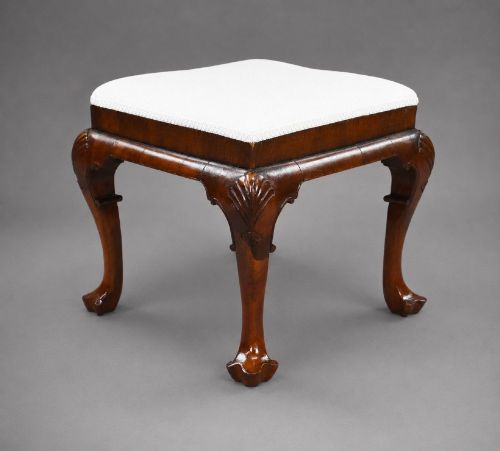
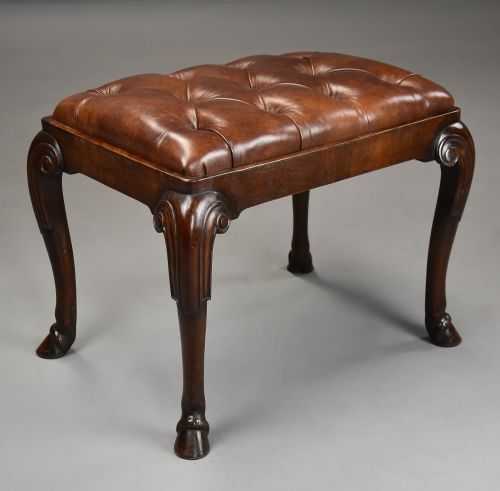
When searching for a queen anne walnut stool, buyers encounter low seating forms designed for dressing tables, footstools, and window seats. The majority of pieces on this page date from the nineteenth and early twentieth centuries, constructed in revival styles that emulate earlier eighteenth-century designs.
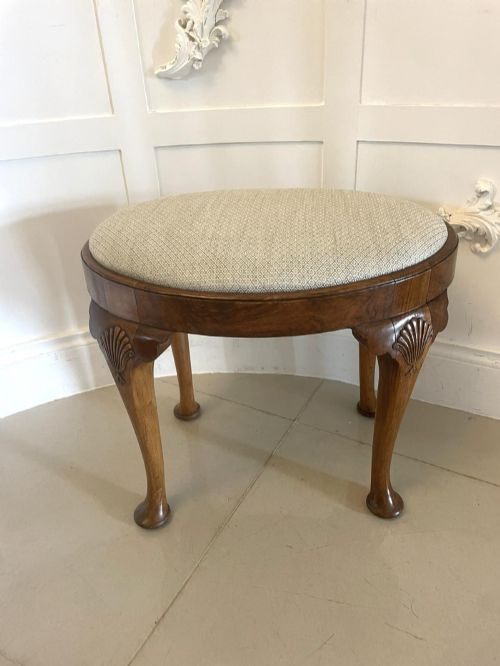
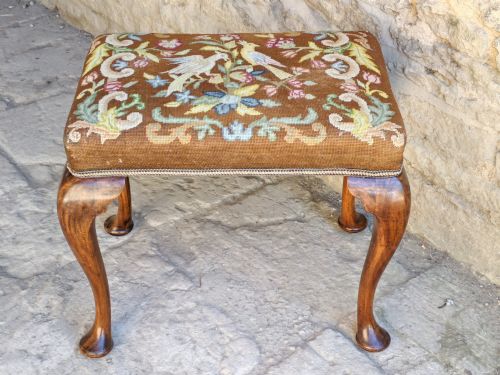
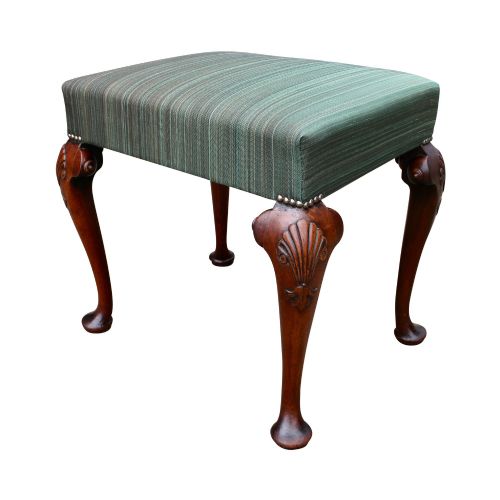
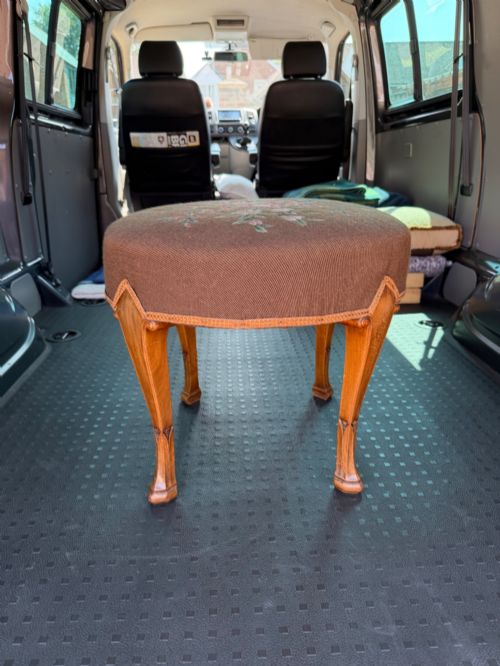
The standard form utilises a solid walnut frame supported by characteristic cabriole legs, occasionally terminating in pad or claw and ball feet. Upholstered tops vary from simple drop-in pads to elaborate needlepoint, tapestry, wool, and silk damask covers.
How they were made
Makers shaped the frames from walnut, sometimes utilising burr walnut veneers to achieve figured grain patterns on the rails. Carving appears selectively on the knees of the cabriole legs or along the seat frame, maintaining the restrained ornamentation typical of the style.
Upholstery relies on traditional webbing and stuffing secured beneath textile covers such as needlepoint, wool, fabric, or tapestry. Brass tacks frequently fasten the edges of the upholstery to the wooden frame.
Listings feature walnut stools spanning from the eighteenth century through Victorian, Edwardian, and 1930s revival periods.
What varies in quality
Quality rests in the crispness of the timber carving and the selection of the walnut grain, where figured or burr surfaces command greater attention. The structural integrity of the frame joints and the harmony of the cabriole curve dictate the overall proportion and visual weight.
Upholstery materials also distinguish examples, ranging from hand-worked needlepoint and tapestry panels to simpler commercial fabrics. The integration of original textile covers or faithful period replacements elevates the integrity of the piece.
Morris & Co.
The Queen Anne Walnut Stool Glossary
- Cabriole leg
- A furniture leg that curves out in a convex shape at the knee and tapers inward in a concave shape toward the foot, mimicking animal limbs. This form defines much of the seating from the period.
- Drop-in seat
- A removable wooden frame holding upholstery that rests within a rebate in the seat rail rather than being permanently fixed. It permits straightforward reupholstering without dismantling the main structure.
- Needlepoint
- Hand-stitched embroidery executed on an open-weave canvas ground, frequently using wool yarn. It appears on many period and revival stool tops.
- Pad foot
- A simple rounded foot found at the base of a cabriole leg, resting flat on the floor without separate toes. It offers a clean termination to the leg profile.
- Burr walnut
- Timber harvested from growth excrescences on walnut trees, yielding highly swirled and mottled grain patterns. Cabinetmakers used it as veneer on prominent surfaces.
- X frame
- A structural base formed by intersecting diagonal timbers supporting the seat centre. This configuration provides distinct geometric rigidity.
Queen Anne Walnut Stool: Frequently Asked Questions
How do I date a queen anne walnut stool?
Dating relies on timber characteristics, construction methods, and the style of the carving. While genuine eighteenth-century pieces exist, many examples date from nineteenth-century and early twentieth-century revivals.
Examining the underside reveals the type of screws, timber ageing, and secondary woods used by the maker. Revival pieces often incorporate machine-cut elements or later upholstery webbing beneath traditional covers.
Were these stools used at dressing tables?
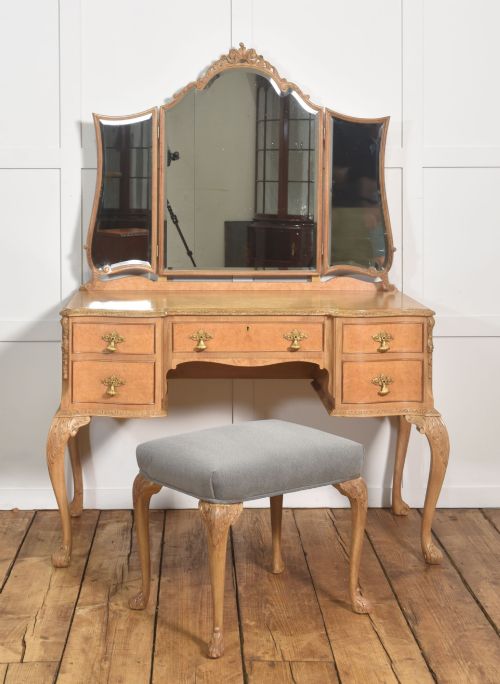
Many examples function specifically as dressing stools, paired with matching walnut dressing tables and triple mirrors. Their compact height allowed them to sit neatly beneath table surfaces when not in use.
Footstools and window seats share similar stylistic traits but differ in proportion and placement. Dressing stools generally offer a slightly higher seat level suited for grooming.
What upholstery fabrics are authentic?
Needlepoint, tapestry, wool, and silk damask appear frequently on period and revival pieces. Hand-stitched needlework panels reflect the domestic craft traditions associated with these seats.
Replacement upholstery is common due to the age of the textiles. Many surviving pieces retain twentieth-century needlepoint or period-appropriate woven fabrics.
How do I care for walnut and textile seats?
Walnut frames benefit from occasional application of quality wax to nourish the timber and preserve the grain. Direct sunlight and excessive heat should be avoided to prevent wood splitting and textile fading.
Textile covers require gentle vacuuming through a protective mesh attachment. Professional cleaning is recommended for antique needlepoint or delicate tapestry surfaces.