
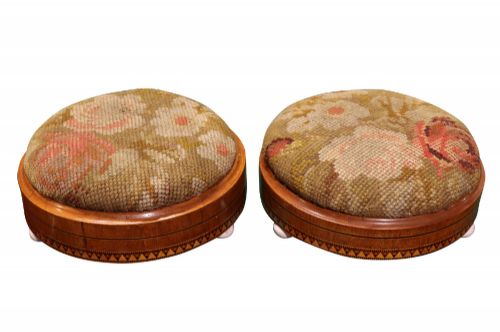
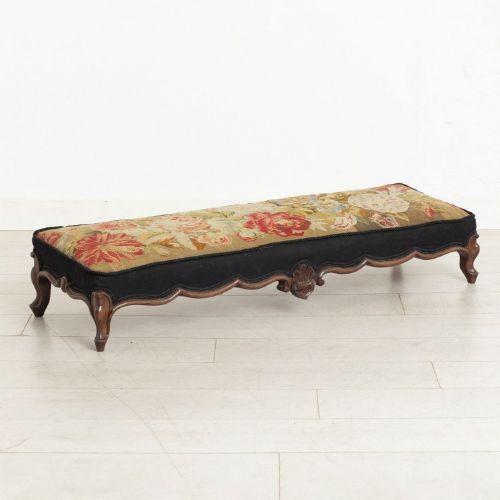


Needlepoint Footstool Walnut
A needlepoint footstool walnut brings tactile warmth to a room, offering sturdy timber frames paired with intricate historic textiles.
Needlepoint Footstool Walnut
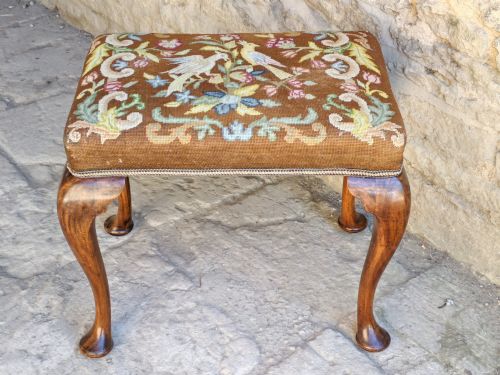
A needlepoint footstool walnut combines a resilient timber frame with a hand-worked textile cover designed for domestic comfort. These pieces serve primarily as fireside seats, dressing table supports or low rests for tired feet.
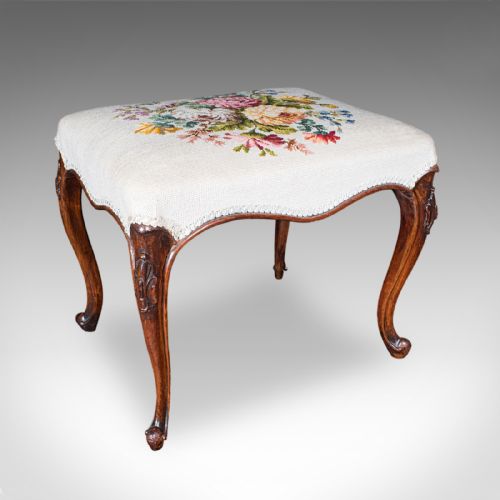
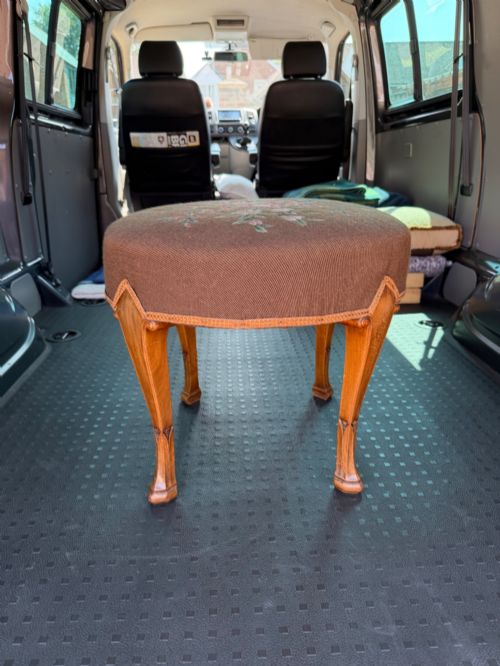
Most examples found here date from the nineteenth century, particularly the Victorian era, alongside early twentieth-century revivals. Forms range from simple circular frames to low stools resting upon carved cabriole legs.
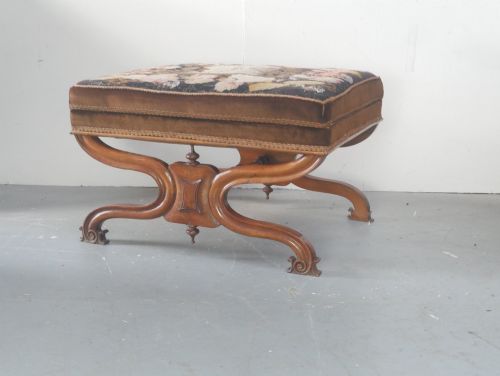
Makers produced these items in various regional styles, including Scottish Baronial and Queen Anne revivals. Buyers encounter everything from small round stools to large padded ottomans.
How they were made
Makers utilised solid walnut for the structural frames, shaping the timber into cabriole legs, inlaid surfaces and carved supports. Walnut provided the necessary strength while accepting fine decorative carving and polish.
Upholstery relies on wool tapestry, textile and needlepoint worked in geometric or floral patterns. Artisans secured these covers over internal padding, occasionally adding brass details or ceramic elements for finish.
Design styles span from early Victorian and Queen Anne revival to Scottish Baronial and Louis XV revival forms.
What varies in quality
Quality rests upon the crispness of the timber carving and the density of the walnut grain. Finer examples display meticulous inlay work, such as Tunbridge Ware, and robust structural joinery.
The needlepoint cover dictates much of the visual appeal. Tightly stitched wool work featuring complex floral or geometric designs represents superior craftsmanship compared to plain or heavily worn upholstery.
The Needlepoint Footstool Walnut Glossary
- Needlepoint
- A form of counted thread embroidery stitched onto an open-weave canvas. It creates a durable, decorative surface ideal for heavy-use furniture covers.
- Cabriole leg
- A furniture leg that curves outward in an arc and tapers inward toward a pad or scroll foot. This design appears frequently on revival pieces.
- Tunbridge Ware
- A type of decorative woodwork involving minute mosaic patterns made from differently coloured natural woods. It adorns small panels on select Victorian items.
- Scottish Baronial
- A nineteenth-century architectural and decorative style drawing upon medieval Scottish forms. Stools in this manner are typically heavy and substantial in build.
- Tapestry
- A thick textile woven with pictorial or geometric designs. In these listings, it describes the heavy fabric used to upholster seat tops.
Needlepoint Footstool Walnut: Frequently Asked Questions
How do I date a walnut footstool?
Examine the timber finish, joinery methods and the style of the carved legs. Victorian pieces often display darker polish and heavier proportions compared to earlier designs.
The upholstery needlework also offers clues, though many pieces have been re-covered over decades of domestic use.
Are these footstools sturdy enough for daily use?
Most walnut frames are robustly constructed from dense hardwood designed to withstand regular weight. Check that the joints remain tight and the legs do not wobble.
Delicate needlepoint covers benefit from gentle treatment to preserve the wool threads over time.
What is the difference between a dressing stool and a fireside stool?
Dressing stools typically stand slightly taller to match vanity tables and feature neat, compact frames. Fireside stools sit lower to the ground for comfort near a hearth.
Both utilise similar walnut structures and needlepoint upholstery traditions.
How should I clean the needlepoint top?
Remove surface dust gently using a soft brush or a low-suction vacuum attachment. Avoid harsh commercial cleaning liquids that might damage the historic wool fibres.
Professional textile conservation is recommended for deep cleaning aged tapestries.