


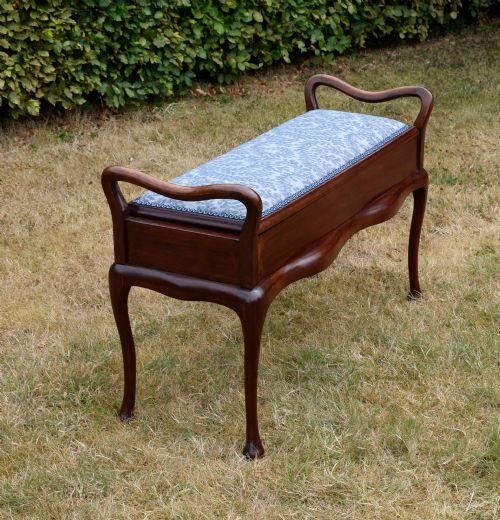
Queen Anne Seating
Queen Anne seating covers the high-backed chairs, stools and settees built in walnut and mahogany that define early eighteenth-century comfort and later revival periods.
Queen Anne Seating
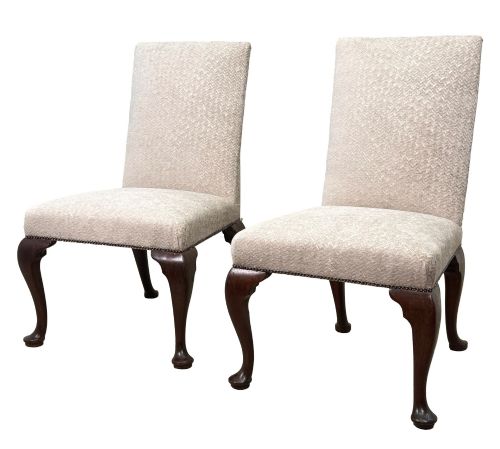
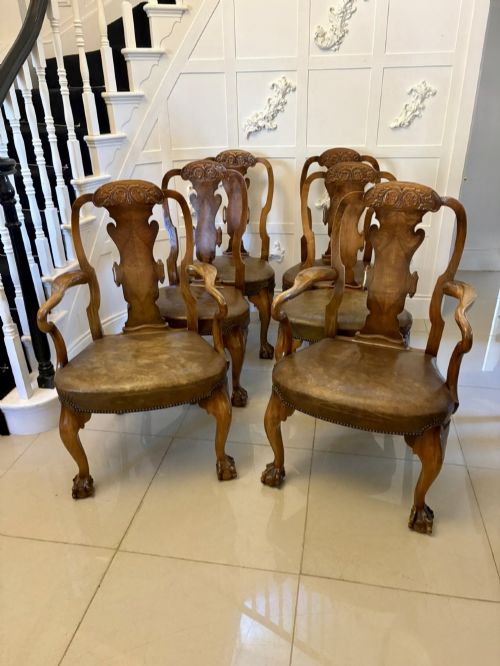
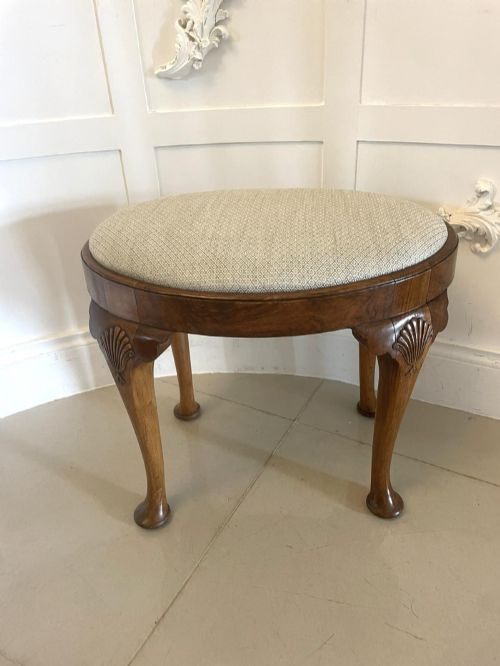
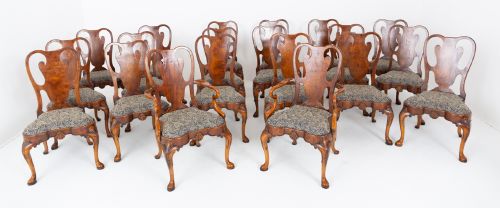
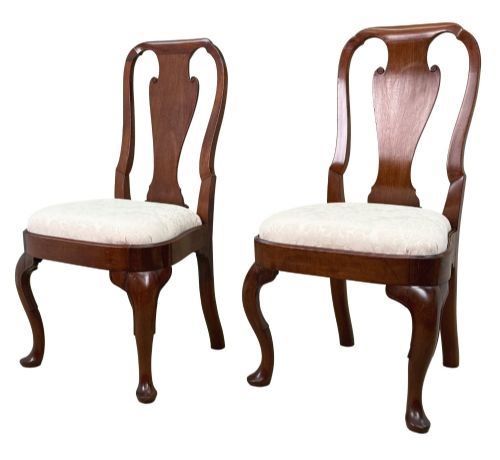
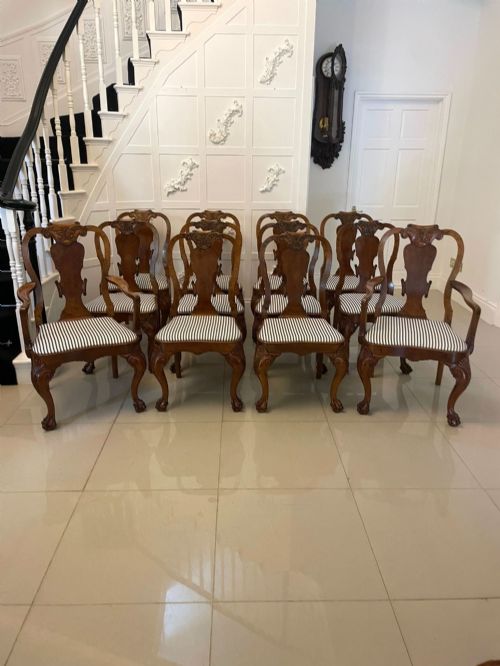
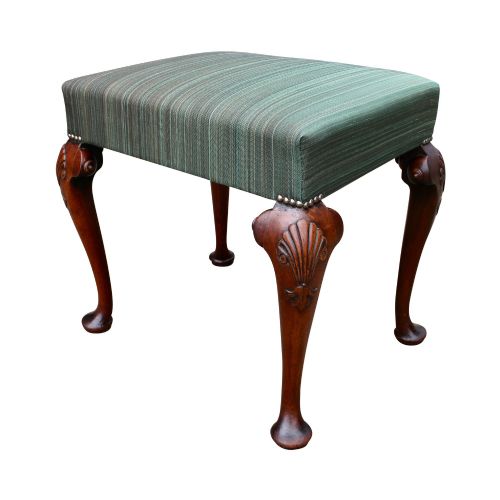
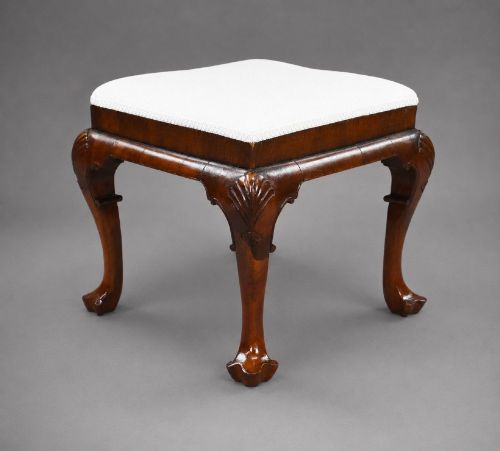
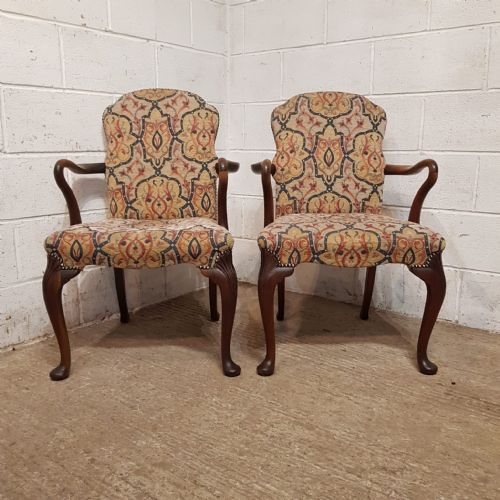
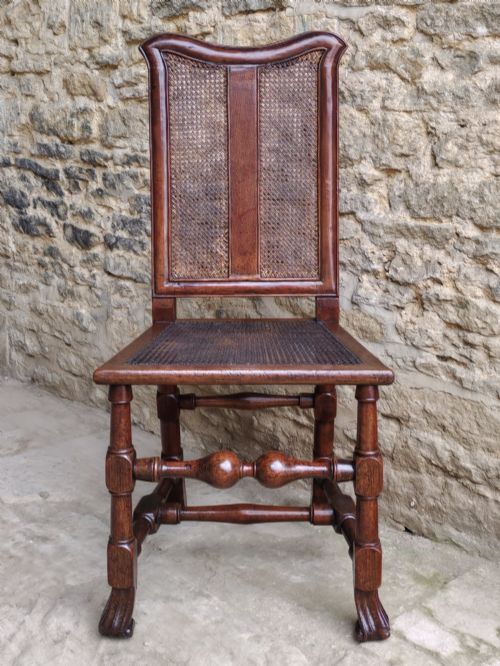
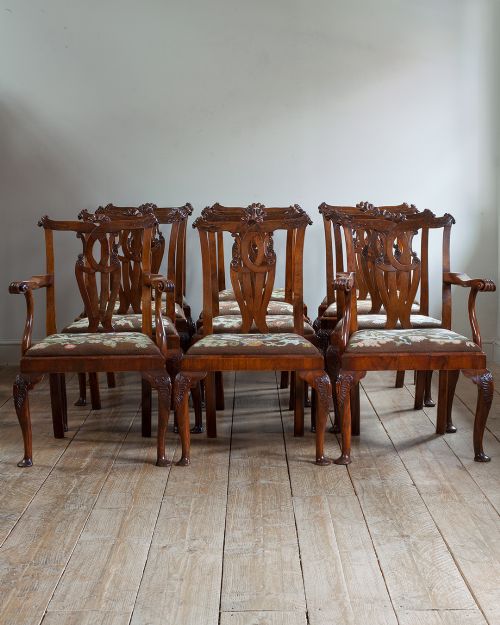
Queen Anne seating encompasses dining chairs, armchairs, side chairs, stools, footstools, piano stools, settees and sofas. Pieces originate from the original eighteenth-century period as well as later revival eras spanning the nineteenth and twentieth centuries.
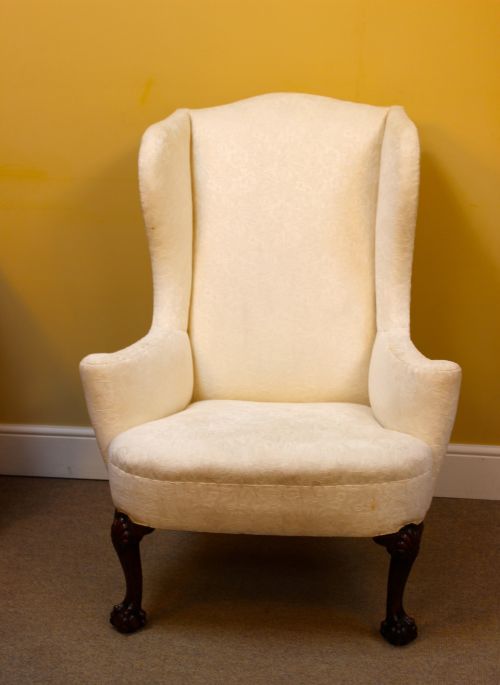
Buyers will encounter walnut dining sets, individual side chairs, upholstered wing armchairs and various stools. The selection ranges from early eighteenth-century examples to Edwardian and later twentieth-century interpretations.
Materials and construction
Walnut and burr walnut dominate the frames, supported by occasional uses of mahogany, elm and oak. Woodwork is paired with upholstery materials including fabric, textile, leather, velvet and needlepoint.
Joinery relies on solid timber frames shaped with cabriole legs and supportive splats. Drop-in seats and upholstered backs require precise textile work integrated directly into the wooden framework.
Listings span the eighteenth, nineteenth and twentieth centuries, featuring walnut, mahogany, oak, elm, brass and diverse textiles.
Distinctions in quality
The choice of primary wood defines the baseline of a piece, with figured burr walnut and early eighteenth-century walnut timbers standing apart from later painted or secondary woods. Timber selection dictates both the visual depth and the structural integrity of the frame.
Execution of carved details and upholstery standards separate standard production items from finer workshop output. Crisp lines on cabriole legs and the integration of quality textiles dictate the overall standing of each chair or stool.
Charles Tozer·Whytock & Reid
The Queen Anne Seating Glossary
- Cabriole leg
- A furniture leg that curves outward at the knee and tapers inward toward the ankle, mimicking animal limbs. This form is central to the profile of queen anne seating.
- Drop-in seat
- A removable seat frame upholstered separately before being dropped into a recess in the chair rails. It allows for straightforward reupholstery without dismantling the main structure.
- Settee
- A long wooden or upholstered seat for two or more people with a back and arms. These pieces match the design language of contemporary dining and side chairs.
- Wing armchair
- An upholstered armchair with side panels designed to shield the sitter from drafts. Early examples utilise substantial walnut frames and deep padding.
- Splat
- The vertical strip of wood down the centre of a chair back. Queen anne seating frequently employs vase-shaped splats that curve to fit the back of the sitter.
Queen Anne Seating: Frequently Asked Questions
What defines queen anne seating?
Queen anne seating is characterised by graceful cabriole legs, pad feet and curved backs that replaced the rigid straight lines of earlier periods. These forms appear across dining chairs, armchairs, stools and settees.
Walnut serves as the primary timber, often complemented by drop-in seats or fully upholstered wing frames designed for domestic comfort.
How do I spot an eighteenth-century piece?
Early eighteenth-century pieces display authentic timber patination, hand-cut joinery marks and structural wear consistent with age. Construction methods and wood species provide the clearest indicators of original period origin.
Later revival pieces from the nineteenth and twentieth centuries often use heavier internal framing while closely imitating the historic profiles.
Are these chairs suitable for daily dining?
Many dining chairs and sets from this category remain entirely robust for regular daily use. Solid walnut construction and sturdy joinery ensure enduring functional strength.
Upholstered components can be modernised or restored to suit contemporary seating preferences without altering the historic wooden frames.
What is the difference between side chairs and armchairs?
Side chairs are built without arms to allow multiple seats to fit closely around a dining table or desk. They feature narrow profiles focused on back support and leg geometry.
Armchairs incorporate structural armrests, offering a wider footprint suited for reading desks, libraries or occasional seating areas.