



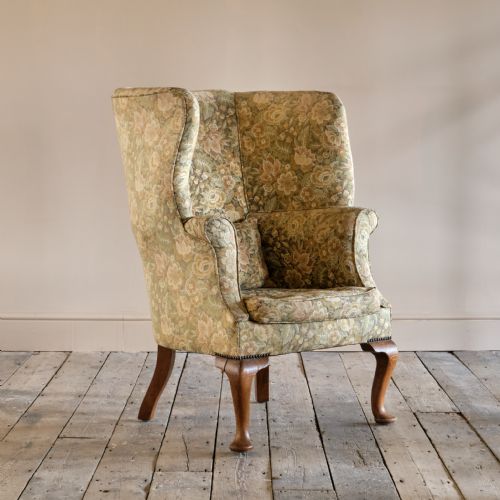


Queen Anne Fireside Chair
A queen anne fireside chair offers deep wingback comfort and period style, bringing traditional seating to any hearth.
Queen Anne Fireside Chair
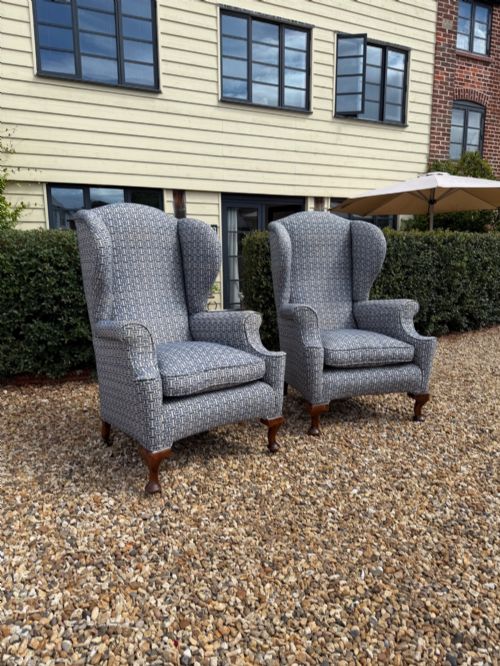
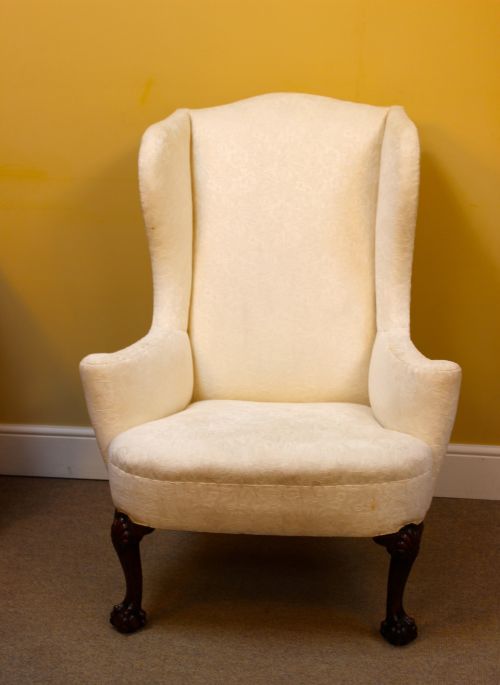
A queen anne fireside chair is an upholstered armchair designed to keep draughts away from the sitter by means of protective side wings. Buyers browsing this selection will encounter pieces spanning from the eighteenth century through to revival periods in the nineteenth and twentieth centuries.
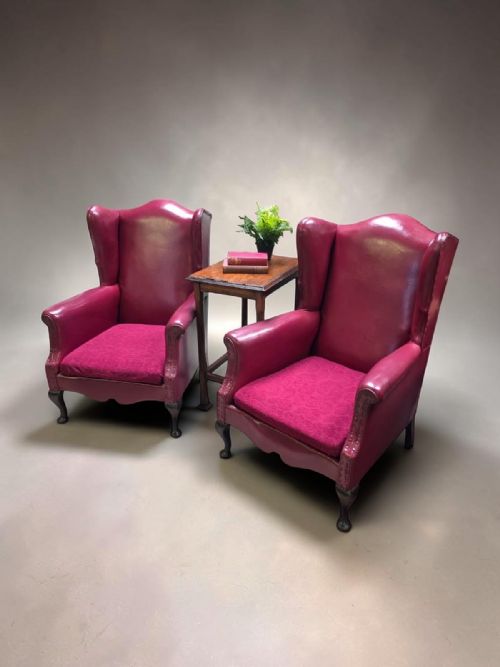
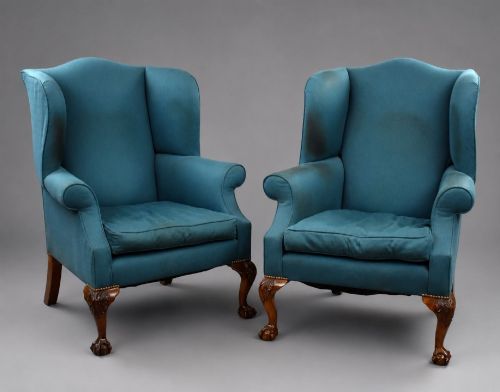
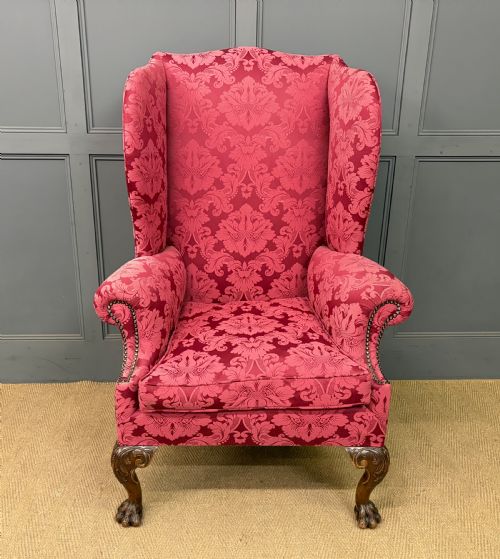
The most common forms on this page include walnut and mahogany frames with high backs and supportive armrests. Many examples appear in revival styles such as Queen Anne Revival and Georgian Style, alongside genuine period pieces from the eighteenth and nineteenth centuries.
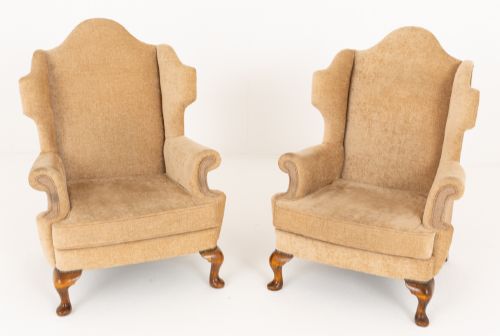
Makers and manufacturers produced these armchairs in pairs, sets, and as individual statement seating. The inventory encompasses barrel backed formats and standard wingback designs finished in various textiles and leathers.
How They Were Made
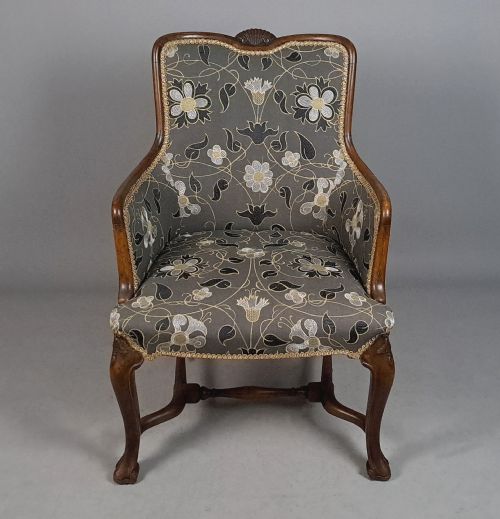
These armchairs rely on timber frames constructed principally from walnut and mahogany. Cabinet makers shaped cabriole legs directly into the wood, often supporting substantial upholstered bodies above.
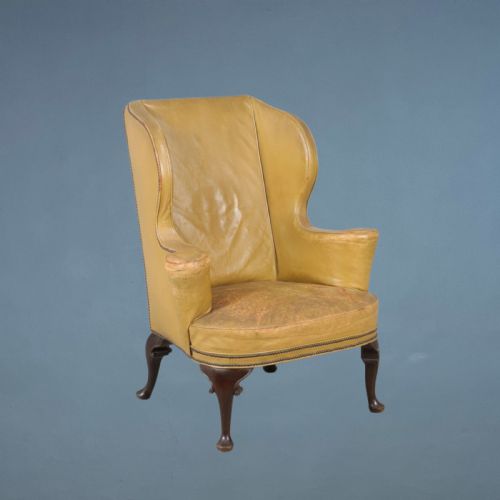
Upholstery techniques involve textiles, fabric, velvet, and leather stretched over padded inner structures. Brass detailing sometimes appears on traditional hide coverings, securing the upholstery to the wooden framework.
Several armchairs come paired with matching footstools, ensuring maximum comfort for tired feet after a long day by the fire.
What Varies in Quality
The distinction between standard examples and finer pieces rests upon the integrity of the wooden frame and the precision of the carved cabriole legs. Walnut framing with hand-coloured leather or period-correct fabric points to a higher grade of manufacture.
Proportion and execution define the overall presence of each armchair. Pieces reflecting the authentic Queen Anne manner demonstrate superior balance in the wings and back compared to later, simpler revival iterations.
The Queen Anne Fireside Chair Glossary
- Cabriole leg
- A furniture leg that curves outward at the knee and tapers inward toward the ankle, ending in a pad or foot. This form is characteristic of eighteenth-century design and its later revivals.
- Wingback
- An armchair style featuring protective flaps or wings attached to the armrests and extending up to the headrest. These projections originally served to shield the sitter from hearth draughts.
- Barrel back
- A seating form where the backrest curves continuously around to form the arms in a single rounded enclosure. This shape provides an enveloping feel for the person sitting.
- Revival
- A design movement that imitates the aesthetic and structural characteristics of an earlier historical period. Examples on this page include Queen Anne Revival and Georgian Style interpretations from the nineteenth and twentieth centuries.
- Hide
- A heavy animal skin used for upholstery purposes in traditional seating. Green and oxblood variations frequently appear on nineteenth and early twentieth-century models.
Queen Anne Fireside Chair: Frequently Asked Questions
Are these chairs comfortable for daily use?
These upholstered armchairs provide substantial back and arm support suited for regular seating by a fireplace. Their padded construction accommodates long periods of relaxation.
Individual comfort levels depend on the specific depth of the seat and the firmness of the internal padding within each antique or revival piece.
How do I identify an 18th century piece?
Early pieces display authentic timber patination and construction methods particular to the seventeen-hundreds. Genuine items often feature period walnut frames and traditional joinery.
Distinguishing original antique items from later nineteenth or twentieth-century revivals requires close examination of the wood grain, wear patterns, and internal framing techniques.
What materials were used for upholstery?
Traditional coverings include woven textiles, fabrics, velvet, and leather. Many nineteenth-century and vintage examples utilise oxblood or green hide.
Some listed items are sold specifically for re-upholstery, allowing buyers to apply modern or period-appropriate fabrics to the existing frame.
Do these chairs come in pairs?
The inventory frequently includes matching pairs of armchairs alongside individual pieces and larger sets of four. Pairs are especially common among twentieth-century revival items.
Finding matching seating allows for balanced placement on either side of a fireplace or within a traditional drawing room arrangement.