


Queen Anne Dining Table
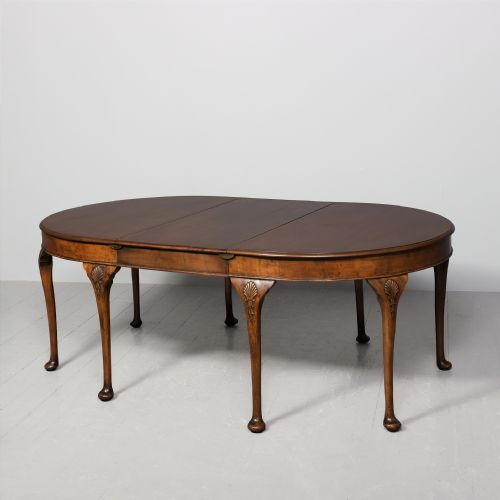
A queen anne dining table brings centuries of British domestic tradition to the room, combining generous proportions with distinctive cabriole legs.

Form and Period
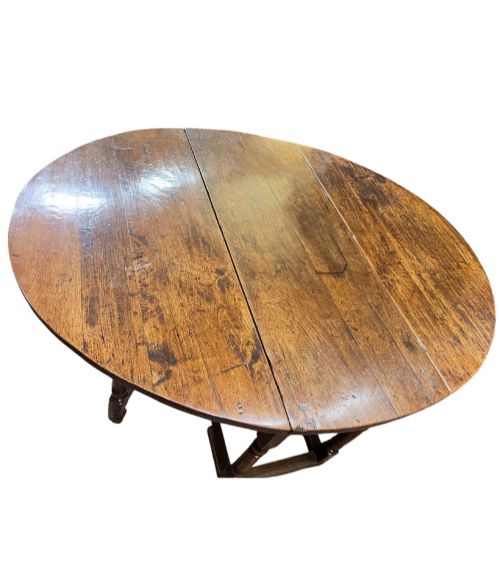
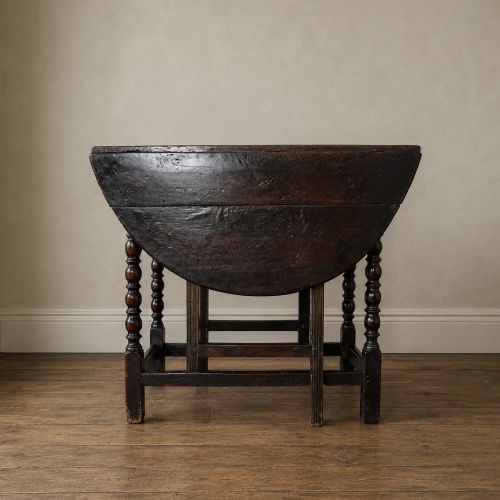
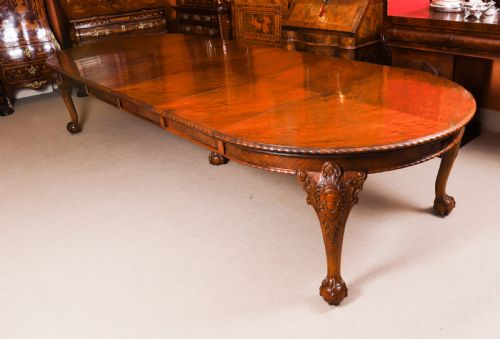
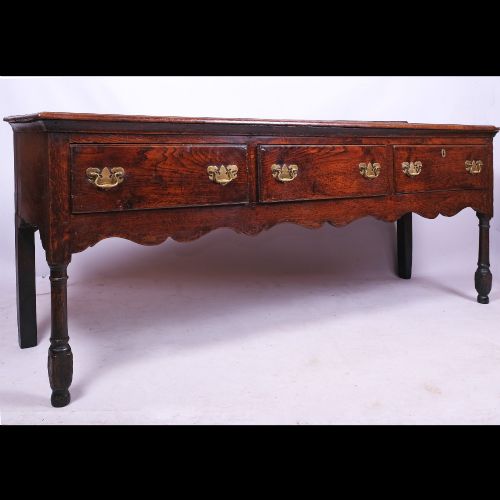
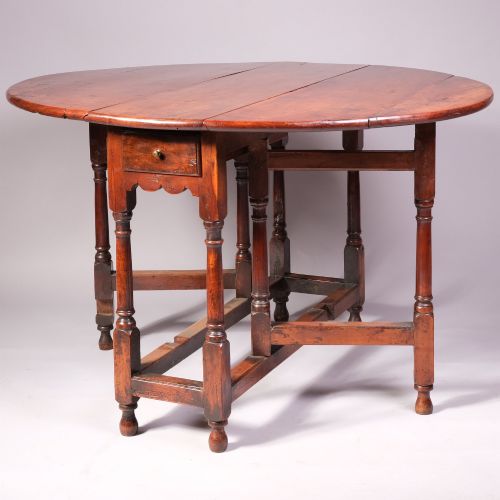
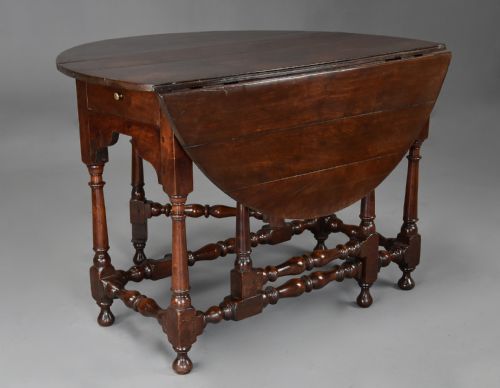
When searching for a queen anne dining table, buyers encounter a mixture of genuine 18th-century pieces alongside later revivals from the 19th and 20th centuries. The selection encompasses large ten-seater wake tables, gateleg designs, drop-leaf variations, and modern extending mechanisms housed within period aesthetics.
Original pieces date back to the early 1700s, constructed in oak or Cuban mahogany, while revival iterations span the Victorian era, 1880, 1910, 1920, and 1930. These forms adapt to modern dining requirements through wind-out systems or drop-leaf leaves whilst retaining classic stylistic markers.
Materials and Construction
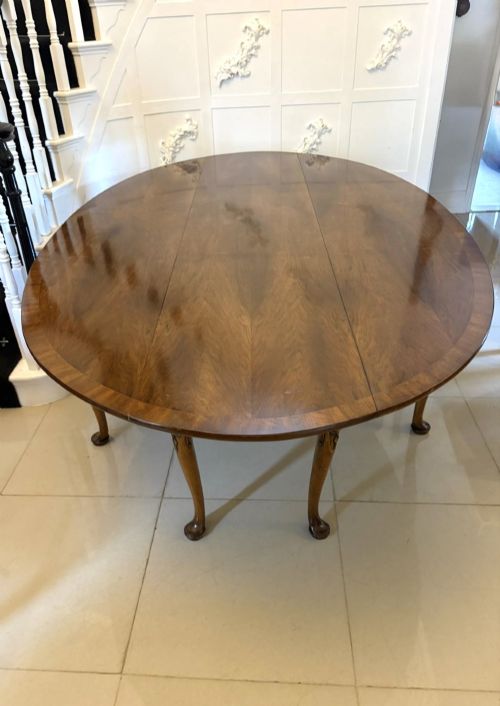
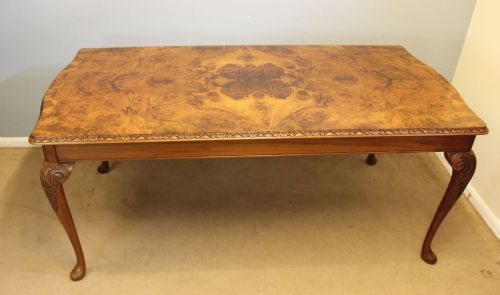
Cabinet makers utilised dense native and imported timbers, predominantly mahogany, walnut, burr walnut veneer, and oak, often reinforced with brass fittings on extending mechanisms. Surfaces display rich figuring, particularly where burr walnut veneer or Cuban mahogany provides deep natural grain patterns.
Structural integrity relies on traditional joinery, incorporating drop-leaf hinges, gateleg frames, and wind-out extension screws. Carved details adorn the framework, most notably upon cabriole legs terminating in pad feet.
Retail Price Guide 2026
Typical UK retail prices for queen anne dining table, calculated from the Sellingantiques database of over a million retail prices indexed since 2003. This retail price guide relies exclusively on Sellingantiques data; no external sources or auction records are used, so the figures do not describe the wider market.
Listings feature mahogany, walnut, and oak across Georgian and 20th-century periods.
Assessing Craftsmanship
Quality rests in the selection of timber and the precision of the carving, distinguishing heavy-duty utility pieces from formal dining furniture. Tables featuring figured burr walnut veneer or dense Cuban mahogany demonstrate superior material choice compared to standard domestic woods.
The sophistication of the mechanism determines the tier of later extending tables, with smooth wind-out systems outweighing simple drop-leaf configurations in mechanical complexity.
Maple & Co
The Queen Anne Dining Table Glossary
- Cabriole leg
- A furniture leg that curves outward at the knee and tapers inward toward the foot, mimicking animal limbs. This form became a defining characteristic of early 18th-century design.
- Pad foot
- A simple, rounded foot where the leg rests flat on the floor without additional shaping. It frequently terminates the bottom of a cabriole leg on period tables.
- Drop leaf
- A table top featuring a fixed centre section with hinged flaps on either side that fold down when not in use. This mechanism allowed tables to be stored compactly against walls.
- Wind out
- An extending table mechanism operated by a handle that turns an internal screw thread to separate the leaves. This innovation allowed large dining surfaces to expand evenly.
- Burr walnut
- Timber taken from a tree growth or wart, producing intricate, swirling grain patterns highly prized for veneer work. Makers applied these thin sheets over stable secondary woods.
Frequently Asked Questions
How do I seat ten people?
Look for large wake tables, refectory designs, or extending wind-out models. These variations accommodate larger gatherings through additional leaves or generous baseline lengths.
Check the clearance beneath the apron to ensure diners have adequate legroom while seated around the perimeter.
Are these tables solid mahogany?
Many period and revival pieces utilise solid Cuban mahogany or native oak, while later revival pieces often employ burr walnut veneer over supportive secondary timbers.
Inspect the edges and undersides to understand the construction method and material depth utilised by the cabinet maker.
How do drop leaf tables function?
Drop leaf tables rely on hinged wooden flaps supported by swing legs or fly brackets that pivot out from the central frame. This allows the surface area to expand or contract depending on daily requirements.
When raised, the leaves lock into a stable horizontal position resting upon the extended support arms.
What is a wind out table?
A wind out table employs an internal metal screw mechanism operated by a detachable handle to pull the table halves apart. Insertion leaves are then placed into the central gap to lengthen the surface.
This Victorian and Edwardian innovation allowed formal dining tables to adjust smoothly without straining the outer frame.