


Queen Anne Credenza
A queen anne credenza combines period timber with functional storage, offering a sturdy yet graceful centrepiece for a dining room or hall.
Queen Anne Credenza
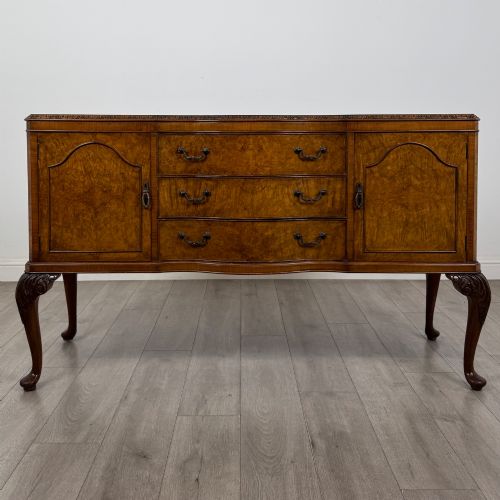
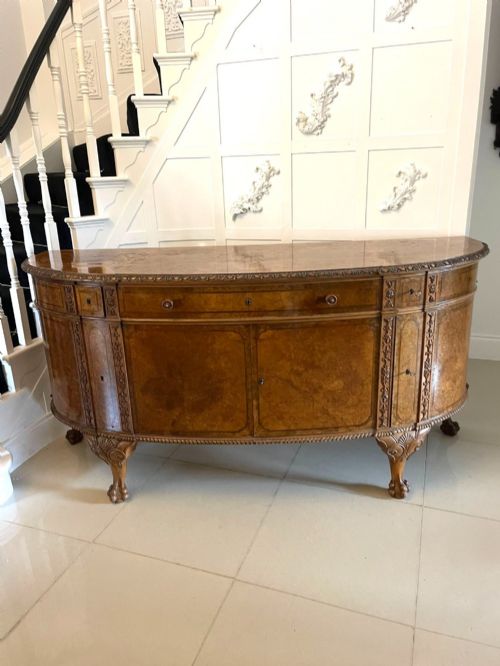
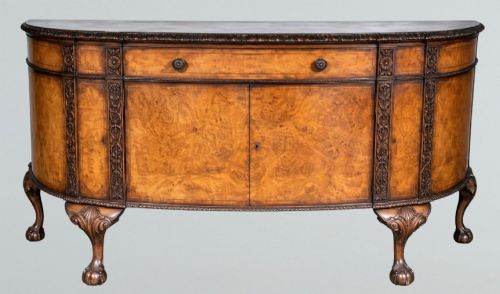
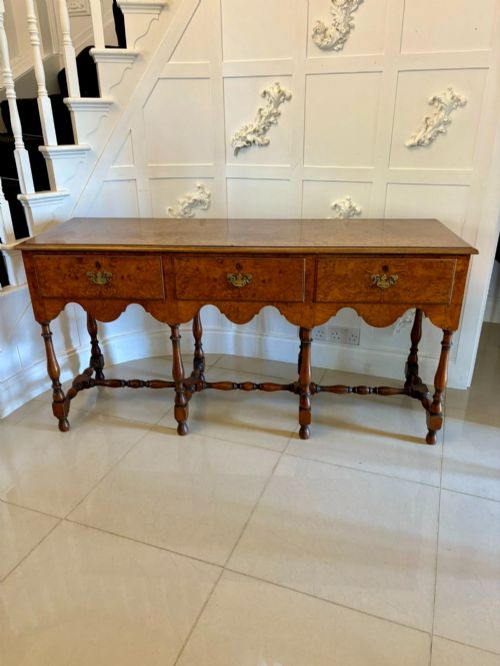
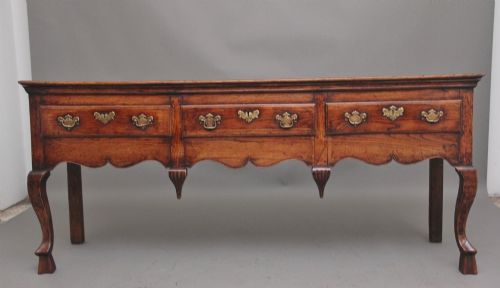
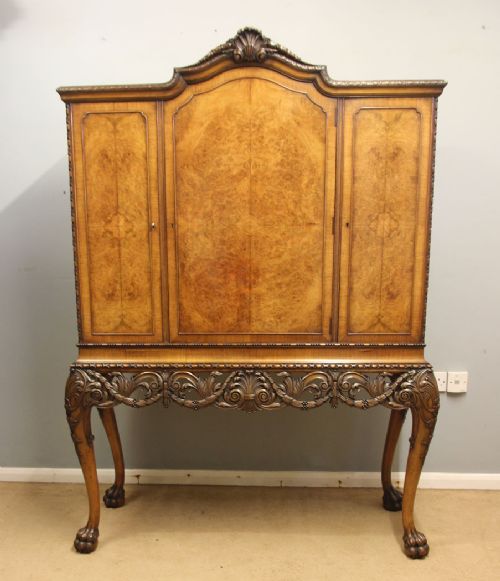
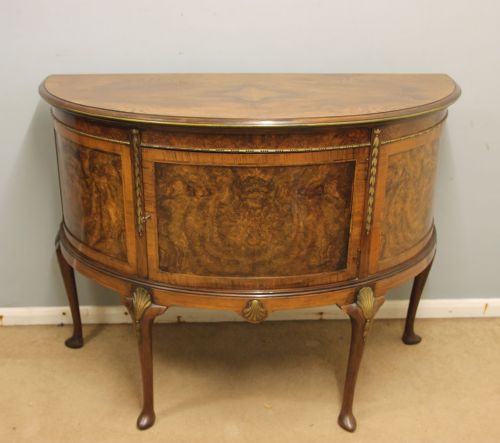
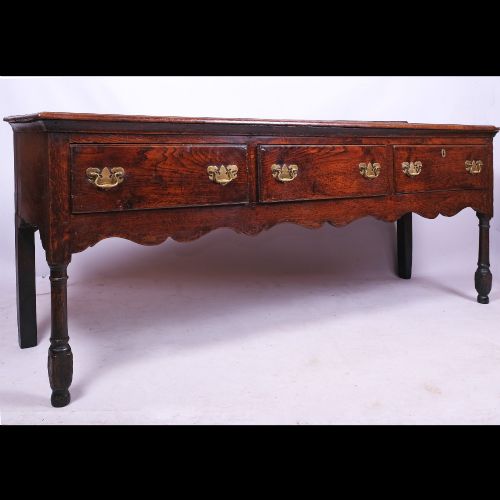
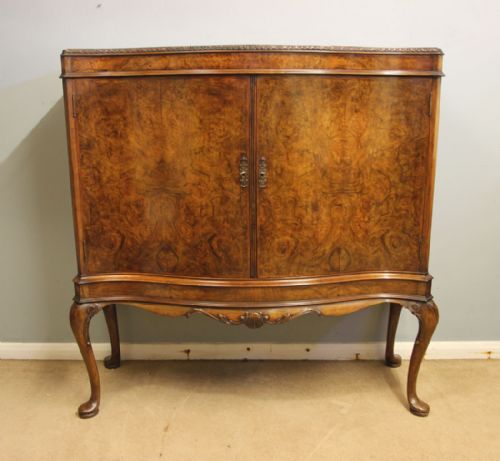
When buyers search for a queen anne credenza, they typically encounter revival sideboards, side cabinets, and drinks cabinets rather than formal period credenzas. These pieces emerge chiefly from early twentieth-century workshops and Edwardian decades, echoing earlier design motifs.
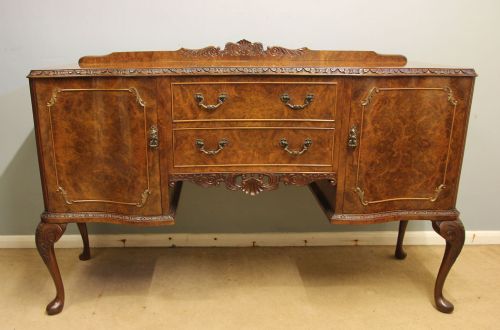
Most examples lean towards the Queen Anne style or revival interpretations, incorporating characteristic cabriole legs and figured wood veneers. Buyers select them to anchor a room with traditional timber character while gaining enclosed storage.
How they were made
Cabinet makers utilised solid oak and hardwood for foundational frames, applying burr walnut and figured walnut veneers to visible surfaces. Crossbanding and brass hardware complete the construction of these twentieth-century and earlier forms.
Surface treatments range from polished walnut grain to bleached finishes on oak dresser bases. Structural joins rely on traditional cabinetry techniques suited to supporting heavy sideboards and drinks cabinets.
Several cabinets include hidden compartments once intended for secret cocktail ingredients or forgotten cutlery sets.
What varies in quality
The selection of timber veneer dictates much of the visual appeal, with richly figured burr walnut commanding attention over plain surfaces. Pierced brass handles and precise crossbanding indicate higher grade execution in revival pieces.
Proportion and carved detail separate standard production from superior workshops. Solid construction in the primary framing woods ensures longevity across heavy sideboards and cocktail cabinets.
Hille of London·Epstein
The Queen Anne Credenza Glossary
- Burr walnut
- A figured wood grain taken from the warted growths of walnut trees. It creates intricate, swirling patterns across cabinet doors and tabletops.
- Cabriole leg
- A furniture leg that curves out and then in, resembling an animal's leg. This shape appears frequently on revival and period chairs and tables.
- Crossbanding
- A narrow strip of veneer laid around the border of a panel with the grain running perpendicular to the main section. It provides a neat, contrasting frame.
- Dresser base
- A low wooden storage unit featuring drawers or cupboards beneath a flat top. Early examples use solid oak.
- Demi-lune
- A half-moon shape used for the front profile of side cabinets and console tables. This geometry fits neatly against walls.
Queen Anne Credenza: Frequently Asked Questions
What is a queen anne credenza?
A queen anne credenza generally refers to revival sideboards and cabinets from the early twentieth century that borrow eighteenth-century stylistic cues. They serve as decorative storage units in dining rooms.
These pieces use walnut veneers and cabinet doors to conceal cutlery, glassware, or drinks sets.
Are these pieces genuine eighteenth century?
Most options listed date from the Edwardian era, 1920s, and 1930s. They emulate earlier furniture traditions rather than originating in the reign of Queen Anne.
Genuine eighteenth-century items appear primarily as oak dresser bases rather than standard dining sideboards.
How do I use a drinks cabinet?
Twentieth-century drinks and cocktail cabinets incorporate internal shelving and storage designed for bottles and glassware. They function as dedicated entertaining stations in living spaces.
Drop-down leaves or opening doors provide a surface for mixing drinks during gatherings.
What timber is most common?
Walnut and burr walnut dominate the twentieth-century revival pieces, offering warm tones and prominent wood grain. Oak appears more frequently on older dresser bases.
Secondary woods like hardwood provide structural support behind the decorative veneers.