
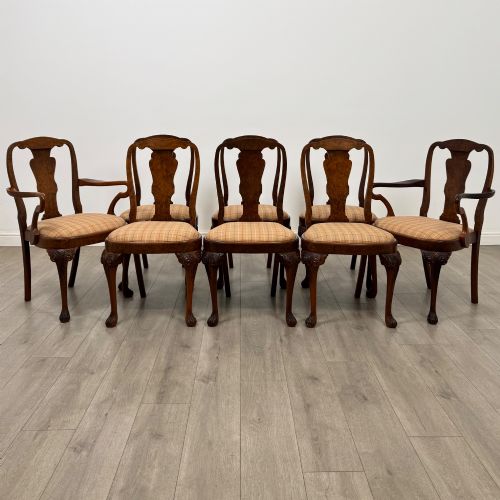
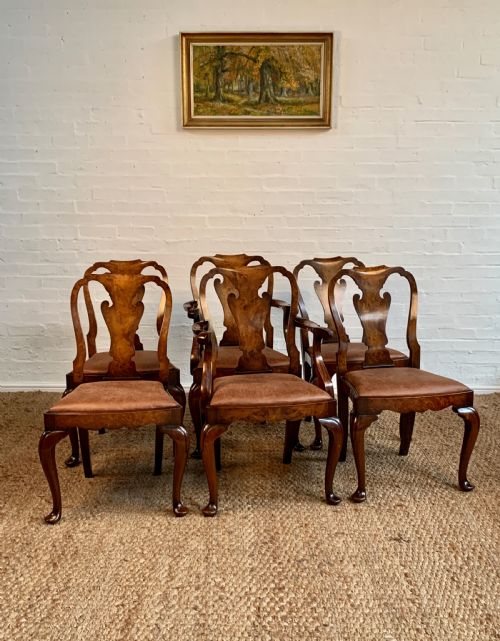
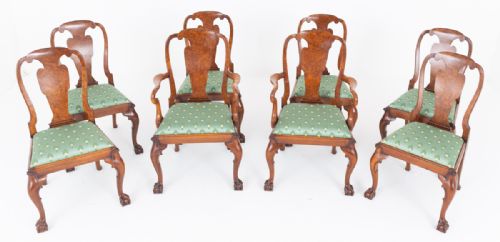


Queen Anne Carver
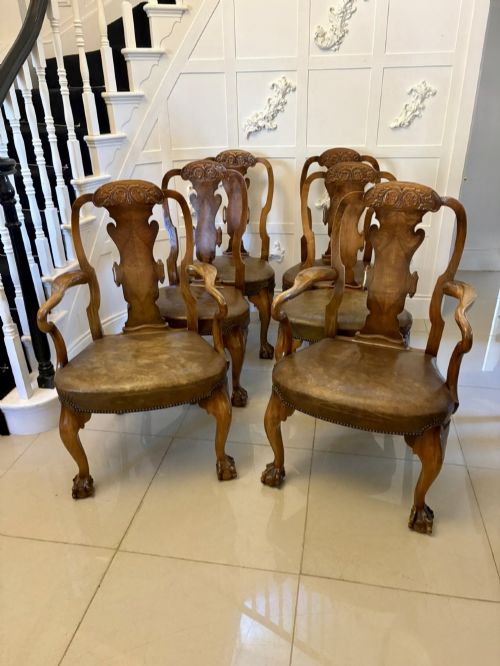
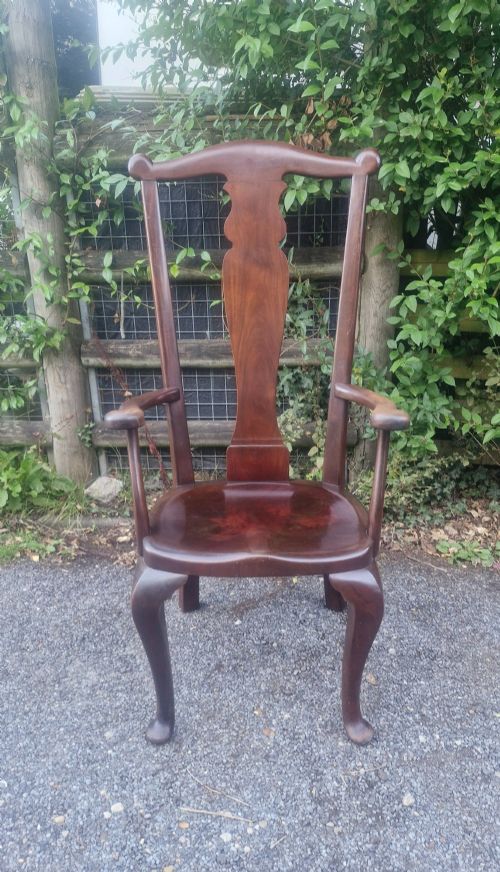
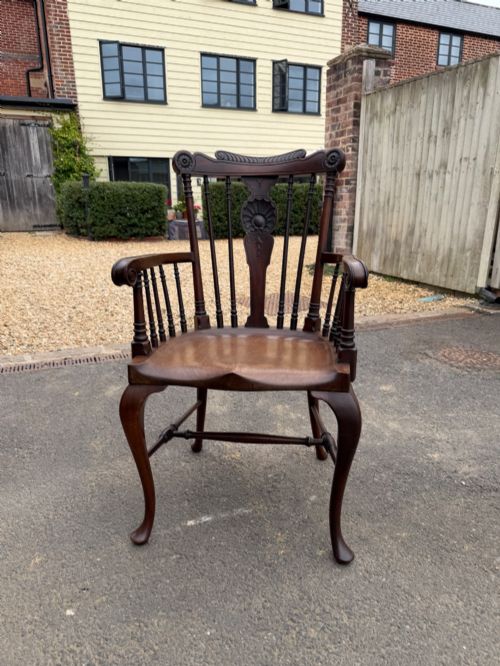
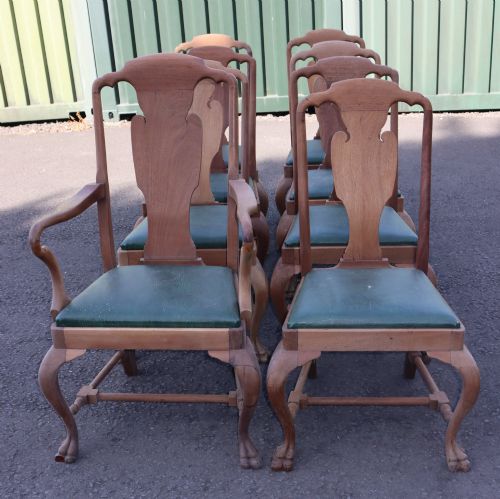
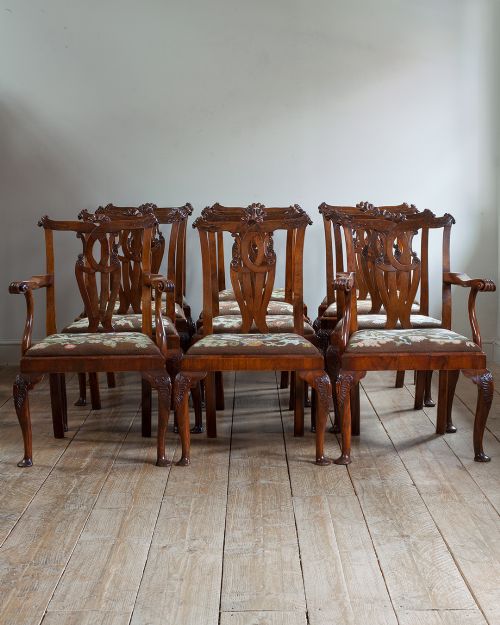
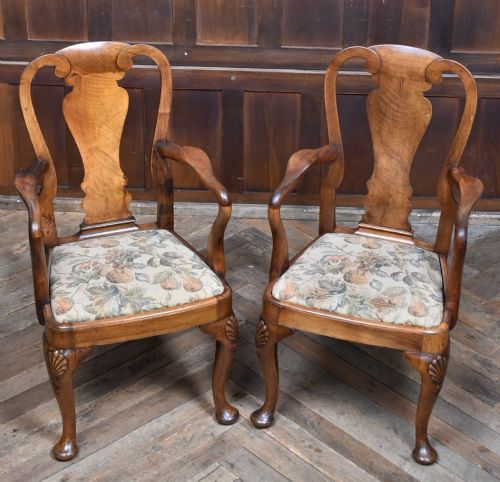
A queen anne carver brings substantial timber frames and shaped arms to a table or desk, offering robust seating shaped by walnut and mahogany.
Queen Anne Carver
A queen anne carver combines the elevated stature of an armchair with specific design roots seen across the 18th century, Victorian, and Edwardian periods. Buyers search this phrase to find singular armchairs and matching sets that include elbow chairs alongside standard dining seats.
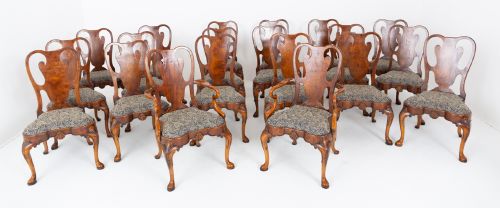
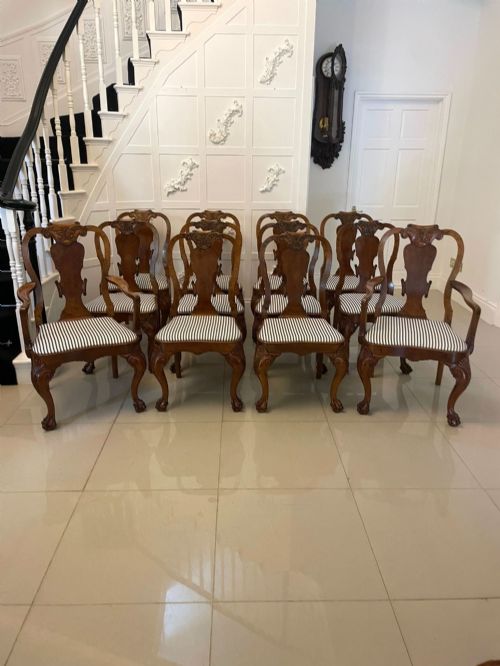
Most examples encountered here belong to the Queen Anne style or revival periods of the late 19th and early 20th centuries, rendered in woods like walnut, burr walnut, and mahogany. These forms range from high-back study chairs to low desk armchairs and expansive dining sets.
The enduring appeal of the queen anne carver lies in its synthesis of supportive armrests and upright posture, rooted in historical forms but built to suit traditional and modern rooms alike.
Materials and Construction
Makers shaped these frames primarily from solid walnut, burr walnut, and mahogany, often utilising applied veneers to create striking grain patterns on backsplats and seat rails. Oak and elm appear in specific regional or period interpretations.
Upholstery forms a vital component of the construction, utilising fabric, leather, velvet, and various textile coverings over supportive padding. Carved details on knees and crest rails demonstrate the manual work applied to the timber frames.
Listings span centuries from original 18th-century production through Victorian revivals and 1930s interpretations.
Assessing Quality and Execution
The distinction between tiers rests upon the depth of timber selection, particularly the choice of figured burr walnut or dense mahogany over simpler secondary woods. Finer execution shows in the crispness of carved wooden details and the harmonious proportions of the arms and splat.
Structural integrity and the quality of upholstery integration dictate everyday longevity, separating standard production pieces from those made with exceptional cabinet-making standards.
Spillman & Co·Waring & Gillow·Howard & Son's
The Queen Anne Carver Glossary
- Carver
- An armchair designed with elbow supports, traditionally made to match a set of single dining chairs. These served the head of the table or office desks.
- Splatt
- The central vertical wooden strip running down the middle of the chair back. It often takes a vase or fiddle shape in these designs.
- Cabriole leg
- A furniture leg that bends outward at the knee and tapers inward toward the ankle, ending in a pad or foot. This form defines the silhouette.
- Burr walnut
- Wood sliced from walnut tree growths that produces intricate, swirling grain patterns. It was prized for decorative veneer panels.
- Elbow chair
- An alternative term for an armchair, frequently used in historical records to denote seating with arm rests designed for dining rooms.
Queen Anne Carver: Frequently Asked Questions
What is a queen anne carver?
A queen anne carver is an armchair featuring distinctive wooden frames, supportive armrests, and upright backs derived from 18th-century design traditions.
These chairs frequently appear as part of larger dining sets or as standalone desk and study seats.
How were these chairs used?
Historically, carver chairs served seated occupants who required arm support, placing them at the heads of dining tables or beside writing desks.
Today, they function as occasional chairs in living spaces or functional desk seating.
How do I live with a walnut carver?
Living with walnut requires keeping timber away from direct heat sources and sudden humidity shifts to protect the wood and veneer.
Regular dusting and careful attention to upholstered surfaces keep the materials stable during daily use.
How do I tell periods apart?
18th-century originals exhibit genuine period construction methods, timber patination, and wear consistent with extensive historical use.
Revival pieces from the Victorian and Edwardian eras show cleaner machine-assisted joinery and different finishing techniques while copying earlier styles.