

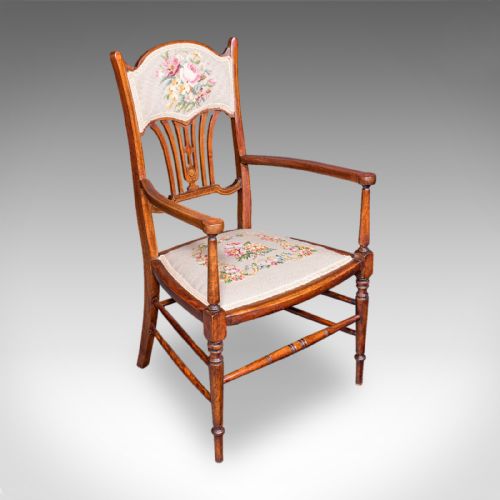


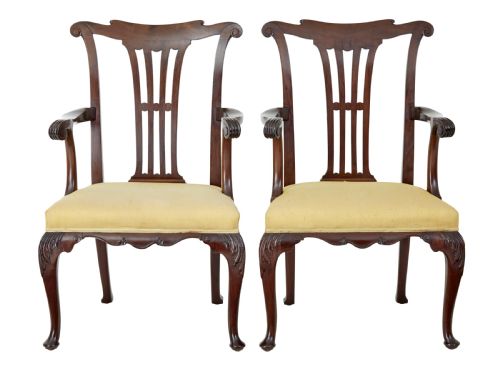


Padded Seat Carver
A padded seat carver brings generous arm support and traditional craftsmanship to the dining table or study.
Padded Seat Carver
A padded seat carver is an armchair designed to sit at the head of a dining table or serve as a standalone study seat. These pieces combine sturdy wooden frames with upholstered pads covered in fabric, leather, or tapestry.
You will most frequently encounter mahogany and walnut examples spanning the eighteenth century through the Edwardian period. Styles range from restrained Queen Anne and Georgian designs to ornate Victorian and Art Nouveau interpretations.
How they were made
Cabinetmakers shaped primary timbers like mahogany, walnut, beech, and oak into upright frames, curved armrests, and supportive back splats. Joinery relied on mortise and tenon construction to ensure stability under daily use.
Upholstery techniques involved securing supportive webbing and stuffing directly onto the wooden seat base before finishing the edge with textile, leather, or tapestry coverings.
Padded Seat Carver Retail Price Guide 2026
Typical asking prices for padded seat carver among the pieces listed under this phrase on Sellingantiques today, from the lower quarter to the upper quarter. They describe what is for sale here now, not the wider market.
Listings feature mahogany, walnut, beech, and oak frames paired with fabric, leather, and tapestry upholstery.
What varies in quality
Quality rests in the precision of the timber carving and the architectural balance of the arms and splat back. Finer examples display crisp detail work on the cabriole legs or vase splats rather than plain, heavy turnings.
The integrity of the original frame construction and the choice of dense hardwoods like walnut and mahogany separate refined period seating from later revival pieces.
The Padded Seat Carver Glossary
- Splats
- The vertical wooden strip down the centre of a chair back. Styles vary from solid vase shapes to pierced and decorative designs.
- Cabriole leg
- A furniture leg that curves out and then tapers in, mimicking an animal's leg. This form appears frequently on eighteenth-century seating.
- Box stretcher
- A system of horizontal rails connecting the lower legs of a chair for added stability. These reinforcements prevent the joints from loosening over time.
Padded Seat Carver: Frequently Asked Questions
What is a carver chair?
A carver chair is an armchair traditionally used at the head of a dining table. It provides supportive armrests while matching the surrounding side chairs.
These pieces also function well as desk chairs or accent seating in a morning room or study.
How do I identify a Queen Anne style chair?
Queen Anne style chairs typically feature smooth, curved lines and pad or cabriole feet. The backs often incorporate a vase-shaped splat for ergonomic lumbar support.
Decoration is subtle, relying on the natural grain of walnut or mahogany rather than heavy carving.
Are these chairs suitable for daily use?
Most wooden carver chairs are built with sturdy mortise and tenon joints designed for regular seating. Solid hardwoods like mahogany and walnut withstand everyday dining and study use.
Upholstered pads can be maintained or recovered over time to preserve comfort without altering the antique frame.
What timber was commonly used?
Mahogany and walnut are the most prevalent timbers found across these listings, prized for their rich grain and structural strength. Beech and oak also appear in specific regional or period pieces.
Cabinetmakers selected these hardwoods for their ability to hold intricate carving and withstand stress at the joints.