


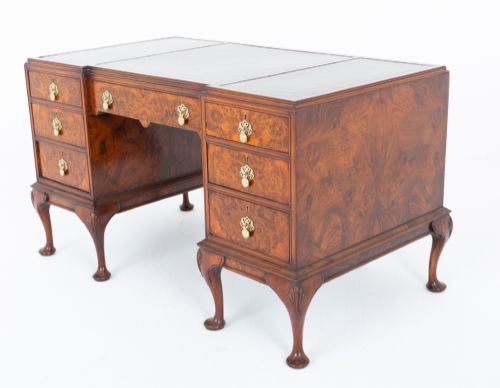
Queen Anne Bureau Desk
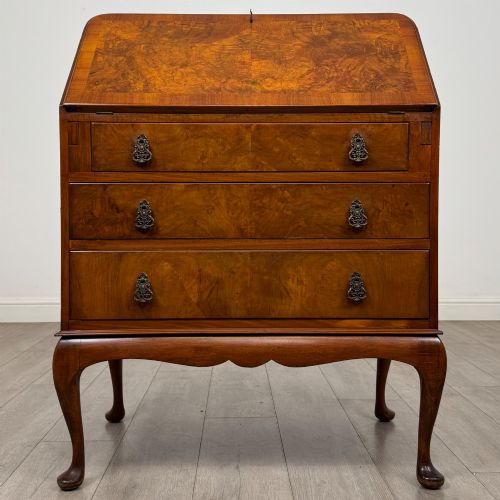
A queen anne bureau desk combines a fitted fall-front writing space with deep drawers, offering compact storage and a dedicated writing surface.
Queen Anne Bureau Desk
A queen anne bureau desk stands as a fundamental form of domestic writing furniture, developed to manage correspondence and personal papers securely. When you search for a queen anne bureau desk, you meet pieces ranging from eighteenth-century originals to later revivals produced during the Edwardian era and the early twentieth century.
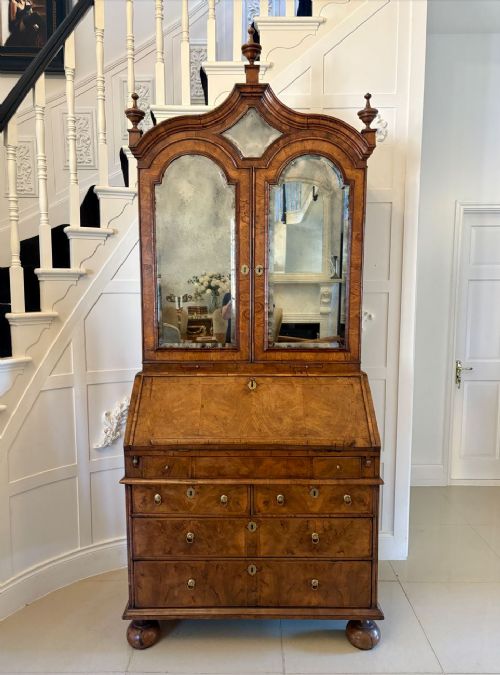
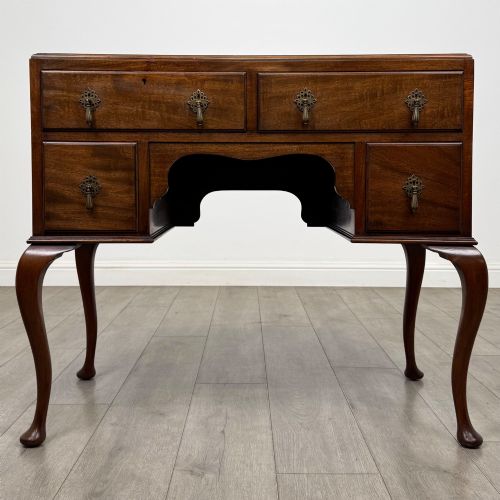
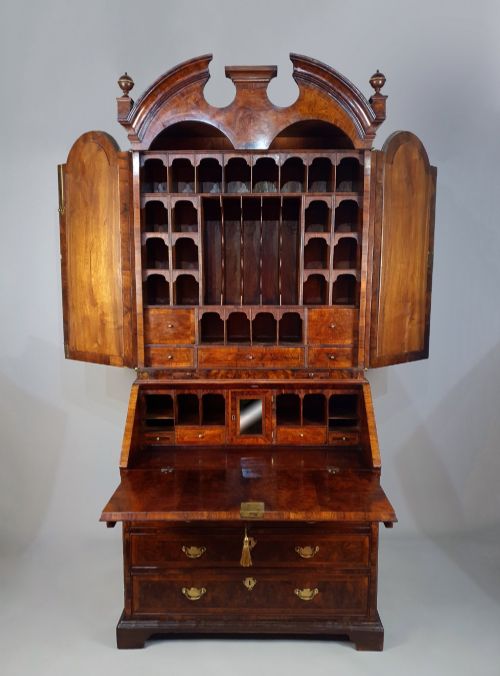
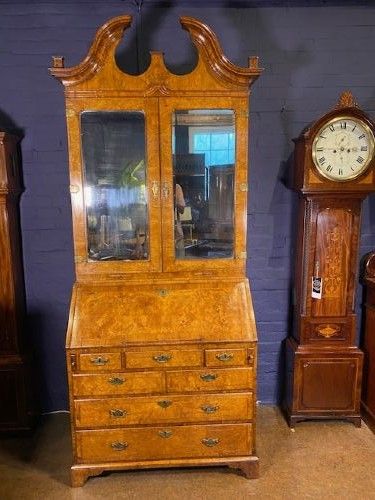
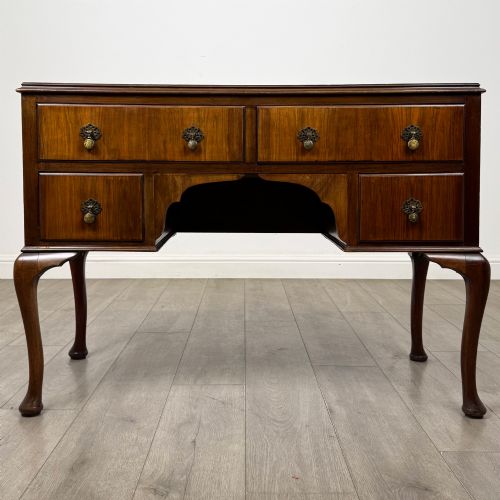
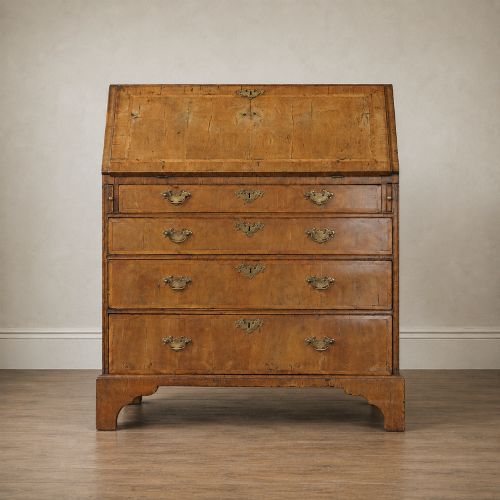
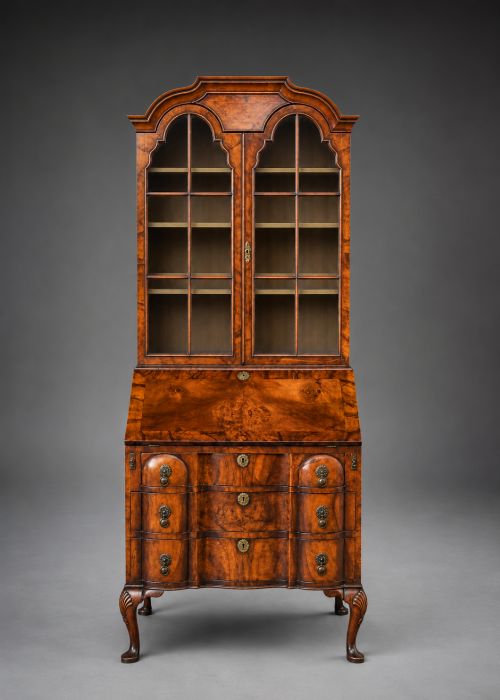
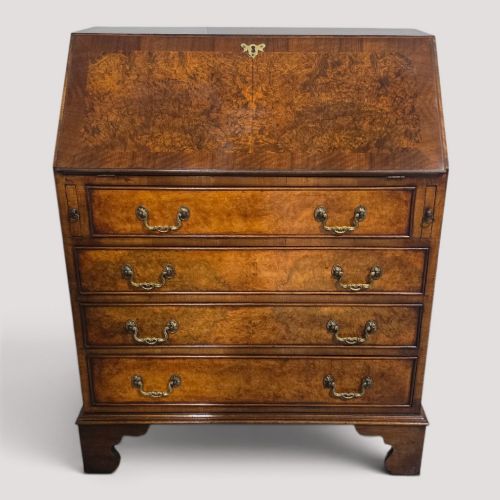
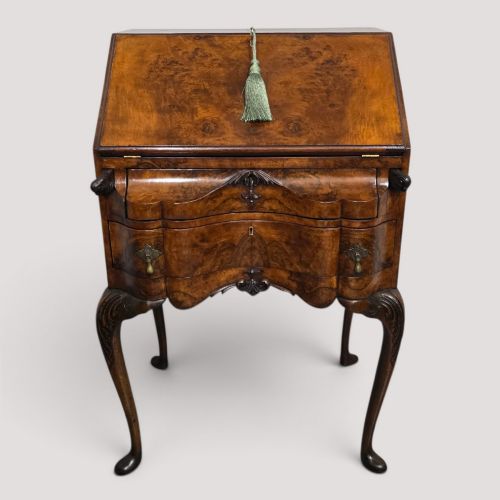
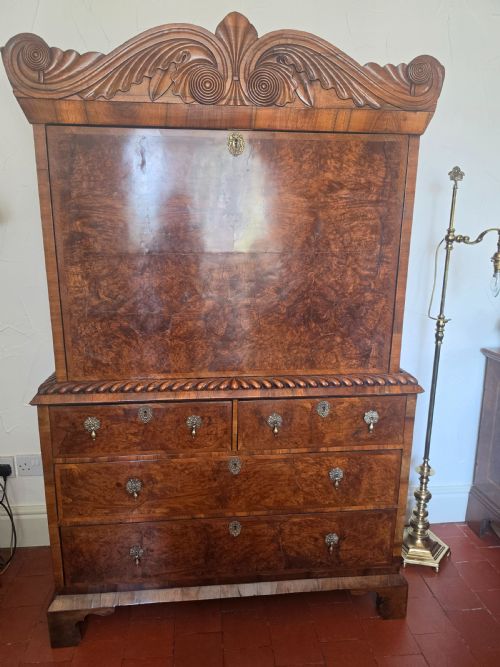
The primary form involves a sloping fall-front flap that opens to reveal internal pigeonholes and small drawers, positioned above a chest of drawers. Alternatively, versions appear as bureau bookcases featuring upper glazed or panelled cabinets, or as smaller desks raised on legs and stands.
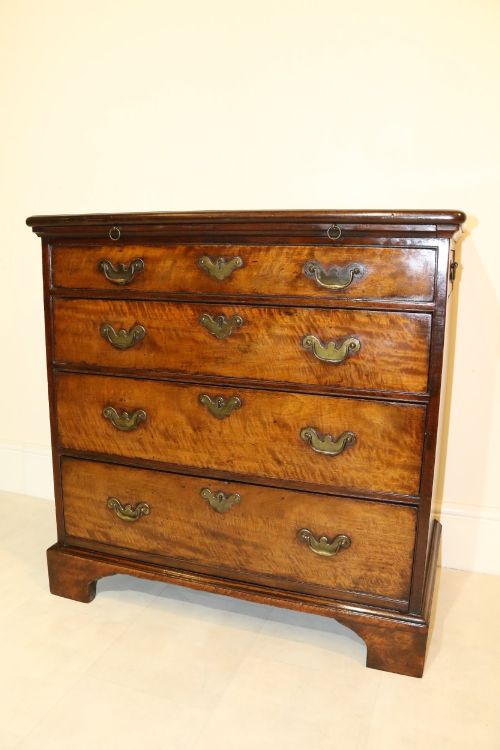
Examples originate from eighteenth-century workshops alongside twentieth-century revival pieces modelled on George I styles. The selection includes variants executed in oak, mahogany, and burr walnut, reflecting both period commissions and later interpretations.
Materials and Technique
Makers utilised timber construction centred on walnut, burr walnut veneer, oak, and occasionally mahogany or yew wood. Carcasses employed solid oak or pine framing, faced with decorative veneers selected for striking grain patterns.
Surface ornamentation relied on featherbanding and crossbanding around drawer fronts and fall-front flaps, creating delicate borders that highlighted the timber. Hardware consisted of brass drop handles, escutcheons, and ironwork secured to operational drawers and fall mechanisms.
Internal compartments incorporated small drawers, hidden compartments, and pigeonholes constructed with dovetail joints. Writing surfaces frequently integrated inset leather panels tooled with gilt borders.
Secret compartments hidden within internal pigeonholes once stored private papers away from prying eyes.
Judging Quality
Quality rests upon the selection and matching of timber veneers across the fall front and drawer faces. Superior pieces display harmonious burr walnut figures that mirror across the centreline, whereas lesser items use plain or mismatched veneers.
The integrity of secondary woods and internal drawer construction indicates the standard of workshop execution. Fine examples retain original brass hardware, smooth-running dovetailed drawers, and well-fitted internal compartments without excessive replacement timber.
Wylie & Lochhead Glasgow·maples of London
The Queen Anne Bureau Desk Glossary
- Bureau
- A writing desk featuring a sloping fall-front that opens to reveal internal compartments and drawers. It typically sits above a chest of drawers for general storage.
- Fall Front
- The hinged writing flap of a bureau that lowers to a horizontal position for writing. When closed, it conceals the internal pigeonholes and small drawers.
- Burr Walnut
- Timber taken from the abnormal growth knots of a walnut tree, yielding highly figured patterns. Makers sliced this wood into thin veneers for decorative surfaces.
- Featherbanding
- A type of inlay using thin strips of veneer laid in a herringbone pattern around the edges of drawer fronts. It frames the primary wood panels.
- Escritoire
- A tall writing cabinet or desk containing a drop-front writing surface and internal drawers. The term often describes tall bureau formats from the early eighteenth century.
- Kneehole Desk
- A compact desk featuring a central recessed space for the user's legs, flanked by pedestals of small drawers. These pieces often incorporate a small concealed cupboard behind the kneehole.
Queen Anne Bureau Desk: Frequently Asked Questions
What is a queen anne bureau desk?
A queen anne bureau desk is a compact writing cabinet featuring a sloping fall-front flap that opens to reveal small drawers and pigeonholes above a set of storage drawers.
These pieces emerged during the early eighteenth century and saw later revival periods in Edwardian workshops, maintaining a traditional form designed for correspondence and storage.
How do I use a bureau desk?
You pull out any supporting lopers to hold the hinged fall-front flap level, creating a temporary writing surface above the main chest of drawers.
Pigeonholes and internal compartments inside the fall-front store stationery and letters, while the lower drawers accommodate larger documents and household items.
How do I date a walnut bureau?
Dating relies on examining construction methods, timber choice, and hardware styles. Eighteenth-century pieces exhibit hand-cut dovetails, oak secondary woods, and original ironwork or brasses.
Edwardian and later twentieth-century revivals often display machine-cut elements, distinct internal framing, and timber finishes consistent with modern antique reproductions.
Are these desks suitable for daily use?
These desks fit comfortably into modern studies or living spaces as functional writing surfaces and storage units. Their compact footprint allows them to occupy modest spaces while providing deep drawer capacity.
Leather writing inserts offer a durable surface for modern writing instruments, and sturdy fall-front supports handle regular opening and closing.