






Qing Style Plant Stand
A qing style plant stand brings an architectural focal point to a room, holding a favourite urn or trailing plant with solid presence.
Qing Style Plant Stand
A qing style plant stand serves as an elevated platform for display, taking the form of torchères, occasional tables, and pedestal stands rather than everyday utility furniture. These pieces appear across late nineteenth and early twentieth century dates, including Victorian eras, reflecting sustained British interest in imported Eastern design.
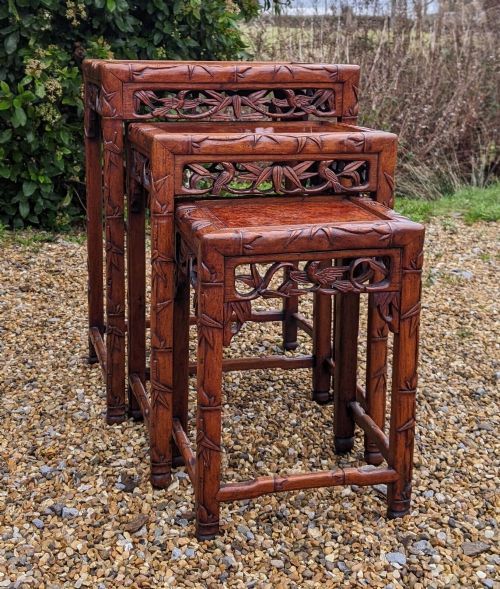
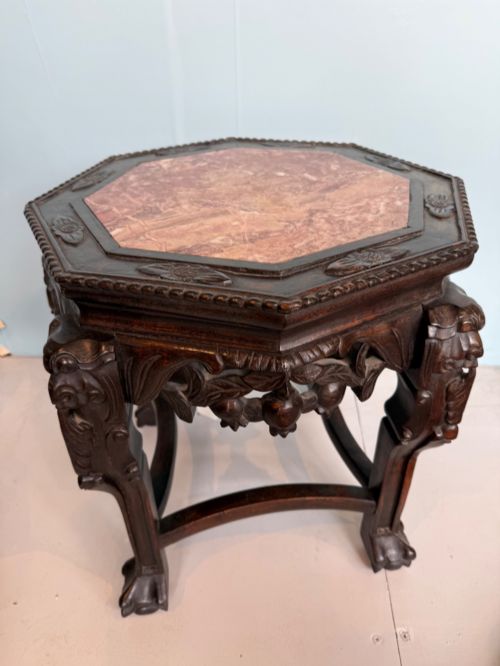
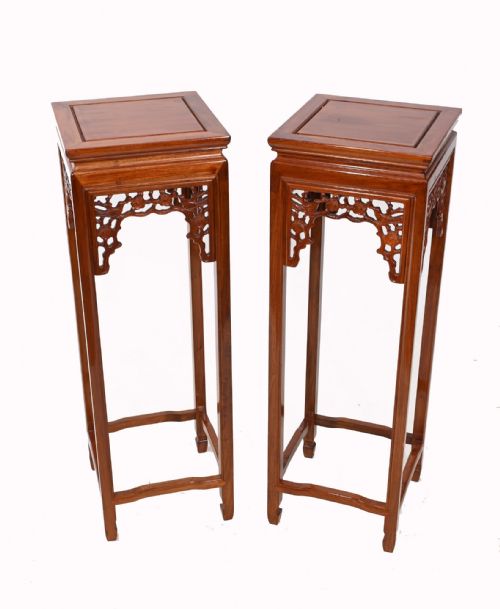
The dominant forms on this page include hardwood plant stands and marble topped occasional tables, alongside nests of tables and garden seats. They utilise traditional Chinese export and Qing dynasty styles, often featuring inset stone or carved aprons that elevate the object from the floor.
Makers and workshops constructed these items primarily for display, meaning dimensions tend to be compact and proportions tall and narrow. Buyers find single pedestals, pairs, and tiered lamp tables designed to anchor corners and window spaces.
Materials and construction methods
Hardwoods form the structural core of these stands, with listings recording rosewood, huanghuali wood, amboyna, padouk, and hongmu. Craftsmen selected dense timbers capable of supporting heavy marble inserts without warping or sagging over decades of use.
Surface ornamentation relies on contrasting inlays and textures, combining mother of pearl, porcelain, lacquer, and cloisonné with deep relief carving. Marble tops sit flush into rebated wooden frames, providing a cool, stable surface resistant to moisture from potted plants.
Qing Style Plant Stand Retail Price Guide 2026
Typical asking prices for qing style plant stand among the pieces listed under this phrase on Sellingantiques today, from the lower quarter to the upper quarter. They describe what is for sale here now, not the wider market.
Materials recorded across the inventory include rosewood, huanghuali wood, amboyna, padouk, marble, porcelain, and mother of pearl.
Distinctions in quality
The refinement of the carving separates standard production from superior examples, visible in the crispness of undercut foliage and the symmetry of pierced aprons. Dense, highly figured timbers with strong grain patterns command greater visual authority than plain secondary woods.
Structural integrity depends on tight joinery in the underframe and the precise fit of inset marble or burrwood panels. Higher tier pieces maintain stability without excessive metal bracing, relying on traditional mortise and tenon construction.
The Qing Style Plant Stand Glossary
- Torchere
- A tall, slender stand designed specifically to support a lamp or decorative urn. They provide vertical emphasis in interior schemes.
- Jardiniere stand
- A low or medium height table built to hold a large ceramic plant pot or flower bowl. The inset top protects the wood from water damage.
- Cloisonne
- An enamelwork technique where metal wire outlines compartments on a base, which are then filled with coloured paste and fired. It adds vibrant colour to side tables.
- Hongmu
- A translation meaning red wood, used to describe dense tropical hardwoods imported for fine Chinese furniture production. It develops a deep patina with age.
Qing Style Plant Stand: Frequently Asked Questions
How do I use a plant stand today?
These stands work well in corners or beside seating to elevate trailing foliage, ceramics, or reading lamps. Their compact footprints make them adaptable for smaller rooms.
Ensure the weight of your object matches the stability of the stand, particularly with tall torchères.
Can these stands support heavy pots?
Most pieces with marble or heavy hardwood tops were built to bear substantial weight, including large ceramic jardinieres and bronze vessels. The dense timbers used provide inherent structural strength.
Check that the joints remain tight before placing exceptionally heavy items on top.
How do I clean marble top tables?
Wipe the stone surface with a damp cloth and mild soap, avoiding acidic cleaners that can etch the polish. Dry thoroughly with a soft cloth to prevent water marks.
Treat the surrounding wood with appropriate furniture wax according to the timber type.
What is the difference between an occasional table and a plant stand?
Plant stands generally feature taller, narrower proportions and smaller top surfaces designed for singular display. Occasional tables offer broader surfaces intended for general use.
Many nineteenth century examples blur this distinction, functioning as lamp tables or jardiniere supports interchangeably.